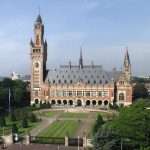
On 23rd July, the International Court of Justice (ICJ) delivered the much-awaited Advisory Opinion on The Obligations of States in respect of Climate Change. The case originated from a request submitted by the United Nations General Assembly seeking ICJ’s opinion on two questions; clarifying state obligations under international law to ensure the protection of the climate system from anthropogenic emissions of greenhouse gases, and legal consequences arising from the breach of these obligations.
This commentary focuses on a crucial development arising from the ICJ judgement from the perspective of international human rights law: the recognition of the right to a clean, healthy and sustainable environment (‘clean and healthy environment’) as a standalone human right. This is the first time the principal judicial organ of the United Nations has acknowledged a right to a clean and healthy environment. This recognition is significant because of the contested nature of the concept, as certain states are reluctant to recognize this as a distinct right under international human rights law.
Clean and healthy environment: the conceptual divide
The question of the presence of the right to a clean and healthy environment arose in the climate change opinion because the Court treated international human rights law as relevant to determining state obligations to address the climate crisis under international law (para 143-145). The discussion of the Court starts with examining the relationship between the environment and enjoyment of human rights (para 372-386). Then the question of the right to a clean and healthy environment as an autonomous right is addressed (para 387-393). This is followed by a discussion on the territorial scope of human rights obligations and consequences arising from these obligations (para 394-404).
The discussion on the existence of the right to a clean and healthy environment is significant because there is no explicit reference to this right in international human rights treaties. Though many domestic constitutions have pronounced an autonomous right to the environment in recent times, international human rights law stops short of identifying this right in explicit terms. International environmental law instruments acknowledge the link between environmental protection and enjoyment of human rights (e.g. Rio Declaration), and state that human rights obligations must be considered in acting against climate change (e.g Paris Agreement).
But there is a conceptual difference between admitting a clean and healthy environment as a pre-condition to enjoy human rights and the right to a clean and healthy environment as a standalone right. In the absence of an autonomous right to the environment, litigants are forced to rely on other human rights provisions such as the right to life (see here, here and here) and the right to health (see here and here) when challenging environmental degradation through human rights litigation.
Though the recognition of a clean and healthy environment as an independent right has been suggested as early as the 1970s , apart from regional human rights treaties (African and Arab human rights charters), there has been no legally binding international instrument that recognized a distinct substantive right to environment. The mandate of the Special Rapporteur on the right to a clean and healthy environment, established by the UNHRC in 2012 has continuously argued for its formal recognition in international law. In 2021, the UNHRC adopted a historic Resolution (see here), declaring an autonomous right to environment. This was followed by a corresponding UNGA Resolution (see here).
Yet it is debatable whether the position enunciated in the above UNGA Resolution represents the legal consensus across states. Powerful countries like the United States and United Kingdom have explicitly refused to recognize the right to a clean and healthy environment as a standalone human right, though they acknowledge the link between environmental harm and enjoyment of human rights. For instance, in the present case, UK objected to the proposition on the ground that there is no widespread, representative and consistent general practice pertaining to the existence of this right, and the lack of opinio juris as instruments like the UNGA resolution on the right to environment belongs to the realm of soft law and do not reflect an intention to be treated as binding law (see here).
Apart from the aforementioned states, in the present case, Australia, Canada, China, Germany, Kuwait, Saudi Arabia, New Zealand, and Serbia argued against the existence of a right to clean and healthy environment in international law. On the other hand, the majority of participants, mostly Global South nations, claimed otherwise (see here).
Structure of the reasoning
The argumentative method the ICJ adopted in deciding on the right to a clean and healthy environment as an autonomous human right involves several steps.
First, the Court cites international environmental instruments, such as the Stockholm and Rio Declarations, to establish that the ‘relationship between human beings and the environment’ is recognized in international law (para 388). Then drawing on a 1994 UN Human Rights Commission report, the Court asserts that ‘effective enjoyment of a number of human rights cannot be fully realized if those who hold them are unable to live in a clean, healthy and sustainable environment’ (para 389). As mentioned earlier, this assertion of the connection between human rights and environmental protection is not subjected to serious debate; this reflects established consensus.
Next, based on regional human rights treaties, the African Charter on Human and Peoples Rights (Art.24), the Arab Charter on Human Rights (Art.38) and the San Salvador Protocol to the American Convention on Human Rights (Art.11), the Court notes that the right to a clean, healthy and sustainable environment is recognized at the regional levels albeit in varying words (para 389). This is supplemented with the argument that more than a hundred states have enshrined the right in their domestic constitutions (para 391). Here the court enters contested territory, going beyond merely admitting the interlinkage between the environment and human rights.
Afterwards, the Court cites the 2022 UNGA Resolution on the right to environment, which states that the UNGA ‘[…] recognizes the right to a clean, healthy and sustainable environment as a human right’ (para 392). The UNGA resolution is seen as ‘evidence of the acceptance of this right’ (para 392). The ICJ notes that the Resolution was adopted with 161 states in favor, with 8 abstentions and no country voting against (ibid).
From this premise, the Court proceeds to conclude that the right to a clean and healthy environment forms a part of international human rights law. The relevant paragraph reads as follows:
Based on all of the above, the Court is of the view that a clean, healthy and sustainable environment is a precondition for the enjoyment of many human rights, such as the right to life, the right to health and the right to an adequate standard of living, including access to water, food and housing. The right to a clean, healthy and sustainable environment results from the interdependence between human rights and the protection of the environment. Consequently, in so far as States parties to human rights treaties are required to guarantee the effective enjoyment of such rights, it is difficult to see how these obligations can be fulfilled without at the same time ensuring the protection of the right to a clean, healthy and sustainable environment as a human right. The human right to a clean, healthy and sustainable environment is therefore inherent in the enjoyment of other human rights (emphasis added). The Court thus concludes that, under international law, the human right to a clean, healthy and sustainable environment is essential for the enjoyment of other human rights (para 393).
As evident from the above phrasing, the Court derives the existence of the right to a clean and healthy environment from the interconnection between environmental protection and human rights. From the conventional, established premise of treating a clean and healthy environment as a pre-condition of human rights protection, the Court advances towards the more expansive stance of declaring that the interdependence between the environment and human rights implies the presence of an independent right to a clean and healthy environment.
Ambiguities and questions
This promulgation, which has been described as a high-water mark in the process of legal recognition of the right to a clean and healthy environment however, raises some pertinent questions. As noted by several critics, the right is proclaimed in language that lacks clarity and therefore reflects a certain degree of vagueness (see Keller and Heri). For instance, it has been argued that the Court does not state whether the right to a clean and healthy environment is a self-standing right (Keller, ibid).
When taken in its entirety, the reasoning of the Advisory Opinion, which draws on multiple sources that admit an autonomous right to a clean and healthy environment, suggests that the Court intended to recognize the right to a clean and healthy environment as a standalone right. But the confusion arises due to the ambiguous language the Court has used in the specific paragraph (quoted above) that outlines its conclusion. As also noted in the declaration of Judge Tladi, the Advisory Opinion seems to conflate the two approaches of admitting the right to a clean and healthy environment as an autonomous right and treating environmental protection as necessary to realize other human rights (Tladi declaration, para 27). While both these approaches can co-exist simultaneously, it would have been better if the Court had stated the existence of a stand alone right to a clean and healthy environment in explicit, unambiguous terms without leaving room for ambiguity and contestation.
The failure to specify the content and the obligations that arise from the right to a clean and healthy environment is another aspect that deserves attention (see Keller, Heri, Boyd and Odermatt). This omission becomes more apparent when comparing the ICJ’s judgement with the Inter-American Human Rights Court’s Advisory Opinion on the climate emergency that was also declared in last July (for a comparison see Heri, ibid). In their separate opinions, Judges Bhandari and Charlesworth note the failure to specify the content of the right (Bhandari opinion, para 3; Charlesworth, para 9), and Judge Charlesworth elaborates on its content as comprising both substantive and procedural dimensions (para 9-12).
Though it would have been commendable if the Court had offered an in-depth discussion on this matter, it is also worth differentiating the function of the ICJ as the body mandated to determine questions under general international law, from the jurisdiction of a human rights court. The ICJ’s recognition of the right to a clean and healthy environment – even in abstract terms – would serve as a catalyst for UN human rights treaty bodies to engage in clarifying its scope and content in the future.
Furthermore, it is not clear whether the Court treats the right to be a part of customary international law. Judges Aurescu, Bhandari and Tladi, in their separate opinions answer this question in the affirmative and note that the Advisory Opinion has not addressed the question explicitly (see here, here and here). Such a proclamation would lead to further questions, as the ICJ heavily relies on the 2022 UNGA resolution to deduce the existence of an autonomous right to a clean and healthy environment. This is the only source with an ‘international’ character -as opposed to regional and domestic provisions – that the Court cites as evidence of the presence of the right . As Judge Tladi explains in his declaration, the 2022 UNGA resolution ‘[…] serves as an important indication of opinio juris’ (Tladi declaration, para 31). One question stemming from this position is the extent to which soft-law instruments like UNGA resolutions can be considered evidence of general and consistent state practice, combined with opinio juris. Even to have that debate, the Court should have clarified its stance in clear terms.
Future implications
Despite above limitations, the Advisory Opinion could have significant implications for the evolving nexus between international human rights law and environmental protection. As already noted, defining the right to a clean and healthy environment as a distinct right is a development that has already taken place at the level of regional human rights systems (see here and here). The ICJ Advisory Opinion elevates this normative development to the international level.
The normative shift that follows is significant as it creates a judicial avenue for litigants to bring in claims against environmental degradation based on an autonomous right to a clean and healthy environment without depending on other human rights provisions. The problem with relying on other human rights like the right to life to challenge environmental harm lies in the fact that in certain instances it might be difficult to establish a clear link between certain types of environmental harm and the invoked right in question. For example, the loss of biodiversity might not always have a direct, immediate effect on the right to life.
With the recognition of a standalone right to a clean and healthy environment, human actions that violate eco-systems can be directly challenged – not merely because the environment is instrumental in protecting other rights – but since a clean and healthy environment itself is a human right.
As national courts refer to ICJ as persuasive authority, this can encourage national courts in countries that have not recognized an autonomous right to a clean and healthy environment yet to acknowledge its existence and to define state obligations accordingly. Furthermore, the recognition of this right can shape the trajectory of climate related litigation at national, regional and international levels. In the future, we are likely to see an increase in litigation at all these levels, that seek to challenge environmental degradation on the basis that a clean and healthy environment itself is a human right and not only a pre-condition to realize other human rights.
The writer is an academic attached to the Department of Legal Studies, The Open University of Sri Lanka. He can be reached at raminduezln {at} gmail(.)com