
By Allison Lampert and Rajesh Kumar Singh
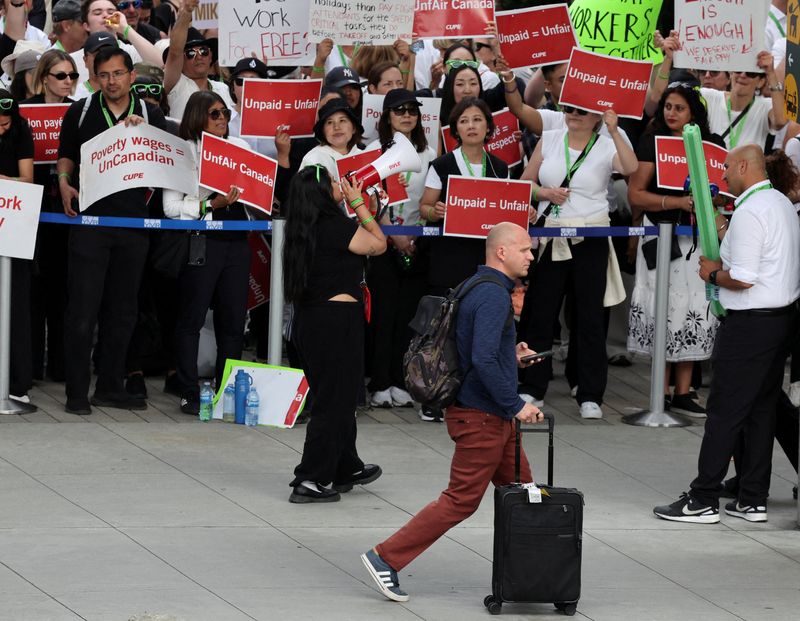
MONTREAL/CHICAGO (Reuters) -A crippling strike by Air Canada flight attendants that grounded thousands of flights over wages and unpaid labor is the latest blow to the airline industry’s compensation system that does not fully pay cabin crews for their hours at work.
The union, representing more than 10,000 Air Canada flight attendants, said on Tuesday they reached a tentative deal that ends unpaid work, without sharing further details. Analysts say any gains could influence upcoming contract negotiations in North America.
The deal could also drive up structural costs in a cyclical industry. Labor is airlines’ biggest operating expense after fuel.
The four-day strike that stranded more than 500,000 passengers mirrors unrest at U.S. carriers, where flight attendants cannot walk off the job until the National Mediation Board grants permission. But cabin crews at American, Southwest, and Alaska Airlines last year rejected several contract deals, saying they did not address concerns about unpaid work.
Flight attendants at United Airlines last month voted down a $6-billion tentative labor agreement, which did not provide compensation for time on the ground before and after flights.
The Chicago-based airline’s union is surveying its members before returning to bargaining in December. United and the union did not immediately respond to requests for comments.
While cabin crews get paid for a minimum number of hours, they are mostly compensated when planes are in motion, neglecting the crucial tasks performed during boarding, deplaning, and other ground operations.
Unions say this amounts to significant unpaid labor. In previous contract negotiations, airlines secured concessions from workers as the industry was struggling due to economic downturns or the pandemic.
But a runup in inflation, stagnant wages, and increased workload have fueled resentment among flight attendants, bolstering demands for a change in pay practices.
“The Air Canada strike helps negotiations everywhere. It defined the problem of ridiculous expectations for flight attendants to work without pay,” said Sara Nelson, international president of the Association of Flight Attendants-CWA, which represents 55,000 flight attendants at 20 airlines, including United.
“The striking flight attendants are an inspiration to working people everywhere.”
Nelson spoke with Wesley Lesosky, head of Air Canada’s flight attendants union, on Monday to coordinate positions, representatives of both unions told Reuters.
Story Continues