
I returned from a business
trip late and tired and wanting to rest, but needing to create a presentation
for a talk I’d committed to give months ago. I can only blame myself for
procrastinating on the talk preparation. But I amped myself up to push through
and get it done. Then the power went out, and with it my internet connection.
Fortunately for me, the power outage was
brief, and I was able to get my work done. But it reminded me of just how much
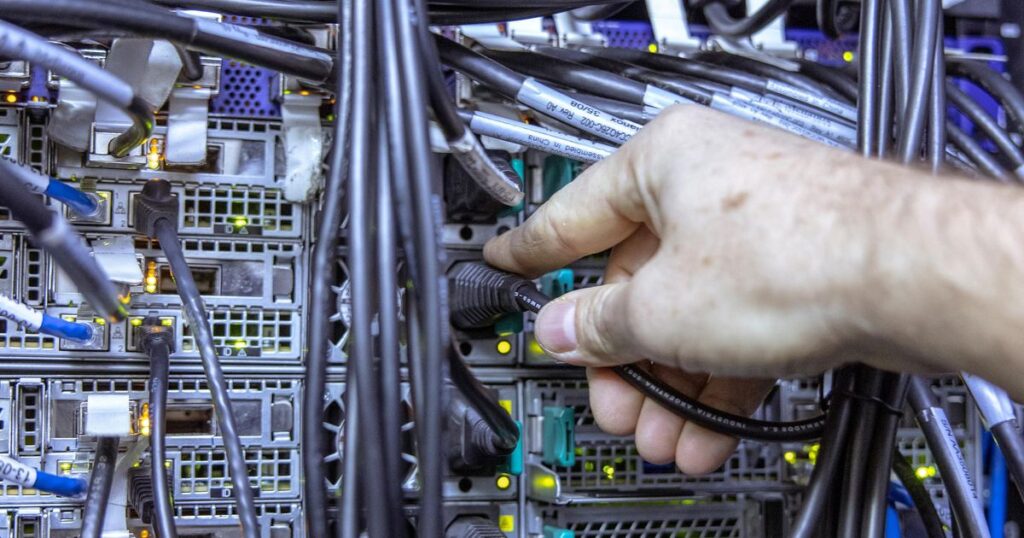
we rely on technology infrastructure. In the physical world, plumbing is
invisible by design. You don’t think about it when it’s working — you only notice
it when it fails. And when it fails, it’s all that matters.
The same is true for the infrastructure
powering the emerging data economy. Hidden beneath the flashy AI demos,
consumer apps and sleek hardware is a layer of unglamorous but indispensable
technology. These are the “plumbing companies” of the 21st century — the small,
specialized firms building the pipes, valves and filtration systems for
real-time data flow. They are rarely household names or venture capital darlings, and they
definitely don’t trend on social media. But we should care deeply about them.
Because without them, stuff we take for granted stops working.
The infrastructure of data commerce is
complex. Sensors collect streams of raw information — temperature readings from
a shipping container, vibration patterns from an industrial pump or GPS
signals from a fleet of delivery trucks. But the raw data is noisy, incomplete and incompatible.
Plumbing companies solve this problem.
They design low-latency networking hardware, edge computing modules and data
integration platforms. They filter, normalize and route information where it
needs to go. They manage data ingestion and structuring. They ensure that IoT
devices talk to cloud services, AI algorithms and enterprise dashboards —
without anyone thinking about the kilometers of digital pipe connecting it all.
When this infrastructure breaks — when a
sensor loses connection, a stream corrupts, or a routing table fails — it’s
kind of like the power going out. If you are fortunate, until the issue
resolves, your business grinds to a halt, productivity slows, machines go
offline and you lose some time or money. But greater risks exist. Safety
systems may stop functioning. Quality control may be lost. You may lose trust
with customers or suffer an irrecoverable issue.
Entrepreneurship in the shadows
In the RIoT Accelerator Program, we have
always taught that creating value trumps creating buzz. I have always been
drawn to “plumbing companies.” They are so un-sexy that there is little
competition. And their platforms are so critical that companies that depend on
them will pay reliably forever for reliable service. The sector rewards quiet
excellence. Plumbing companies don’t win on hype; they win on reliability,
integration expertise and deep industry trust.
A startup making an API that translates
obscure industrial protocols into usable JSON might sound dull — until you
realize it unlocks an entire category of AI-powered maintenance software. And
because the work is specialized, competition is often thin. A company that owns
a niche — like secure firmware updates for smart streetlights or low-power mesh
networks for remote sensors — can build a defensible business with global reach
without ever chasing the consumer spotlight.
Part of what makes plumbing companies so
cool is the outsized impact they have. Every successful plumbing innovation
enables dozens of other companies to exist. Consider:
●
After an integration specialist
builds a platform that connects a patchwork of city infrastructure sensors into
a unified dashboard, urban planners can model traffic, air quality and energy
usage in real time.
●
When someone builds a better
compression algorithm for high-frequency sensor data, suddenly rural wind farms
can transmit real-time turbine performance to control centers without costly
network upgrades.
●
If an edge computing startup
figures out how to filter and aggregate video data from security cameras before
sending it to the cloud, it enables AI analytics companies to run complex
object detection at a fraction of the cost.
North Carolina has been an epicenter for
IoT and the data economy over the past decade. And some of the unsung heroes of
the “plumbing economy” are right here in the Triangle. I’ll profile three local
startups that are doing this multiplier platform work. Each went through the
RIoT Accelerator Program years ago and has continued to grow and make an
impact since. I hope you’ve heard of them, but I bet you haven’t. That’s the
nature of infrastructure companies. They create silent value all day, every
day.
Trilliott
(Raleigh, NC)
●
What they do: Trilliott’s SaaS platform integrates with next-gen RAIN
RFID to digitize asset and inventory tracking. By replacing error-prone
barcodes with inexpensive RFID that works at 90-foot ranges without batteries,
they improve asset accuracy from ~60% to over 98%, enabling individualized
interaction with millions of assets.
●
Impact example: Leveraging Trilliott’s platform, Alfred Williams &
Company manages enterprise assets across the Southeast, including major
hospital systems. They’ve reduced labor, improved accuracy and achieved
real-time visibility across facilities.
●
Plumbing value: Without Trilliott’s digital piping, asset data remains
fragmented and inaccurate — limiting the effectiveness of any downstream
analytics or AI systems.
Microgrid
Labs (Durham & Cary, NC; Boulder, CO)
●
What they do: Their software platform uses
digital twin modeling to help fleets, municipalities and enterprises plan and
optimize electrification — from battery sizing to charging infrastructure.
●
Impact example: For the Greensboro Transit
Agency, they modeled bus routes, charging needs and grid impacts to ensure
operational feasibility while avoiding costly over- or under-building of
infrastructure.
●
Plumbing value: MGL provides the unseen
conduit connecting transport operations to grid, storage, and charging
systems — ensuring energy and data flow as one coordinated system.
ROWND
(Durham, NC)
●
What they do: ROWND provides a
modular open-source framework for building production-ready AI applications
locally. It integrates the most up to date core AI tools and techniques so
users can build on a laptop and deploy anywhere.
●
Impact example: By offering a “batteries-included” AI
development platform, startups and enterprises can deploy AI features in
minutes instead of months — shifting resources from infrastructure work to
product innovation.
● Plumbing
value: ROWND provides the
digital pipework for AI applications—quietly handling document processing,
model orchestration, and intelligent retrieval so developers can focus on
building AI experiences without vendor lock-in or losing control of their data.
These companies are not building the apps
you see. They aren’t posting Reels on Instagram or cutting 9-figure deals in Silicon Valley. Instead, they’re making sure all the hype that other companies
are touting can even exist.
A perfect time for plumbing entrepreneurs
Don’t just take my word for it. I’ll
admit a personal bias for the lower risk and higher value of boring plumbing
companies. Market data also supports the headline of this section. It is a
great time to build a plumbing company. Several forces are converging to make
this a golden age for infrastructure entrepreneurship:
●
The explosion of IoT devices means
exponentially more endpoints that need connectivity, security, and
interoperability.
●
AI’s appetite for real-time data demands
cleaner, faster, and more reliable information streams.
●
Democratization
○
AI democratization allows subject matter
experts to launch more new companies. This opens an ever-growing market for
supporting infrastructure to help use case startups to scale.
○
Cost democratization — cheap sensors,
open-source frameworks, and cloud platforms — makes it feasible for small teams
to compete with legacy providers.
●
Edge computing maturity allows more processing
to happen close to where data is generated, opening new possibilities for
responsive systems.
For founders willing to work in the
shadows, the market is enormous. You don’t need millions of end-users. If you
capture a dozen loyal customers who depend on your product to keep their
business alive, you may have a multi-million dollar business.
Betting on the unseen
We’ve all heard the old saying – In the
gold rush, the people who made the most money were selling picks and shovels.
In the data economy, the picks and shovels are APIs, data brokers, secure
device firmware, cybersecurity layers, IoT middleware and low-latency networks.
The companies building these systems
won’t get flashy headlines — but they will get contracts, renewals and a level
of business resilience most consumer-facing startups can only dream about. In
the end, every great advance in the data economy will stand on the quiet work
of entrepreneurs who built the pipes. And if history is any guide, they’ll be
the ones quietly cashing the biggest checks.