
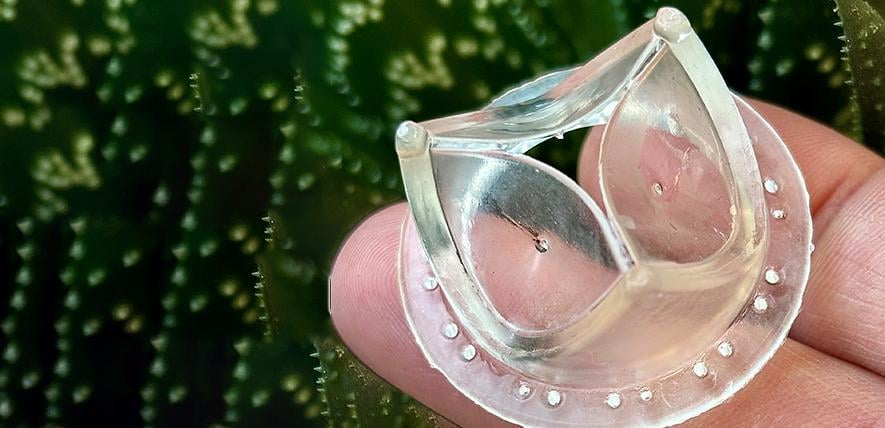
An artificial heart valve made from a new type of plastic could be a step closer to use in humans, following a successful six-month test in sheep.
https://www.cam.ac.uk/research/news/artificial-heart-valve-found-to-be-safe-following-long-term-test-in-animals
3 Comments
From the article: A research team, led by the Universities of Bristol and Cambridge, demonstrated that the polymer material used to make the artificial heart valve is safe following a six-month test in sheep.
Currently, the 1.5 million patients who need heart valve replacements each year face trade-offs. Mechanical heart valves are durable but require lifelong blood thinners due to a high risk of blood clots, whereas biological valves, made from animal tissue, typically last between eight to 10 years before needing replacement.
The artificial heart valve developed by the researchers is made from SEBS (styrene-block-ethylene/butyleneblock-styrene) – a type of plastic that has excellent durability but does not require blood thinners – and potentially offers the best of both worlds. However, further testing is required before it can be tested in humans.
In their study, [published](https://academic.oup.com/ejcts/article/67/8/ezaf266/8220933?login=false) in the European Journal of Cardio-Thoracic Surgery, the researchers tested a prototype SEBS heart valve in a preclinical sheep model that mimicked how these valves might perform in humans.
The animals were monitored over six months to examine potential long-term safety issues associated with the plastic material. At the end of the study, the researchers found no evidence of harmful calcification (mineral buildup) or material deterioration, blood clotting or signs of cell toxicity. Animal health, wellbeing, blood tests and weight were all stable and normal, and the prototype valve functioned well throughout the testing period, with no need for blood thinners.
“More than 35 million patients’ heart valves are permanently damaged by rheumatic fever, and with an ageing population, this figure is predicted to increase four to five times by 2050,” said Professor Raimondo Ascione from the University of Bristol, the study’s clinical lead. “Our findings could mark the beginning of a new era for artificial heart valves: one that may offer safer, more durable and more patient-friendly options for patients of all ages, with fewer compromises.”
“We are pleased that the new plastic material has been shown to be safe after six months of testing in vivo,” said Professor Geoff Moggridge from Cambridge’s Department of Chemical Engineering and Biotechnology, biomaterial lead on the project. “Confirming the safety of the material has been an essential and reassuring step for us, and a green light to progress the new heart valve replacement toward bedside testing.”
As someone with a heart valve currently implanted, what my cardiosurgeon said – “Get the animal, who knows what science will have for you in 15-20 years” is looking good!
8-10 years is a bit outdated though, animals are averaging 15 nowdays
Cool that there’s a new option but I don’t think this will be the valve of the future. The folks working on valves grown from patients’ own tissue are the ones to watch.