
Major world media agree on Serbia’s biggest problem: His name is Aleksandar Vučić

Express newspaper
20/08/2025 13:10
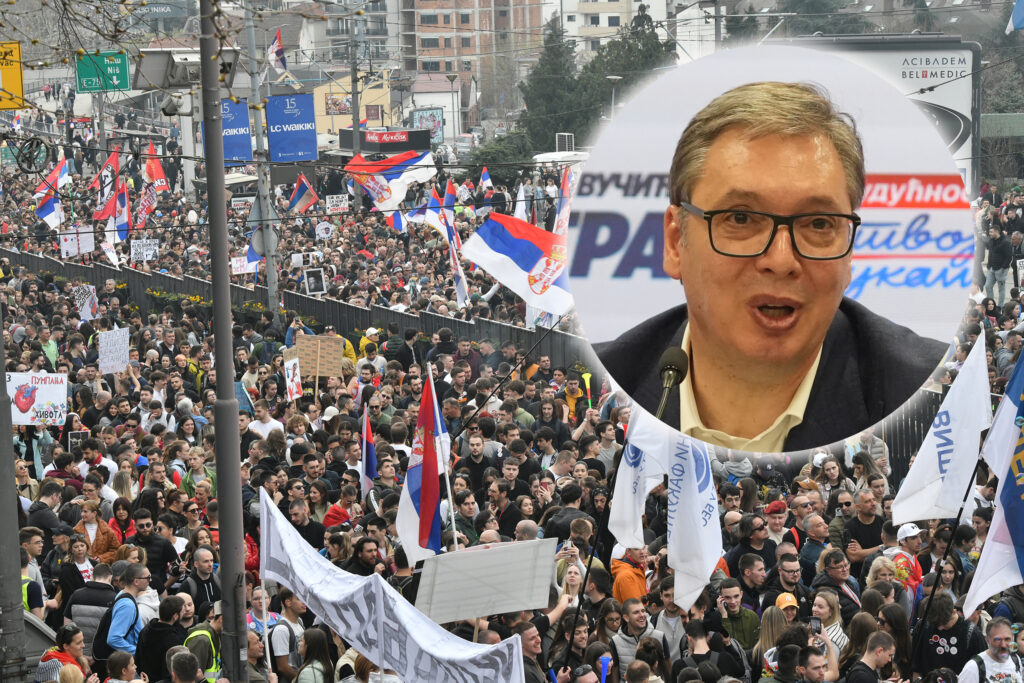
For several days now, the largest European and world media outlets have been reporting on the President of Serbia, Aleksandar Vučić – but not in a positive context. Words like terror, violence and the fall of the regime are increasingly associated with his name. Meanwhile, images from Serbia clearly show that the situation has spiraled out of control.
These protests, which are being violently suppressed by the authorities, have made headlines in many of the world’s most influential media outlets.
According to them, an unacceptable scenario is unfolding in Serbia for a country that claims to be a democracy. The writings emphasize that Vučić has established a system based on fear, repression, and the total destruction of institutions.
The police, which should protect citizens, have become a tool of violence for the regime. President Vučić continues to present himself as a guarantor of stability, while in reality, with his threatening rhetoric and manipulations, he has become the main cause of clashes and crisis in the country.
Germany, through media outlets such as Tageschau and Deutsche Welle, reports that Vučić has sent hooligans and private security forces against peaceful protesters, while the police have remained passive. In Belgrade and other cities, violent clashes are occurring every night, with protesters risking brutal arrests.
“Civil society demands justice – for the victims of the tragic incident in Novi Sad, for the victims of police violence. It demands free elections and a president who respects the constitutional limits of his power,” writes journalist Zilke Hane.
Meanwhile, the Financial Times comments that the Serbian president is at a crossroads: either he will further escalate repression and destroy any remnants of a free press, or he will accept the opposition’s calls for reform. “But autocrats usually choose repression,” the newspaper warns.
France’s Le Monde writes that Vučić has adopted a “strategy of fear”, using hooligans and privatized forces to intimidate protesters. Clashes between government supporters and citizens have been reported in many cities, while footage on social media shows violent arrests and brutal police actions.
Boško Jaksić emphasizes to Nova that the reporting of the world media on the situation in Serbia is important, as the European Union is being passive and following a “wait and see” approach. He criticizes the EU’s soft stance towards the Vučić regime and warns that this silence could be seen as cooperation in the repression taking place in Serbia.
Jaksic adds that European public opinion could influence officials to change their stance, and that the EU’s pragmatic approach to stability in the Balkans could have serious consequences.