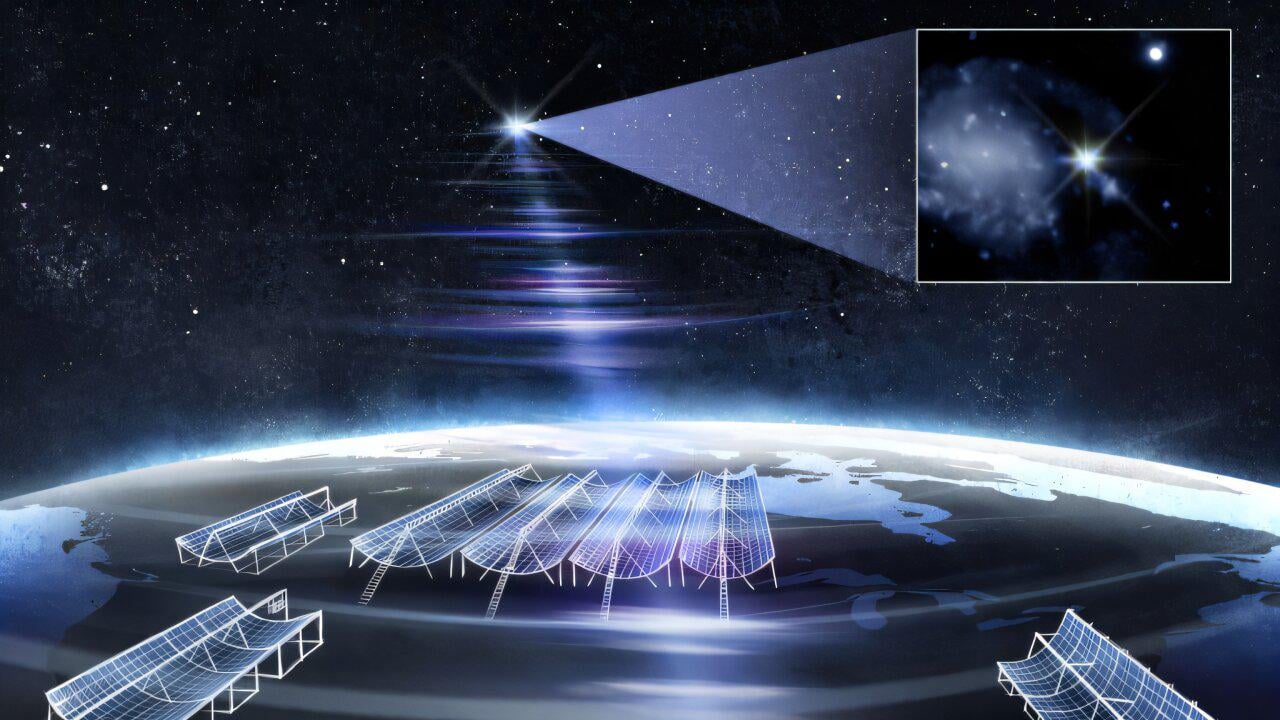
Brightest-ever fast radio burst allows researchers to identify its origin
https://phys.org/news/2025-08-brightest-fast-radio.html

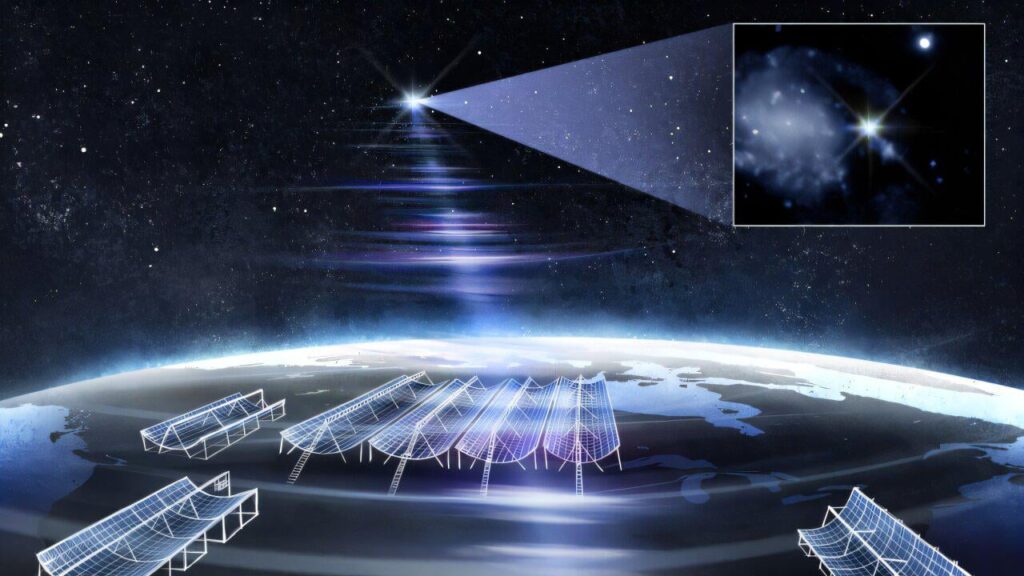
Brightest-ever fast radio burst allows researchers to identify its origin
https://phys.org/news/2025-08-brightest-fast-radio.html
2 Comments
[Here’s the originating article here, as published by the National Radio Astronomy Observatory](https://public.nrao.edu/news/brightest-ever-fast-radio-burst-allows-researchers-to-identify-its-origin/) and the National Science Foundation in the US.
It’s the same article, but with no ads and no tracking. It’s a news release. The picture is much bigger and the paragraph breaking is different. Plus you get NRAO’s generic website navigation.
(Side note: NRAO says at the bottom that “This news was adapted from press releases from several institutions involved with this research, including McGill University and the Center for Astrophysics | Harvard & Smithsonian.” But the link they use to Harvard CfA is broken. And CfA doesn’t have anything related to this on its news page for a couple of months. McGill University doesn’t either. Odd. Maybe a publication timing issue.)
Phys.org is a content aggregator. They collect free (like this) and licensed (?) content and republish it with ads, tracking, and whatever else. The original articles are usually a better browsing experience.
EDIT: at ~10am PDT the originating article link is now broken too. They appear to have backed out the news release. But phys.org still has the content up.
EDIT2: and now at 11am PDT the originating article link works again. Plus [the CfA news release link](https://pweb.cfa.harvard.edu/news/origin-mysterious-radio-signal-possibly-discovered) within the originating article works, too. I recommend the CfA article, much more information!
All FRBs are super-short. Most FRBs are apparently non-repeating, so by the time they’re detected you can’t point more instruments on them to locate them. CHIME is good at seeing them but on its own it can’t localize them. CHIME (which is in British Columbia) now has “outrigger” detectors in West Virginia, California, and BC which are activated when the main CHIME detects something, and that can be used for locating the source. This is the first event located that way, it seems.