
Published on
August 22, 2025
By: Tuhin Sarkar

Why British tourists sound rude in Spain without even realising it is a question troubling both travellers and locals. Every day, thousands of visitors land with good intentions. They want to be polite, respectful, and well-mannered. Yet their elaborate English politeness, when translated word-for-word, often creates confusion instead of courtesy. What sounds natural in the UK can sound awkward or even sarcastic in Spain.
This clash is not about bad behaviour. It is about cultural codes. British travellers use long phrases filled with apologies. Spanish people prefer direct, simple, and clear communication. So when British tourists sound rude in Spain without even realising it, the real mistake lies in mistranslation. Direct words like “un café, por favor” or “disculpe” carry more weight than lengthy sentences. Adapting to local style is the key to respect, warmth, and connection.
Why British Politeness Creates Problems in Spain
British tourists are proud of their manners. Saying sorry, softening requests, and using elaborate politeness is part of everyday life in the UK. Yet in Spain, those same habits can create the opposite effect. What feels respectful in English can sound strange, sarcastic, or even rude when translated word-for-word into Spanish.
Every day, thousands of tourists step into cafés, shops, or taxis across Spain and unintentionally confuse locals with awkward, overly complex phrasing. The problem is not just about language but about culture. Spanish communication values clarity, simplicity, and tone rather than long-winded sentences. Where a Brit might say “Would it be possible if I could maybe have a coffee, if that’s not too much trouble,” a Spaniard would simply say “Un café, por favor.”
The clash between politeness systems is a cultural misunderstanding that shapes real experiences. It can lead to puzzled looks, awkward interactions, and missed chances to connect. For travellers, learning to adapt is the key to smoother journeys and warmer welcomes.
The Cultural Clash of Manners and Misunderstandings
British tourists often assume that being polite means layering phrases with apologies and softeners. In Spain, the opposite holds true. Being direct is seen as respectful because it shows consideration for another person’s time. Long, complicated requests sound unnatural. They also create distance.
Spanish culture has its own form of politeness, but it is expressed differently. A smile, a friendly tone, and simple words like “gracias” or “disculpe” are enough. Body language plays a bigger role than verbal gymnastics. Over-apologising confuses people because it makes them wonder why you are sorry in the first place.
This disconnect goes deeper than words. It reveals two very different cultural philosophies. In Britain, indirect politeness is a social glue. In Spain, directness is warmth. When tourists fail to recognise this, they miss the chance to experience authentic Spanish connection.
Common Translation Mistakes That Sound Rude
One of the biggest mistakes is translating British politeness word-for-word. “Sorry to bother you, but would you mind telling me where the station is?” becomes a long and clumsy sentence in Spanish. To locals, it sounds theatrical and exaggerated. A simple “¿Dónde está la estación?” is much clearer and more natural.
Another frequent issue is the phrase “Would you mind.” This concept does not exist in Spanish the same way it does in English. Direct translations leave people baffled, unsure of what is being asked. British tourists also tend to overuse dramatic apologies. Saying “I’m terribly sorry” before every interaction feels unnecessarily formal. Locals start to wonder if the tourist has done something wrong instead of just asking for help.
In shops, British visitors often use roundabout requests like “Would you mind if I had a look at that, please?” Translated, it sounds stiff and formal. In Spain, the natural way is simply to point and say “Ese, por favor” – “That one, please.” The beauty lies in its simplicity.
Directness as Respect in Spanish Culture
In Britain, directness can sometimes be seen as blunt or rude. In Spain, it is the opposite. Directness is a way of showing that you respect someone’s time and attention. A clear request with a smile is valued far more than a long apology-filled sentence.
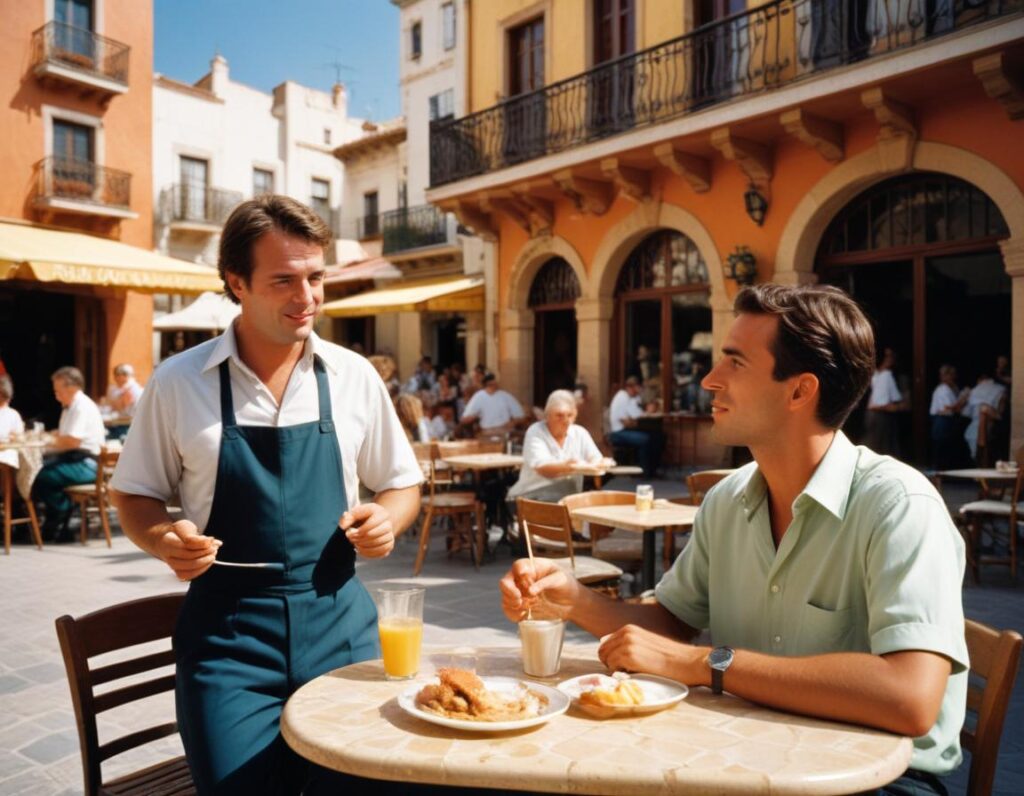
Ordering food offers the clearest example. The British way might be “Would it be possible to have a coffee, if that’s not too much trouble?” In Spain, you simply say “Un café, por favor.” The short phrase is polite, efficient, and completely natural. Adding “gracias” when the coffee arrives completes the exchange perfectly.
Spanish politeness is practical. It is about tone, context, and respect shown through action rather than words. By adopting this mindset, tourists can avoid misunderstandings and build warmer connections with locals.
Real-Life Examples from Daily Tourism
Across Spain’s busy tourist hubs – from Barcelona cafés to Seville tapas bars – British tourists fall into the same pattern. They approach staff with elaborate apologies, long requests, and textbook-style politeness. Locals respond with puzzled looks, awkward silences, or rushed service.
On the other hand, travellers who use direct, clear phrases often find locals respond warmly and helpfully. Saying “Disculpe” to get attention, “Un café, por favor” to order, or “Ese, por favor” in a shop makes communication easy. Tourists who adapt often notice a dramatic difference in their experiences.
The key lesson is that communication style shapes perception. Even with a limited vocabulary, using simple, direct Spanish can create trust and friendliness. Overly polite translations, meanwhile, build barriers and confusion.
Why This Matters for the Tourism Industry
Tourism in Spain is a massive economic engine. Millions of British travellers visit every year, making the UK one of Spain’s biggest markets. Misunderstandings in everyday interactions might seem small, but they affect visitor experiences, repeat travel decisions, and even local attitudes toward tourists.
If British visitors consistently appear confusing or insincere, it can feed into stereotypes and distance. On the other hand, when tourists adapt and show cultural understanding, it enhances the reputation of British travellers abroad. For the industry, this has real value. Positive interactions create loyal customers who return and recommend Spain to others.
Tourism boards and travel companies can play a role by educating travellers about cultural differences. A few words of advice on how to order, ask, or request in Spanish can transform entire holidays.
Lessons for Travellers: How to Communicate in Spain
For tourists heading to Spain, the lesson is simple: be clear, be direct, and use fewer words. Politeness does not vanish; it simply changes form. Use “por favor” and “gracias” often. Smile, maintain friendly tone, and avoid overloading sentences with unnecessary apologies.
Instead of translating complex English phrases, memorise short Spanish ones that work every time. For food, say “Un café, por favor.” For directions, ask “¿Dónde está…?” For attention, say “Disculpe.” For shops, point and say “Ese, por favor.” These phrases are easy to remember, effective, and polite in the Spanish context.
Travellers who adapt not only avoid misunderstandings but also gain deeper cultural connection. Locals appreciate when visitors make the effort to communicate naturally. The reward is a warmer, friendlier experience of Spain.
Broader Travel Trend: Adapting to Local Cultures
The problem of politeness in Spain highlights a wider travel trend. As global tourism grows, cultural misunderstandings become more common. Tourists often assume their home customs apply everywhere. In reality, every destination has its own codes of politeness and respect.
From tipping etiquette in the US to bargaining in markets across Asia, travellers who adapt enjoy smoother journeys. Those who do not often face awkwardness, resentment, or missed opportunities. For the modern travel industry, promoting cultural intelligence is just as important as selling flights and hotels. It ensures tourism remains a force for connection rather than division.
Conclusion: A Small Change That Makes a Big Difference
For British tourists in Spain, the solution is easy. Drop the overly polite translations and embrace simple, direct communication. It is not rude to ask clearly; it is respectful. By adjusting just a few habits, travellers can avoid daily misunderstandings, enjoy friendlier interactions, and connect more authentically with Spanish culture.
In a world where tourism is booming and cultural clashes are frequent, learning how to adapt matters more than ever. For Spain, one of the world’s most visited countries, the ability of visitors to communicate well shapes the entire tourism experience. For British travellers, it is the difference between sounding rude and sounding respectful. The next time you step into a Spanish café, remember: less is more.
Source: Learn Spanish with James
