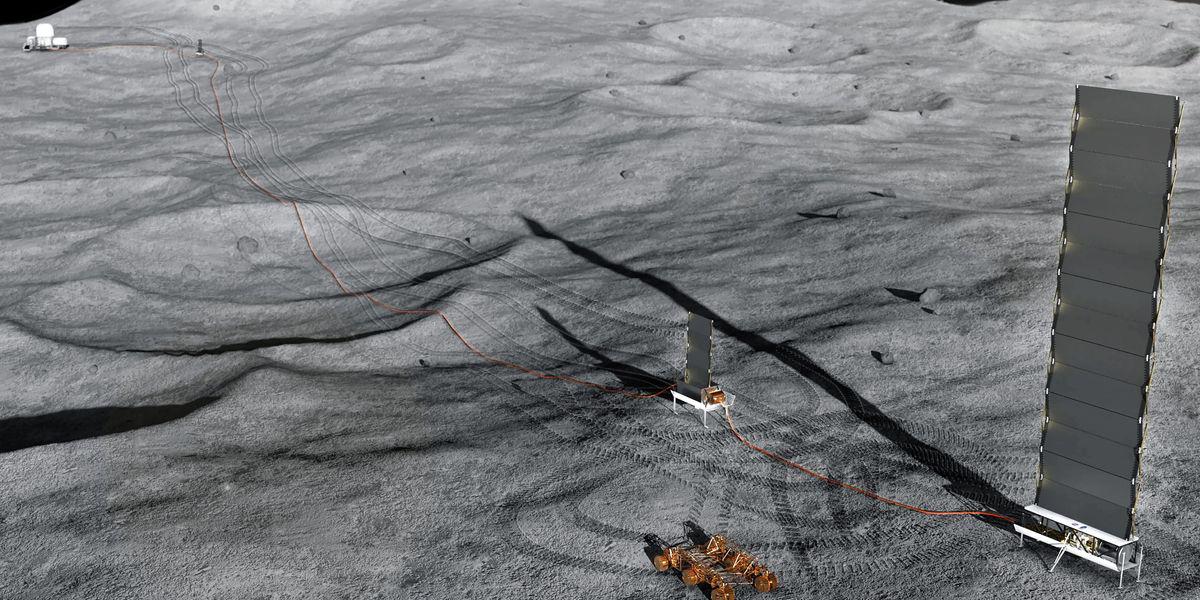
China, Russia, and U.S. Race to Develop Lunar Nuclear Reactors
https://spectrum.ieee.org/lunar-nuclear-reactor-nasa-moon

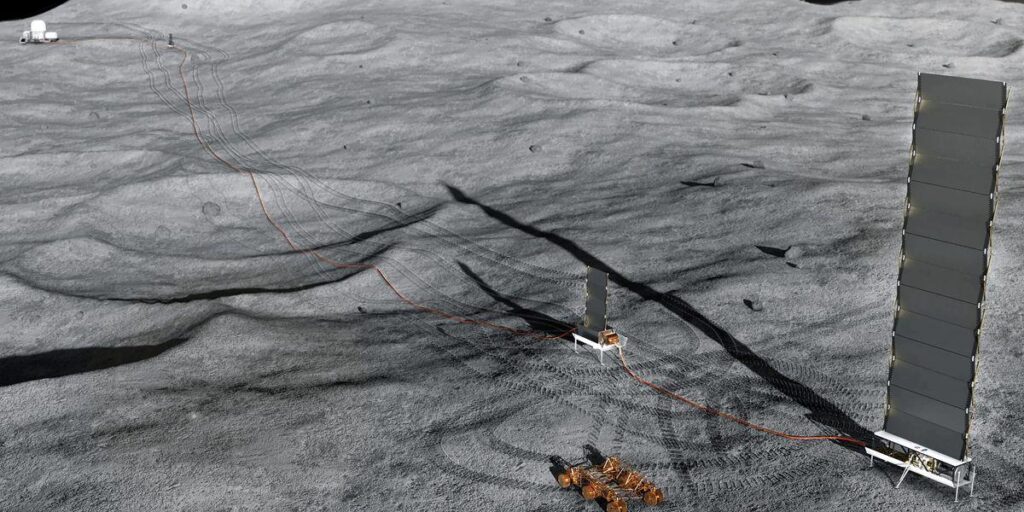
China, Russia, and U.S. Race to Develop Lunar Nuclear Reactors
https://spectrum.ieee.org/lunar-nuclear-reactor-nasa-moon
21 Comments
Isn’t a lunar nuclear reactor just a regular nuclear reactor with really big radiators and closed loop cooling?
I hope it’s based on thorium molten salt reactor technology. A LFTR.
[LFTR nuclear reactor](https://en.wikipedia.org/wiki/Liquid_fluoride_thorium_reactor)
the only thing the US is racing towards is the bottom
They should secretly install a second reactor as a backup.
im sure all those nasa cuts will only give the usa a competitive edge
We’re cutting research to develop cancer treatments but racing to develop lunar nuclear reactors so more people can go to the moon to develop cancer due to all the cosmic radiation they’re exposed to, in addition to what may come from a reactor. Makes total sense.
Pretty sure it won’t be the US that leads anything for a while
For all the reddit geniuses who keep saying “US is gonna lose because NASA cuts!!!!”, the cuts did not cut funding for exploration under NASA. Funding for Lunar and Mars missions is higher than 2025.
( 7,666.2b 2025 -> 8,312.9b in 2026 )
This doesn’t even count potential large players such as corporations like Blue Origin or SpaceX, or possibly even the Space Force in the future if tensions continue to rise with Russia/China.
I agree these NASA cuts are absolute aids, but contrary to Reddit belief, they are not gonna single handedly implode the entire US lunar program.
Source:
[https://www.nasa.gov/wp-content/uploads/2025/05/fy-2026-budget-technical-supplement-002.pdf](https://www.nasa.gov/wp-content/uploads/2025/05/fy-2026-budget-technical-supplement-002.pdf)
Is anyone actually developing lunar reactors, or are they just racing to announce that they hypothetically are? Cos it sounds more like the second one to me.
They better race to build a proper habitat and steady, regular supply line too, cause people are going to have to live there to work at, and maintain, a nuclear reactor.
People are so worried about racing to the moon again when we still haven’t solved problems here on earth since the last time we visited the moon. What a waste of time, precious non-renewables, and money.
How about nuclear reactors on Earth? You know, the place that actually needs clean energy.
Yeah because the country without a department of education that is vehemently antinuclear and antiscience is in the race XD
I love watching huge nations racing to throw away money like it was going out of style.
Like, what is the use case here?
What could go wrong?
Sigh
A lot.
A lot could go wrong.
So hear me out, **shouldn’t we do solar on the moon and avoid potentially ruining access to the moon forever?** I imagine radiation on the moon would spread and not go away for a very long time if any of them failed? Meanwhile we have a proven technology that has no risk that we could send as an alternative?
Would someone please explain to me why we need to power anything on the moon? Are they planning on charging batteries to bring back to earth or something?
Helium-3 for non-existent fusion reactors is a very silly reason to go to the Moon. Even considering hypothetical future reactors, helium-3 fusion is more difficult than the usual deuterium-tritium fusion. Furthermore, helium-3 is a byproduct of deuterium-deuterium fusion, and [the company](https://www.helionenergy.com/faq/) that claims to be working on a heliun-3 fusion reactor plans to breed all their helium-3 from deuterium-deuterium fusion.
Now, there are actual present uses for helium-3, for example [hyperpolarized MRI](https://en.wikipedia.org/wiki/Hyperpolarized_gas_MRI) and deep cryogenic cooling (e.g., for quantun computing). The supply of helium-3 is also very limited and well short of demand. However, the irony is that nuclear *fission* reactors on Earth could be used to produce more helium-3. We don’t have to go to the Moon and sift through crater-loads of regolith to recover the traces of helium-3 there.
The helium-3 we use comes from the natural radioactive decay of tritium (hydrogen-3), which is produced (mainly in certain) fission reactors. Some tritium is produced as an inherent byproduct of many fission reactor designs (e.g., deuterium in heavy water absorbing a neutron to become tritium), and some countries like Canada have even made use of that tritium. But the amount of tritium they collect is comparatively small.
The main source of tritium has been from inserting lithium-6 absorber rods into select reactors with the express purpose of producing and collecting tritium, and that primarily for making the fusion fuel for thermonuclear weapons. (Tritium itself also has other uses, particularly in medical imaging, as well as the fuel for experimental deuterium-tritium fusion reactors.) The lithium-6 absorbs neutrons and fissions to produce tritium and an alpha particle (a regular old helium helium-4 nucleus). Tritium decays into helium-3 with a half-life of 12.3 years, so the tritium in nuclear warheads must be regularly replaced and the helium-3 removed. With the post Cold War/START reduction in nukes, there has been a supply bottleneck, combined with recent demand growth from newer uses like quantum computing.
Currently, the only domestic US source of helium-3 is from tritium and nuclear warheads processed at the DOE’s Savannah River Site, with the only current source of that tritium being the TVA’s Watts Bar Nuclear Plant. (The other main global producer of tritium and helium-3 is and has long been the USSR/Russia…)
Collecting and producing more tritium could be done with most fission reactors. That would be (in technical terms, but maybe not politically) much simpler and cheaper than going to the Moon to get helium-3–which is only present in low concentrations of generally ~1-15 parts per billion by weight, locally up to 50 ppb. Even towards the higher end of concentrations, just matching US demand would require processing several hundred million kilograms of lunar regolith per year with near-100% efficiency.
I assume China will win. Trump won’t approve anything that isn’t powered by coal.
Because they’re so inexpensive to build in a vacuum, and they’ll be so useful in the future for …. something. Don’t worry, governments know what they’re doing!
Trust, no need to verify. 👍🇺🇸🤣
US? doesn’t Trump cut spending on space programs?