
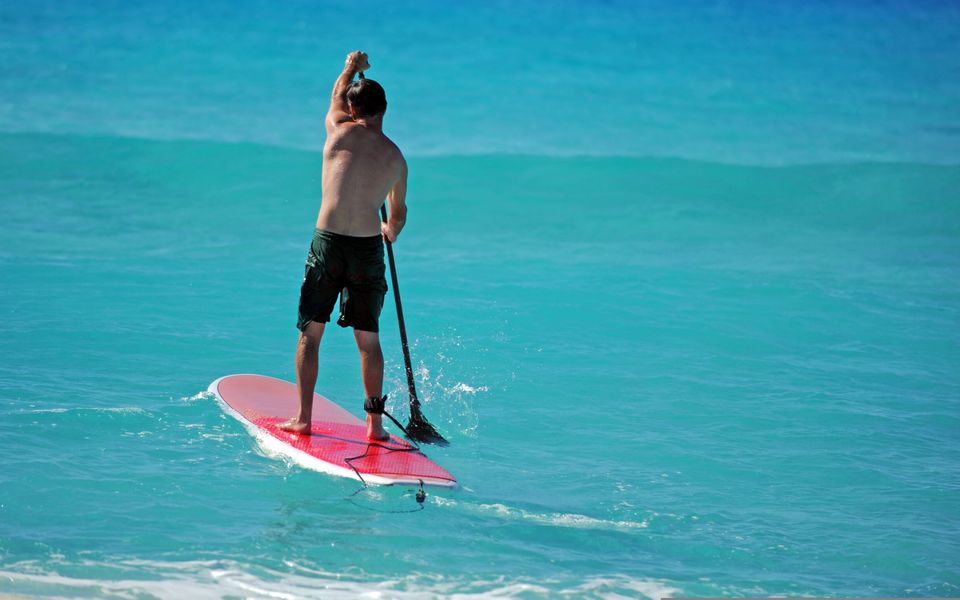
Greece’s coast guard and lifeguards are increasingly being called to assist stand-up paddleboard (SUP) users as the sport grows in popularity along the country’s beaches, officials said.
Rescue operations have taken place in recent months on the islands of Lefkada and Lemnos, in Xylokastro in the Peloponnese, and on the northern Halkidiki peninsula. On Lemnos, nine children were swept out to sea on paddleboards as winds reached 7-8 Beaufort. In Lefkada, two paddleboarders were rescued after sending a distress signal via the 112 emergency hotline.
The Hellenic Lifesaving Schools Association said it will propose next month that the shipping ministry introduce a certification system requiring swimmers to complete short courses at local clubs before using SUPs, citing a rise in incidents of people being carried away by currents.
Experts advise swimmers to use SUPs only at organized beaches, check weather conditions before heading out, supervise children closely and always wear a life jacket
Under existing port regulations, SUPs are classified as water sports and subject to the same rules as canoes or kayaks, said George Athanasiou, head of the Hellenic Canoe-Kayak, SUP and Surfing Federation. “The basic rule is that use is permitted up to 500 metres from the shore,” he said. “It is prohibited in rough weather, at night, or with more riders than the board allows. Users should also wear life jackets, which we rarely see.”
Marios Myronakis, president of the Hellenic Lifeguard Schools Association, said incidents have risen in recent years but none has been fatal, as boards can act as flotation devices. Since 2020, lifeguards have been equipped with boats and jet skis to assist the coast guard in emergencies.
Experts advise swimmers to use SUPs only at organized beaches, check weather conditions before heading out, supervise children closely and always wear a life jacket.