
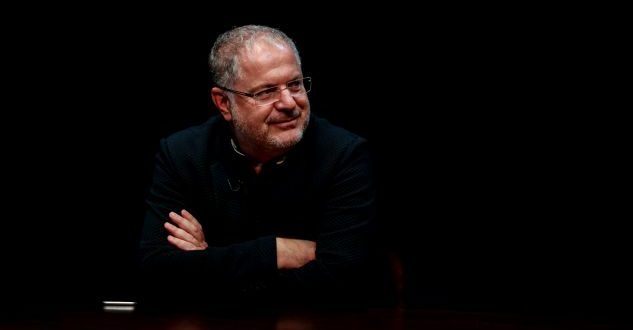
Artur Zheji, the friend who gave his word to Kosovo

Express newspaper
23/08/2025 19:55
Written by: BATON HAXHIU
I don’t want to write it like in memoriam, because Artur Zheji did not participate in my closing rituals.
He was a man who always opened windows and stories, even when they didn’t follow a straight line, but took strange turns. He was unique in his nationalism.
I first met him in Rome, in 1992, at the Radical Party congress.
We had been communicating by phone and the tired internet of the time for two years, but there we saw each other face to face.
The delegation from Kosovo was demanding a resolution on independence, at a time when no one could openly pronounce this word.
Zheji and Edi Rama wrote the text in Italian, and with the help of Marco Panella, the resolution became an official document.
It was the first time that the word “Kosovo independence” was stamped on an international congress.
Zheji was passionate about this issue, as a spiritual debt that came to him from his mother, Besa, and from Petro Zheji, who were well-known names in Kosovo.
During the war years, we spent hours and days in Macedonia, meeting with KLA leaders, with Arbër Xhaferi and Menduh Thaçi.
He did not see the war as a chronicler, but as a participant. He wrote with the passion of a warrior.
After the entry of NATO troops, he entered Kosovo with me, stayed for weeks and wrote down every burnt mark, every wound that Serbia had left.
There I saw more clearly who he was: a journalist who could not find peace, because he was making the drama of a people his own.
In Albania, he had a warm friendship with Fatos Nano and considered Rama a friend, without ever entering politics.
He has tried directing public television, broadcasting, and analysis. He has done many things with perseverance, but he has never found lasting peace.
He was gripped by a passion for writing, for conversation, for debate, and more than necessary, for food.
It was a desire that grew within him as an internal rhythm, perhaps to keep his passion for life alive.
But his body couldn’t keep up. He ignored his health, never bowed to the rules of diabetes, and so, in the end, he passed on to the next world.
Artur Zheji was a friend with sorrows and reconciliations, but never with anger. He always remained a gateway that introduced me to his Albania, a confessor of the Kosovo of the faith that his mother had taught him, and a friend who could not separate his passion from life.
Today, when I remember him, I don’t remember him in memoriam or a final farewell. He simply seems like a story that never ends. Because Zheji never accepted closure.