
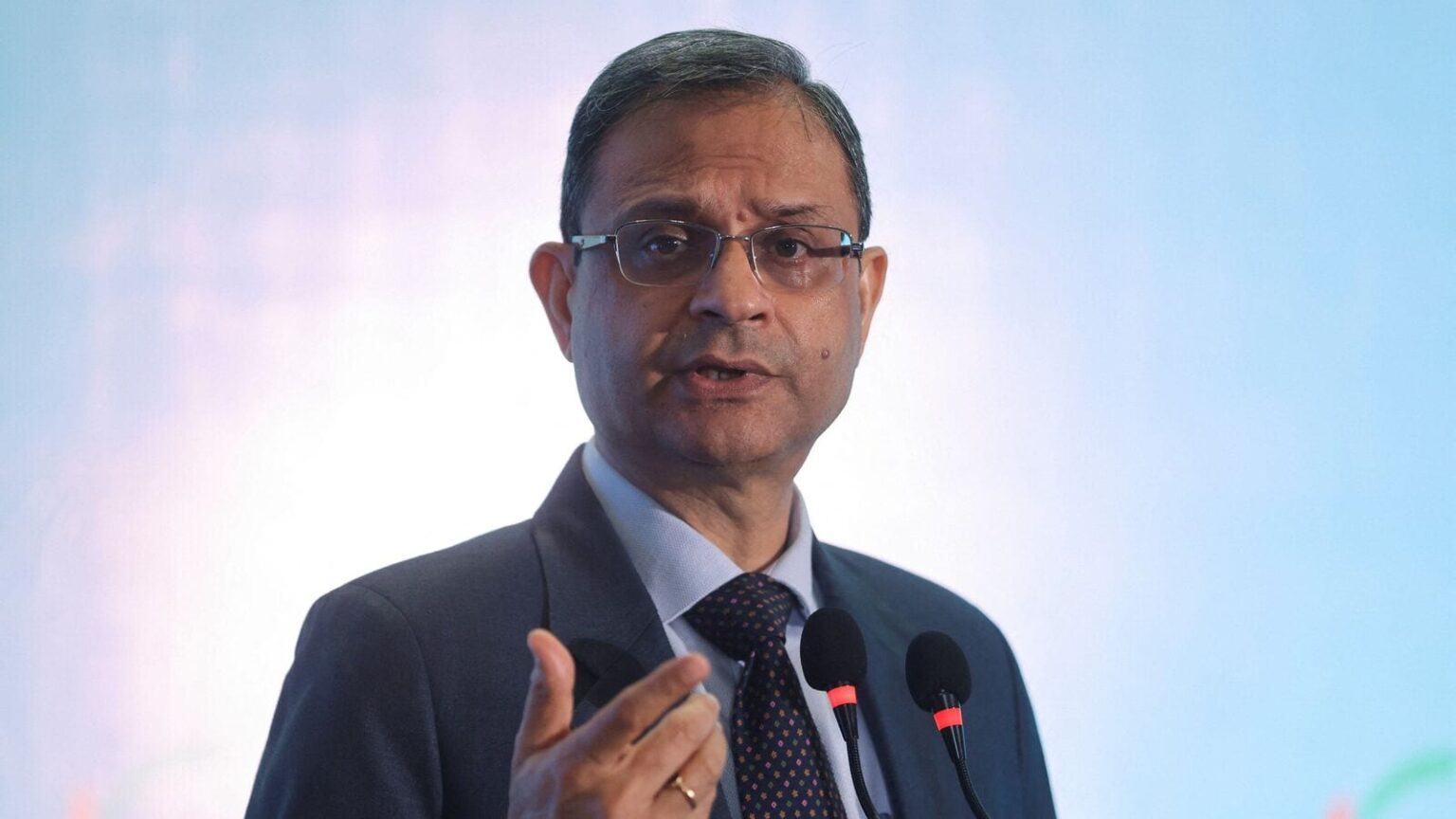
The US’s increased tariffs on Indian goods will only have a minimal impact, Reserve Bank of India governor Sanjay Malhotra said, emphasising the regulator has been “very proactive” in responding to economic challenges and will continue to support growth.
“Now there has been another additional 25% tariff, making it 50%. It’s yet to kick in, and we are hopeful that tariff negotiations will play out and the impact will be minimal,” Malhotra said at the FIBAC 2025 conference, adding that the central bank is prepared to cushion the economy from such external shocks.
While about 45% of Indian exports remain outside the US’s tariff net, the governor acknowledged that certain sectors are more vulnerable. “(On) the remaining 55% like gems and jewellery, textiles, emeralds, shrimps, and MSMEs (micro, small and medium enterprises), there will be potential impact,” he said.
US President Donald Trump’s tariffs on the world’s fifth-largest economy—one that he has often referred to as a ‘tariff king’—is one of the highest globally at 50%, including a proposed 25% levy for buying Russian oil.
Economists estimate India’s growth rate to decline 20-30 basis points in 2025-26 because of the tariffs.
Malhotra said the government has been working on structural reforms and fast-tracking free trade agreements, some of which have been in the pipeline for years.
On its part, RBI has pursued an easing cycle, lowering the repo rate by 100 basis points since February.
The central bank has provided ample liquidity to the banking sector and “whatever else is required” to support the growth of the economy, including sectors that could be significantly hurt by the tariffs, he added.
Malhotra cited the decline in inflation as a key reason for India’s macroeconomic resilience in recent years despite multiple shocks from food price spikes, volatile oil markets, global supply chain disruptions, and geopolitical tensions.
India’s retail inflation stood at 1.55% in July, the softest since June 2017. On 6 August, RBI’s monetary policy committee lowered its FY26 consumer price inflation projection to 3.1% from 3.7% while retaining its economic growth outlook for India at 6.5%.
Malhotra said proactive measures by RBI such as timely interest rate adjustments and liquidity management together with supply-side measures by the government prevented broad-based price pressures. Anchored inflation expectations, he added, have helped stable consumption patterns and improved investor confidence.
“The primary objective of monetary policy in terms of price stability has significantly contributed to the strength of India’s macroeconomic fundamentals,” he said. At the same time, the central bank has not lost sight of India’s growth objective, he added.
“For example, before covid, when growth was slowing, and in recent months, when inflation was benign and growth needed to be supported, the monetary policy committee reduced the policy repo rate. We will continue to conduct monetary policy with the primary objective of price stability keeping in view the objective of growth,” said Malhotra.
RBI on 21 August released a discussion paper on its inflation-targetting framework, seven months before the existing one comes up for renewal.