
![[OC] The most common unisex baby names in the United States since 1880](https://www.byteseu.com/wp-content/uploads/2025/08/f9t3vfs83flf1-1024x683.png "[OC] The most common unisex baby names in the United States since 1880")
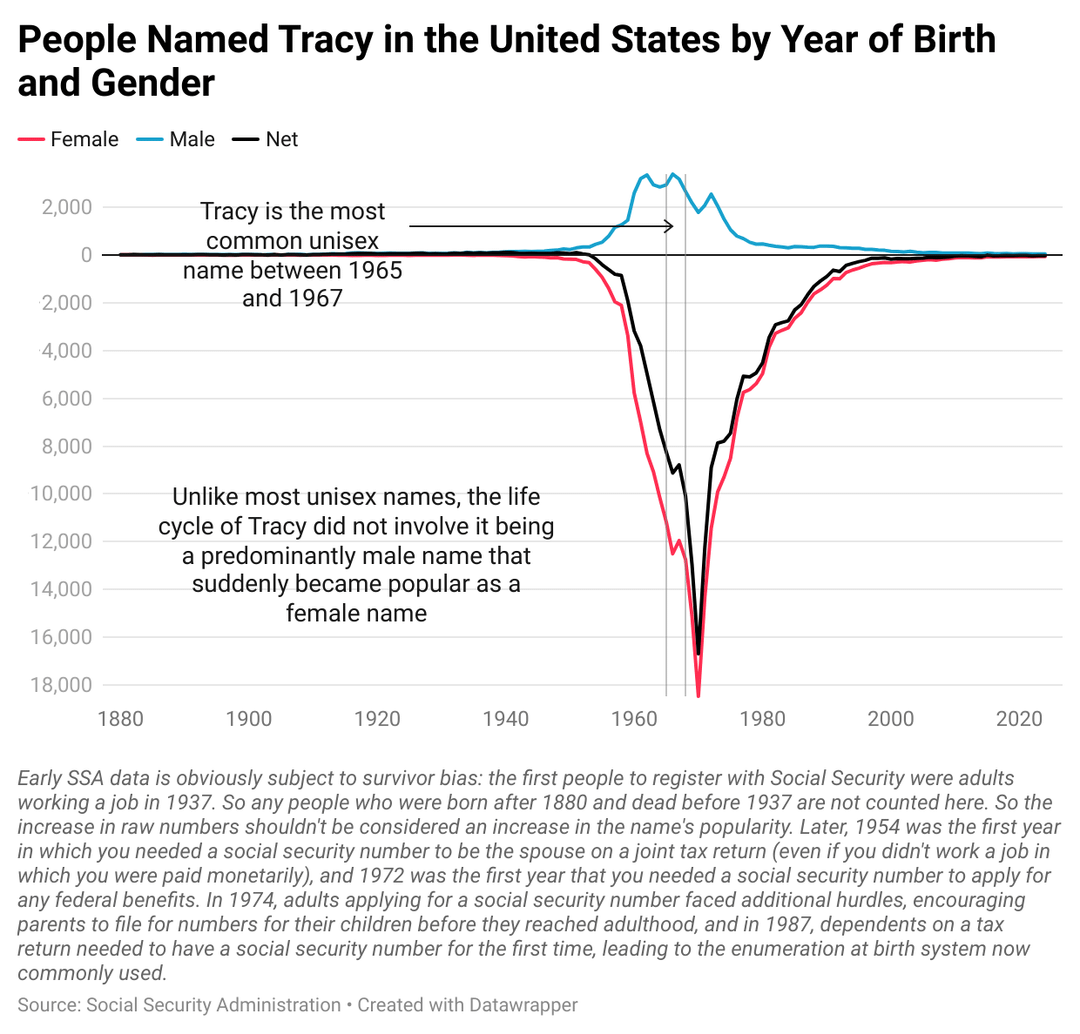
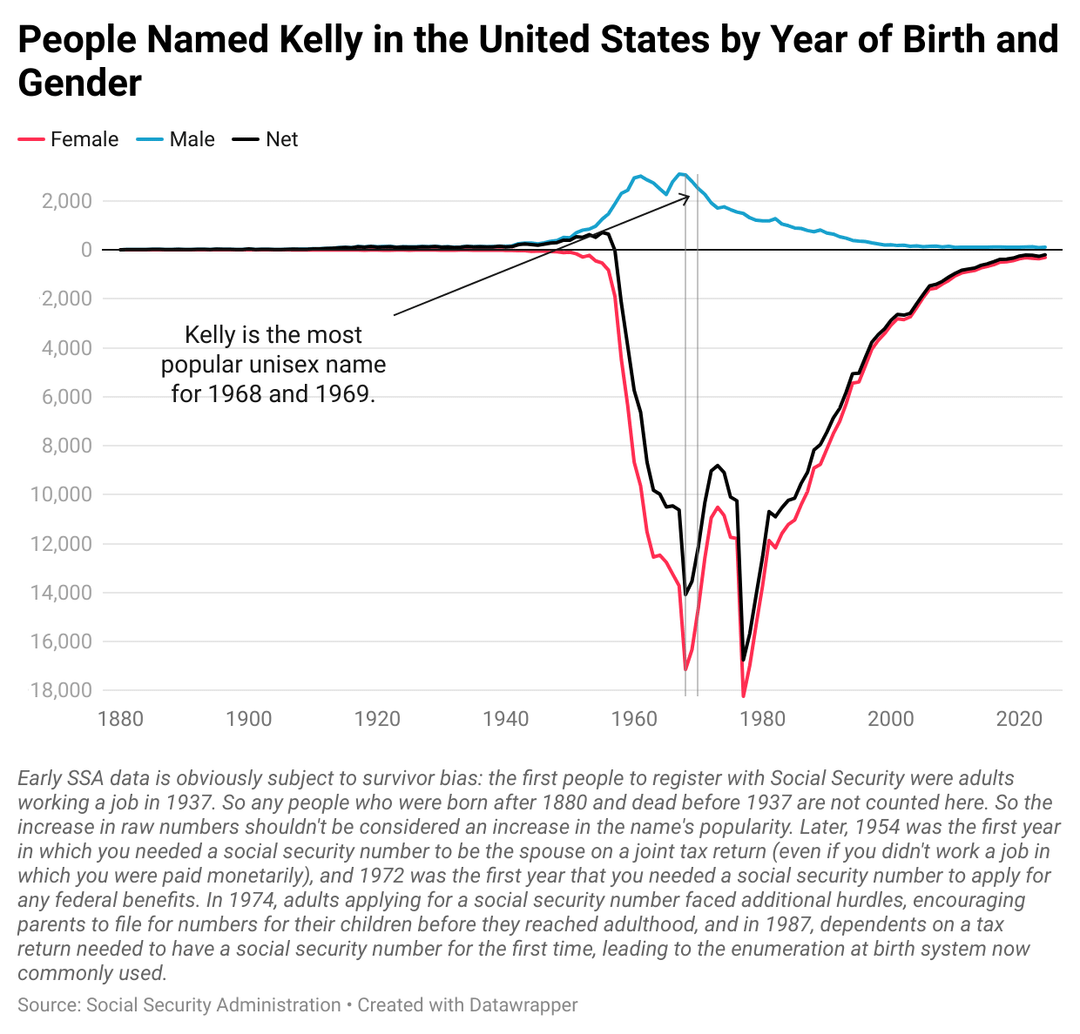
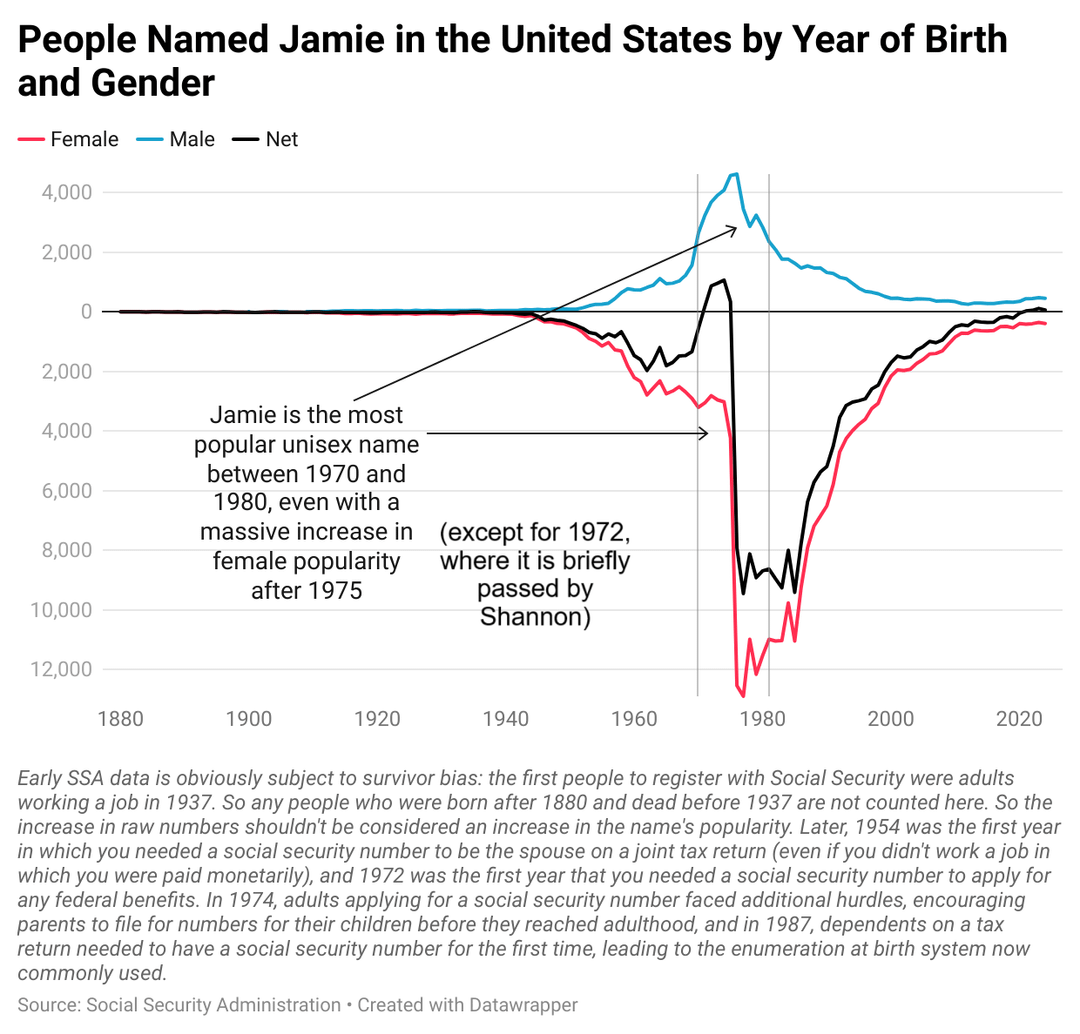
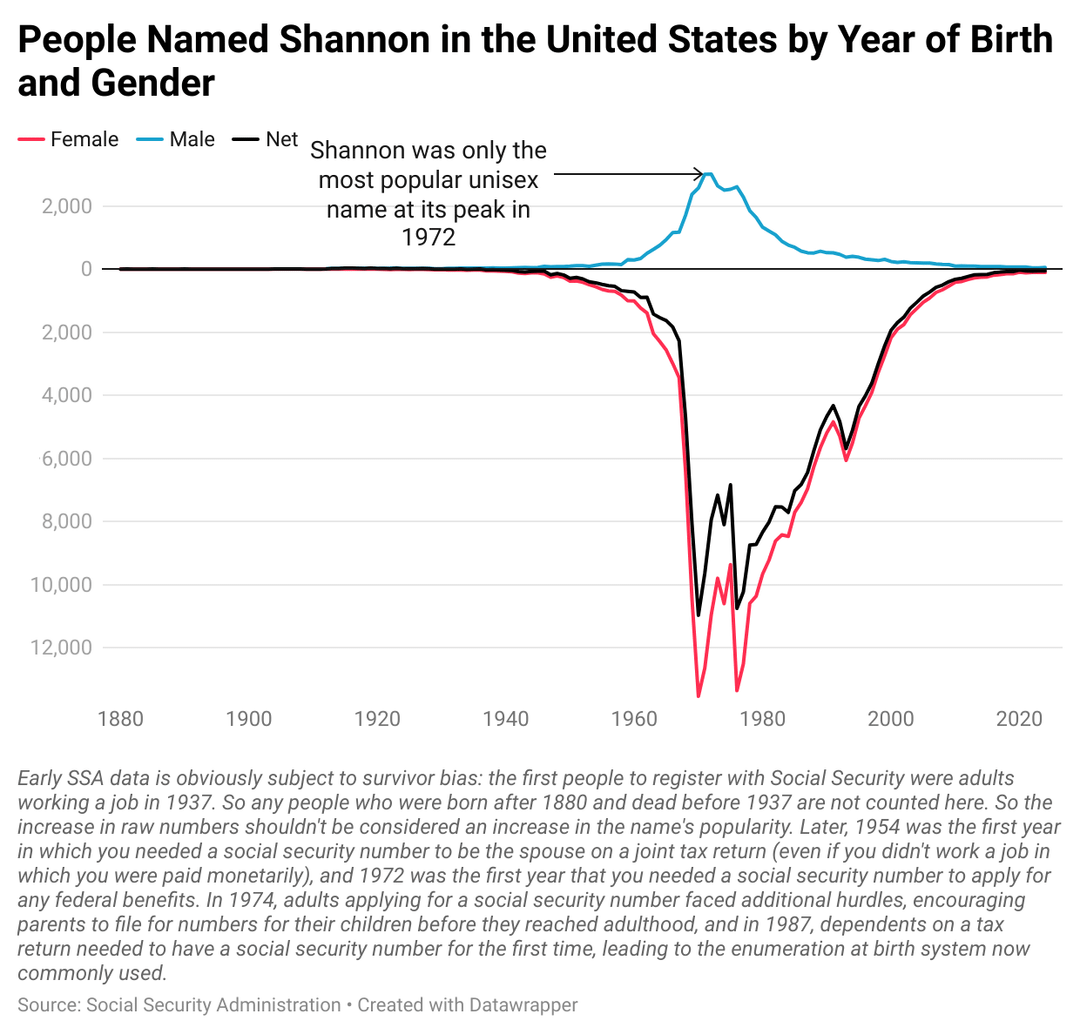
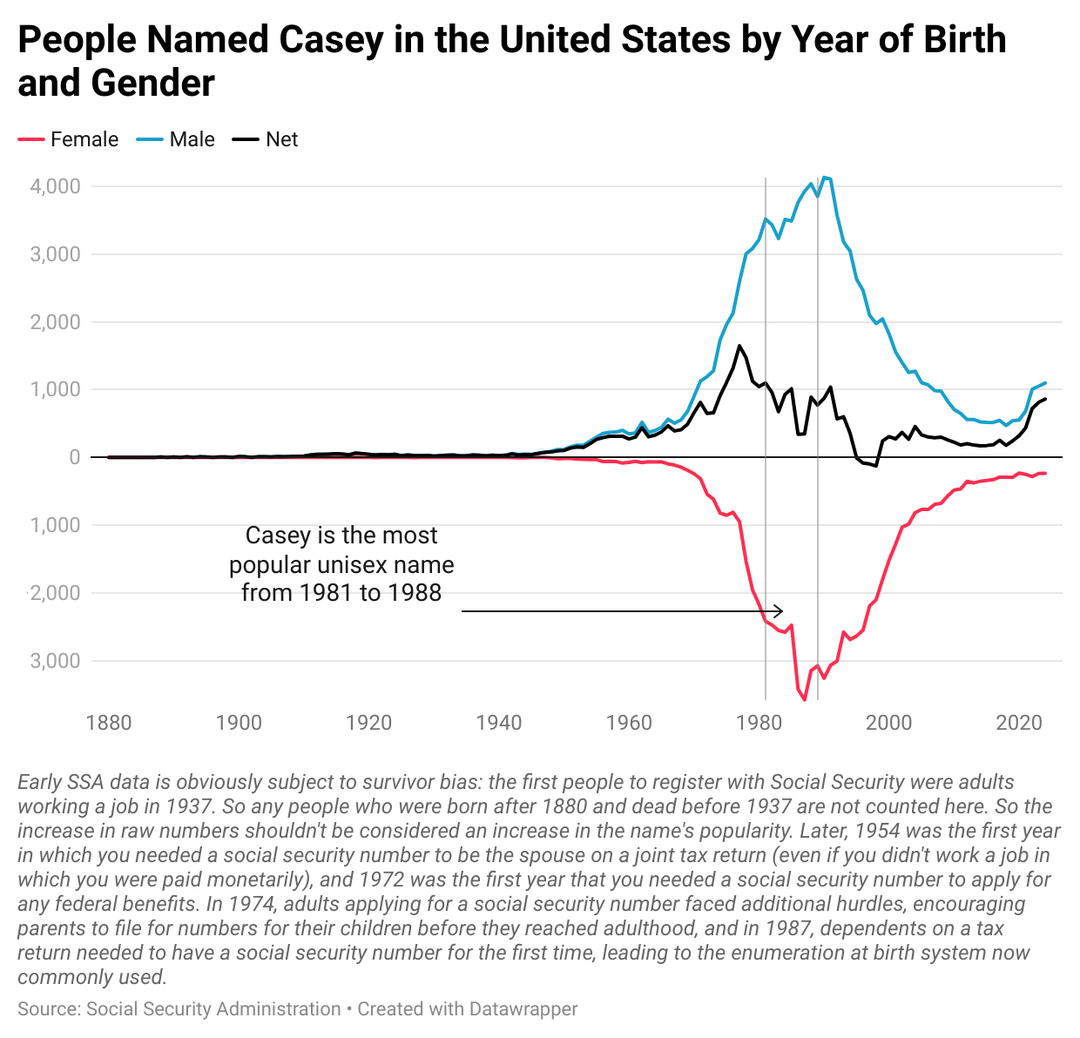
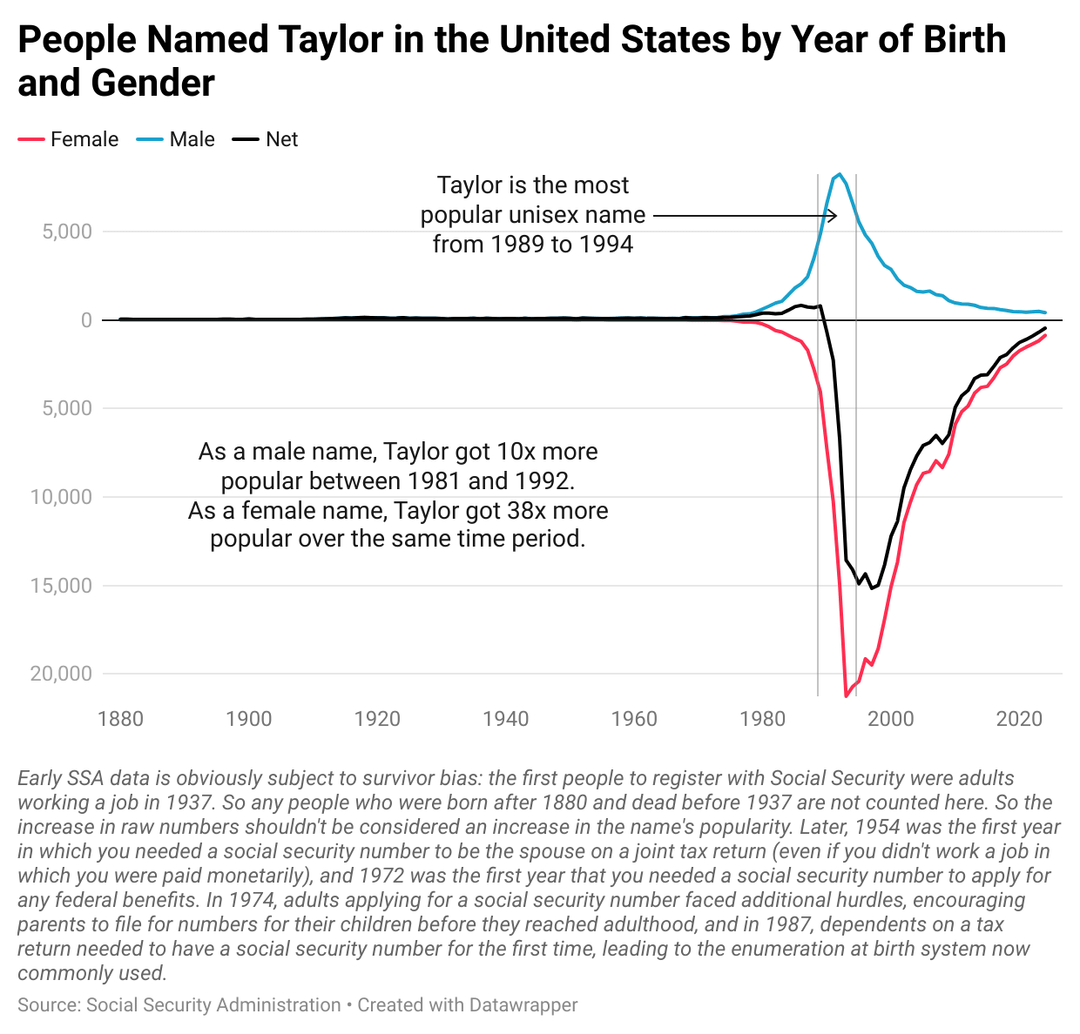
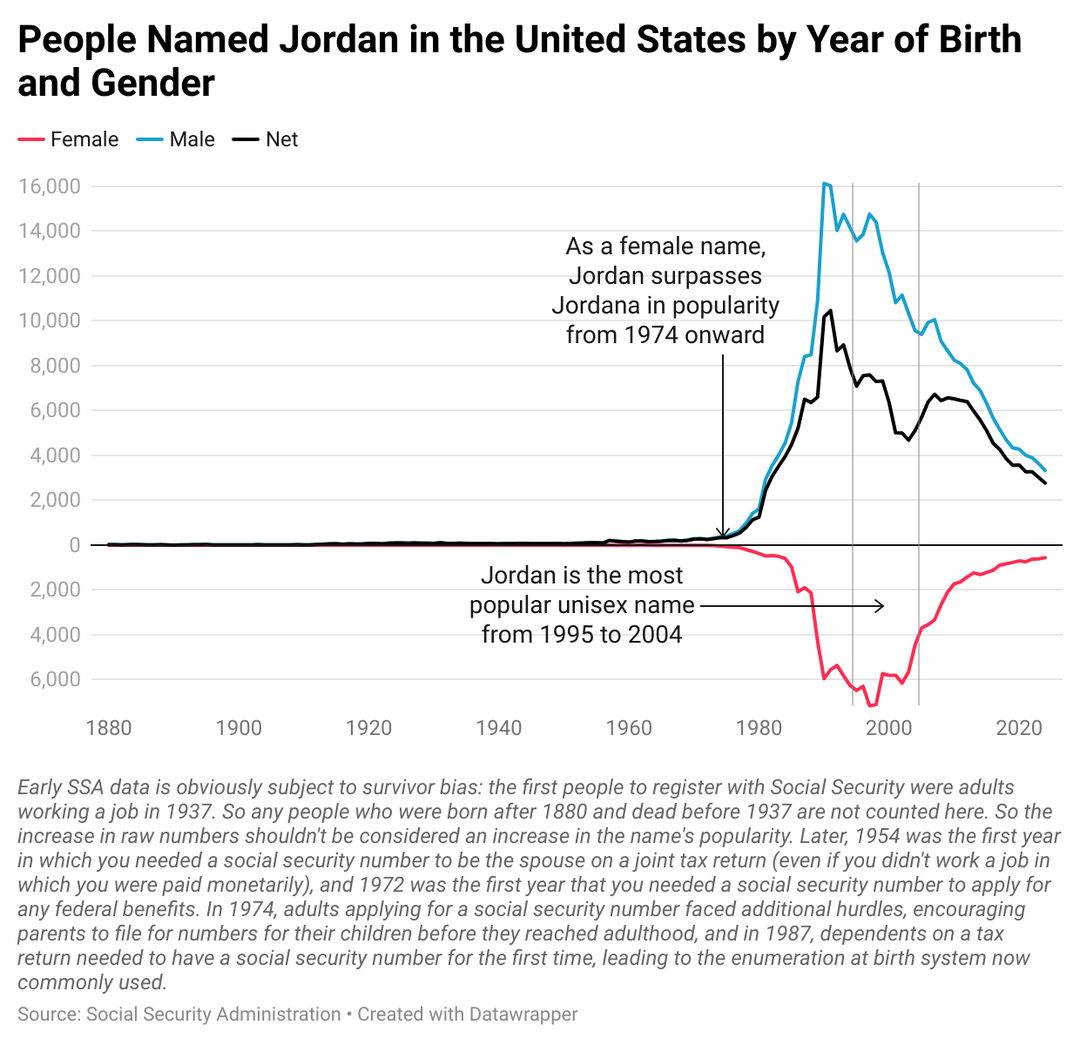
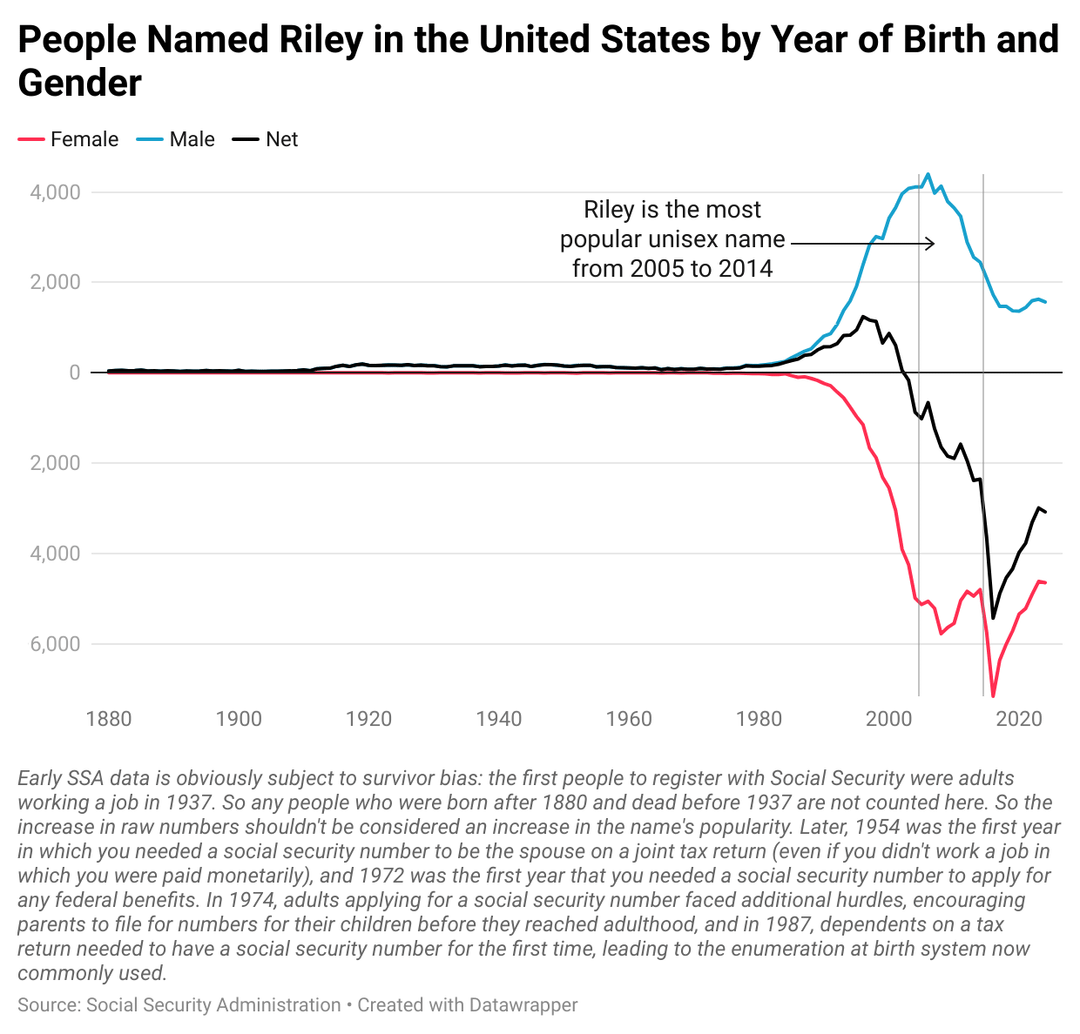
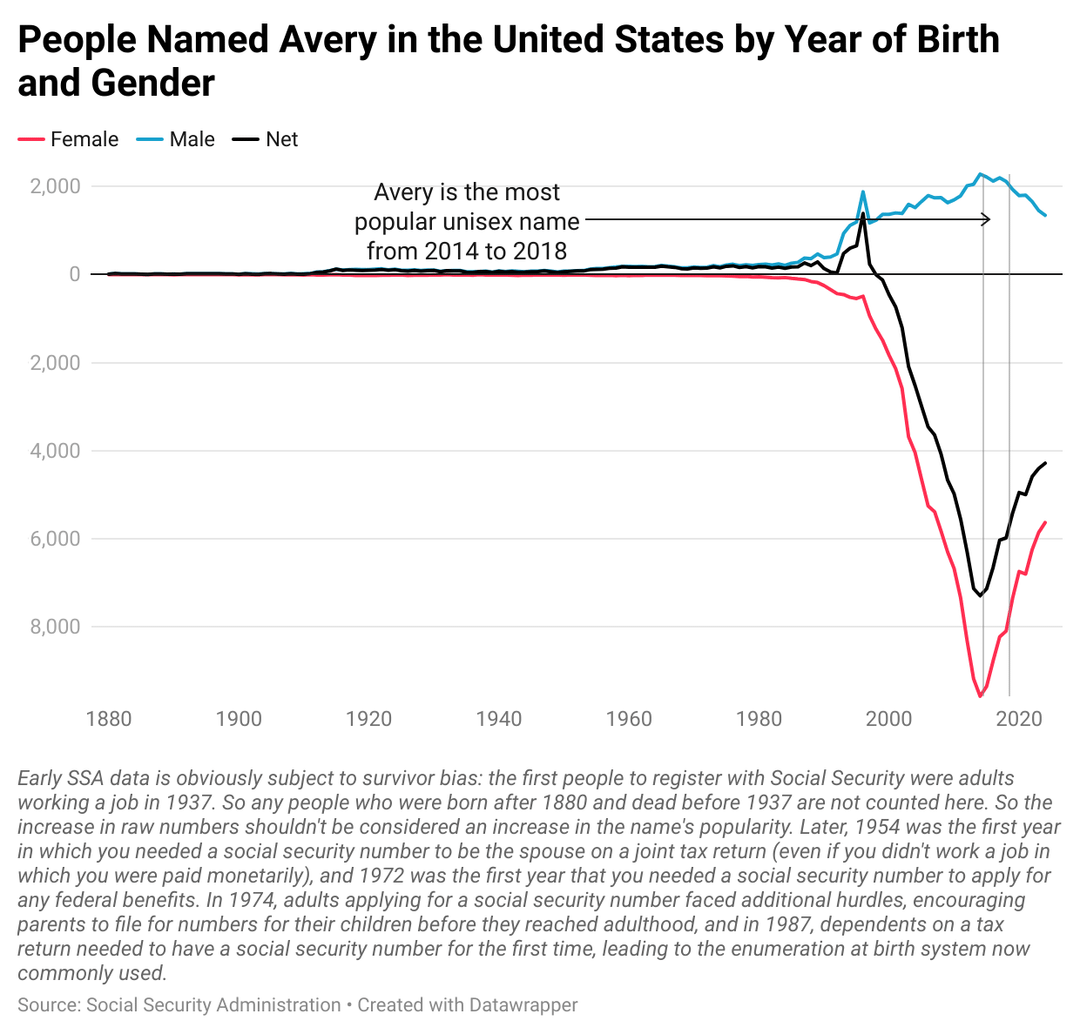
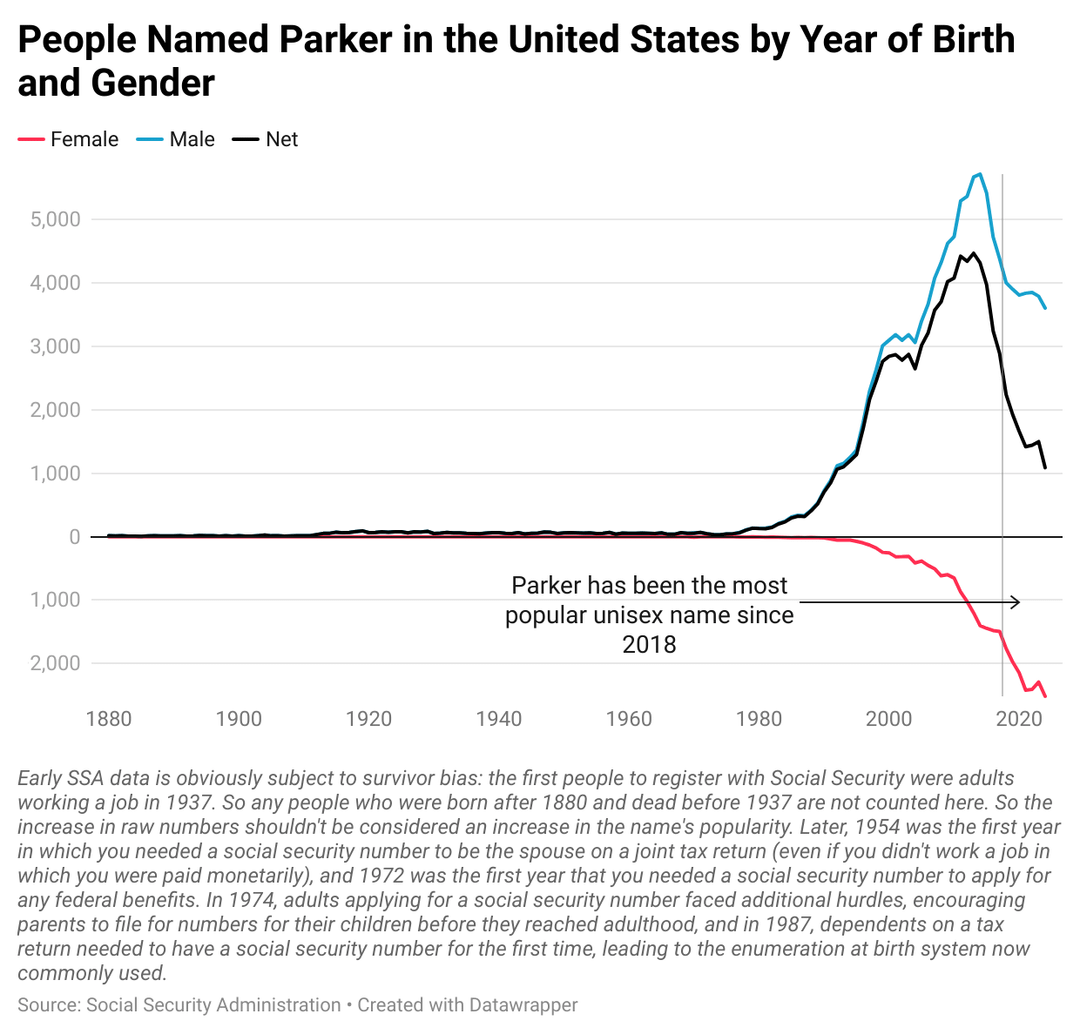
Data is from the Social Security Administration ( https://catalog.data.gov/dataset/baby-names-from-social-security-card-applications-national-data ), created in DataWrapper, with minor adjustments made manually in Microsoft Paint.
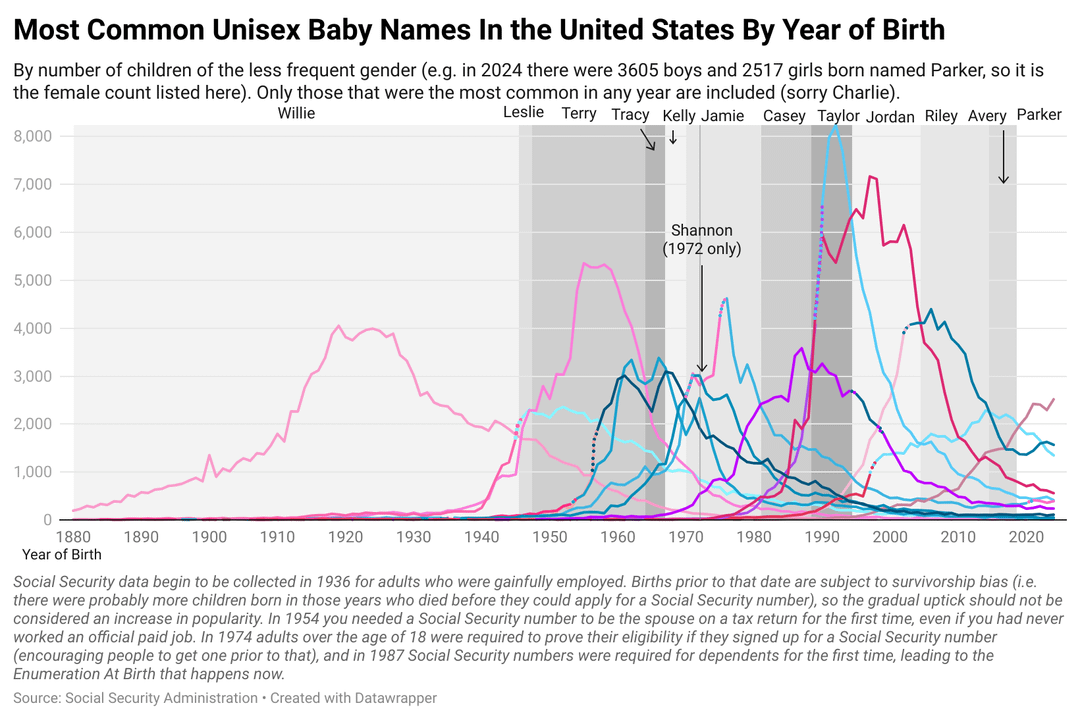
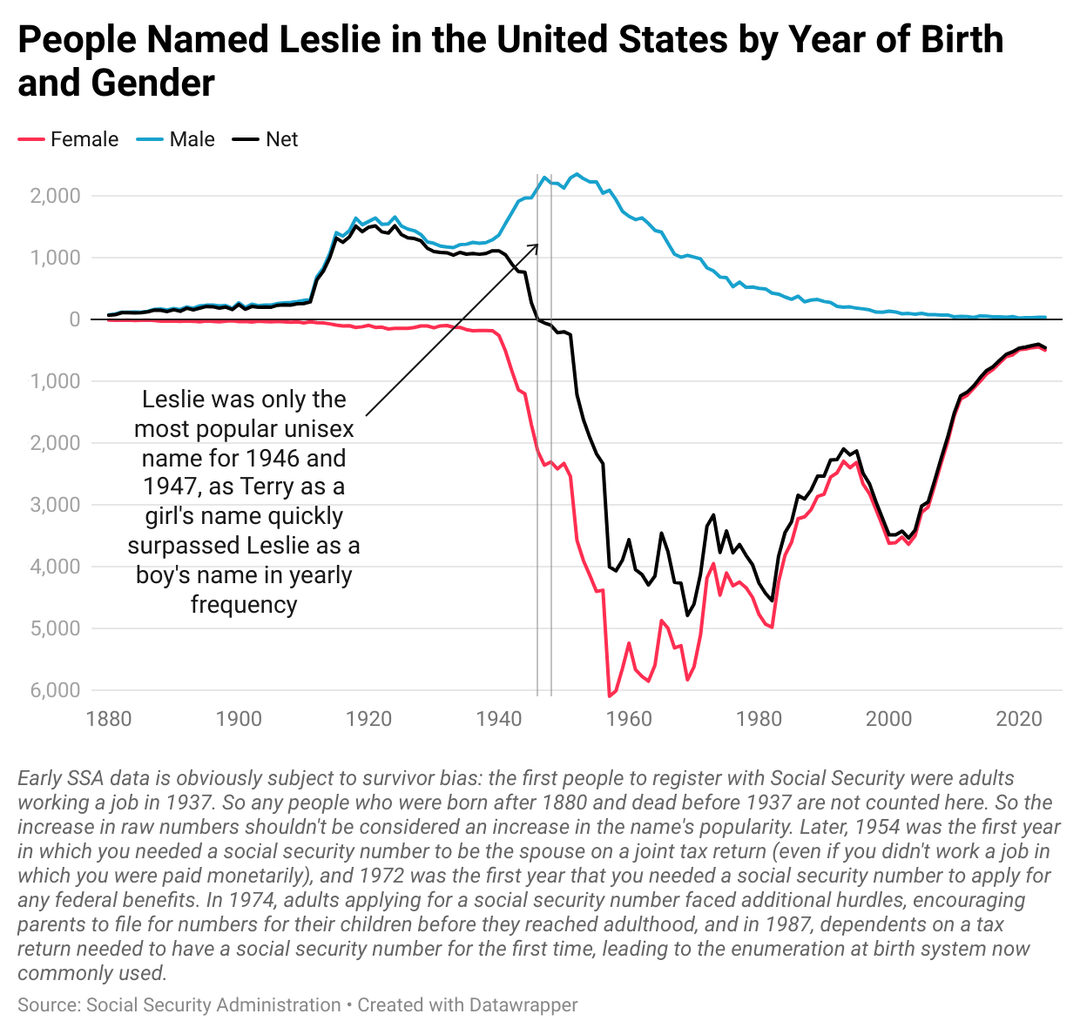
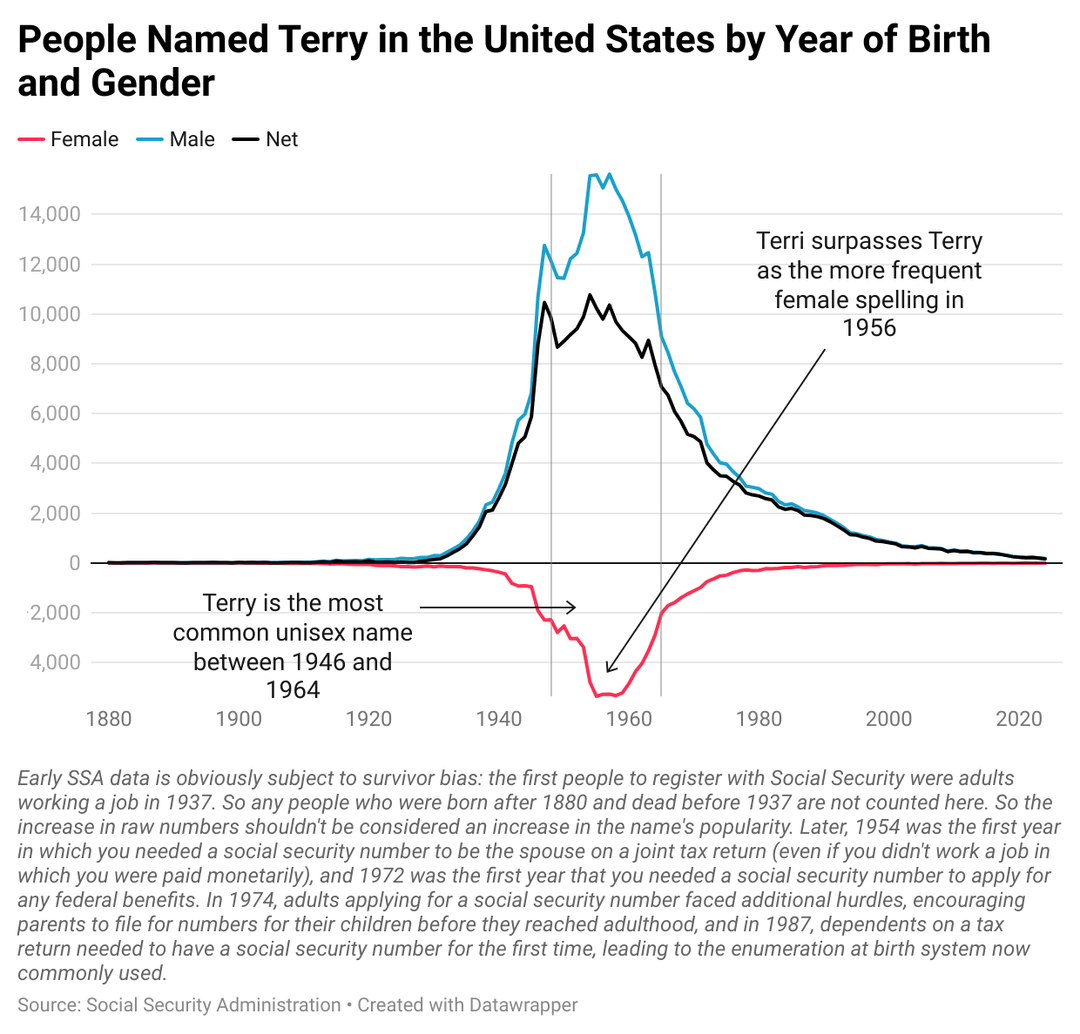
I had the question "What is the most common unisex name?" Upon finding the Social Security data, I had to figure out what I meant by "unisex name". Any unique name is clearly unisex, it's the collective knowledge of the gender of people with that name that gives it the perception of being male or female or unisex (ironically "Unique" is not a unique name, there were 86 girls and 50 boys named Unique in 2024). So I decided the most unisex name is the Being aware of other children with that name is what leads one to perceive it as being a male or female or unisex name. I knew a girl named Ryan in middle school, the year I was born there was 609 girls and 27847 boys given that name, and the substitute teacher definitely thought of it as a boy's name when she took attendance, because 600 girls in a year wasn't enough to change that perception. The most unisex name is the one which has the highest number in whichever the less frequent gender is. For 2024, that's Parker, which had 2517 girls and 3605 boys; those 2517 are the highest at that metric.
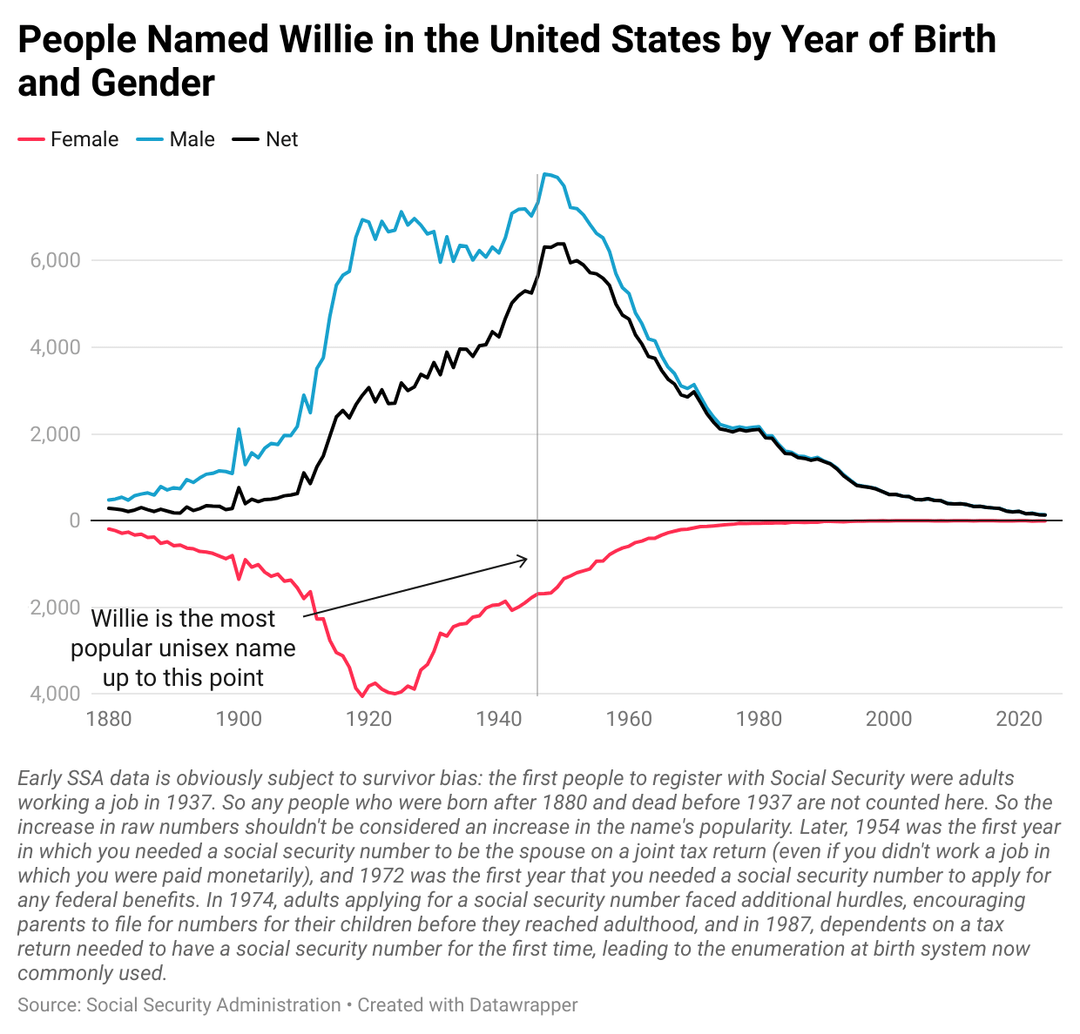
I had never heard of anyone whose legal name was Willie, so considering those earliest birth years were all Social Security applications filled out by adults, I thought maybe it represented their chosen name instead, and I was prepared to exclude it. But the 1940 and 1950 US censuses are freely available online, and a search of female Willies in the 1940 census who were less than 10 years old gave me 24,428 matches, most of which were from southern states. The Social Security Administration also has a version of the names split out by state (where known), and as an example, for girls born in 1920 with the name Willie, they find 623 in Georgia, 510 in Alabama, 499 in Texas, 432 in Mississippi, 357 in Tennessee, 255 in South Carolina, 238 in North Carolina, 206 Louisiana, 189 in Arkansas, 151 in Florida, 88 in Oklahoma, 77 in Virginia, 56 in Kentucky, 31 in Missouri, 17 in West Virginia, 15 in Illinois, and no more than 10 in any other state. So absent any other information, I am assuming that the data is accurate, and I've learned something about southern culture that I didn't know before.
Posted by ConsistentAmount4
10 Comments
reposting my text in a top level comment to make sure my submission doesn’t get deleted
Data is from the Social Security Administration ( [https://catalog.data.gov/dataset/baby-names-from-social-security-card-applications-national-data](https://catalog.data.gov/dataset/baby-names-from-social-security-card-applications-national-data) ), created in DataWrapper, with minor adjustments made manually in Microsoft Paint.
I had the question “What is the most common unisex name?” Upon finding the Social Security data, I had to figure out what I meant by “unisex name”. Any unique name is clearly unisex, it’s the collective knowledge of the gender of people with that name that gives it the perception of being male or female or unisex (ironically “Unique” is not a unique name, there were 86 girls and 50 boys named Unique in 2024). So I decided the most unisex name is the Being aware of other children with that name is what leads one to perceive it as being a male or female or unisex name. I knew a girl named Ryan in middle school, the year I was born there was 609 girls and 27847 boys given that name, and the substitute teacher definitely thought of it as a boy’s name when she took attendance, because 600 girls in a year wasn’t enough to change that perception. The most unisex name is the one which has the highest number in whichever the less frequent gender is. For 2024, that’s Parker, which had 2517 girls and 3605 boys; those 2517 are the highest at that metric.
I had never heard of anyone whose legal name was Willie, so considering those earliest birth years were all Social Security applications filled out by adults, I thought maybe it represented their chosen name instead, and I was prepared to exclude it. But the 1940 and 1950 US censuses are freely available online, and a search of female Willies in the 1940 census who were less than 10 years old gave me 24,428 matches, most of which were from southern states. The Social Security Administration also has a version of the names split out by state (where known), and as an example, for girls born in 1920 with the name Willie, they find 623 in Georgia, 510 in Alabama, 499 in Texas, 432 in Mississippi, 357 in Tennessee, 255 in South Carolina, 238 in North Carolina, 206 Louisiana, 189 in Arkansas, 151 in Florida, 88 in Oklahoma, 77 in Virginia, 56 in Kentucky, 31 in Missouri, 17 in West Virginia, 15 in Illinois, and no more than 10 in any other state. So absent any other information, I am assuming that the data is accurate, and I’ve learned something about southern culture that I didn’t know before.
My main take away is that Casey is the most evenly gendered popular unisex name. You could say it’s the most unisex name
They all started as boys names then became girls names.
I don’t think I’ve ever even heard of a woman named Willie.
Great data! For a second I thought I was in r/namenerds
Just a full on descent into last names
I wonder if it would look any different if the data was normalized using the total number of births in that year?
I wonder if this is a real trend or just something in these examples, but it looks like there’s a trend for the name to be popular for boys and then girls, after which it gets less popular for boys. It certainly looks like most of these unisex names are more popular for girls than boys at their peaks.
OP, does that hold up across the dataset or a I just seeing stuff?
Can confirm that Jamie was the most popular unisex baby name for my age group.
I think you should use year as the Y axis for the individual graphs. A lot of population demographics charts do that. It feels more intuitive to me.