
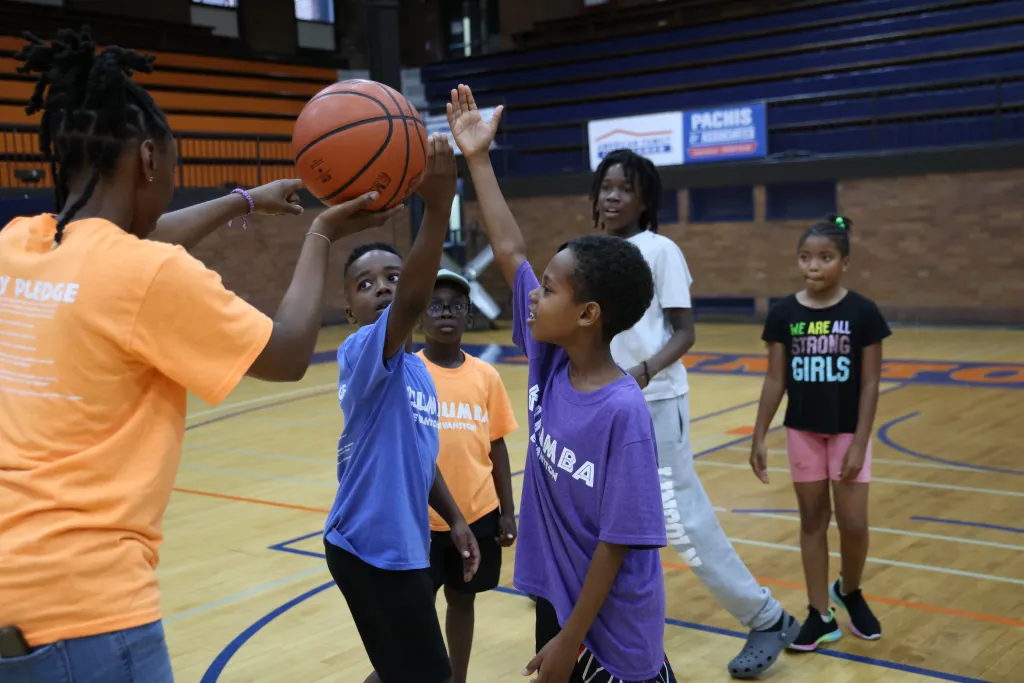
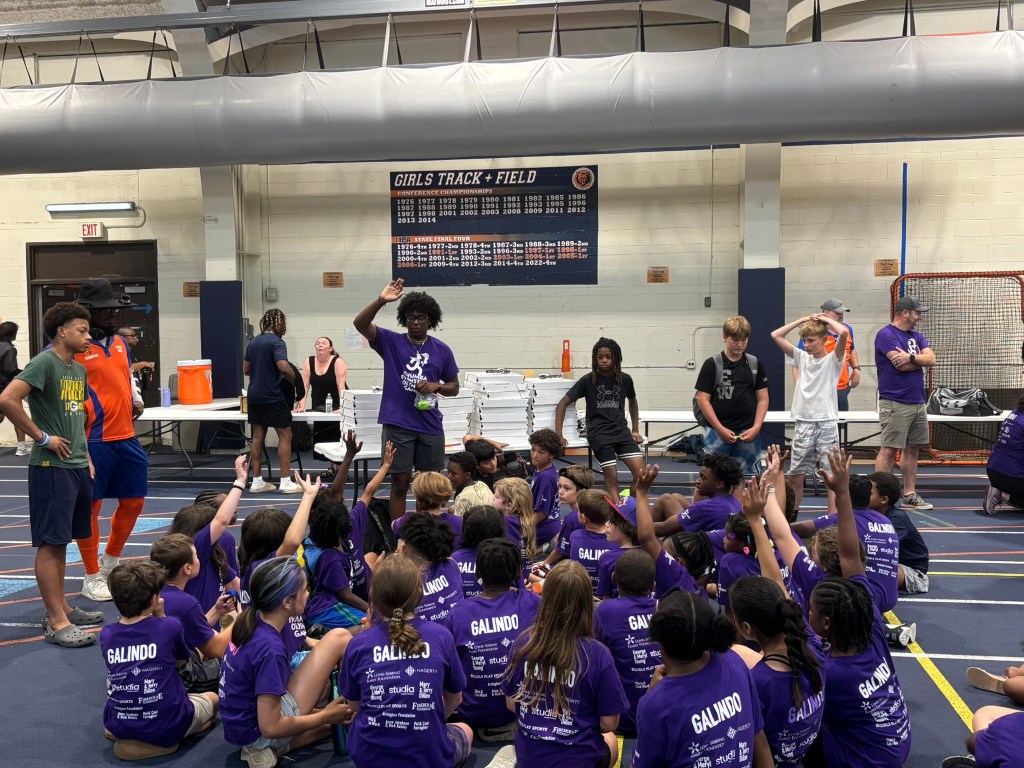
 A volunteer leader asks the Galindo Knights “how many of you had never played flag football before?” during the Kuumba Olympics Credit: Alexis Rogers
Coaching youth sports is not an easy task. It’s even more complicated when your own kid is on the team.
With the fall season kicking off soon, some local youth sports coaches offered their insights and advice for prospective coaches. Here’s what they had to say.
Christa Solotorovsky: “keep it short and sweet”
Evanston mom Christa Solotorovsky played basketball growing up and began coaching while in high school. She returned to the court to coach her kids’ 4th and 5th grade basketball teams at Evanston/Skokie School District 65 schools and in local Catholic schools as well.
“I think it’s good to not assume that kids know more than they do at that age,” she said.
She recommends starting with the basics and focusing on the positives and the effort. She noted that there’s often a large skills gap among young players, so it’s important to find ways to make the sport enjoyable for everyone.
Some ways Solotorovsky engages the whole team is through scrimmages, especially when short attention spans make drills difficult.
“Keep it short and sweet,” she said. “You really learn most from scrimmaging anyway.”
Solotorovsky said she’s seen the positive impact of her coaching: Last season, every kid made a bucket by the end of the season. The more experienced players also got better at passing to the less experienced players when the team was up in a game.
“Getting everyone involved was kind of the most rewarding,” she said.
Solotorovsky noted that youth sports today have become expensive, especially travel teams. That’s why volunteers like her are so important, she said. Organizations like the American Youth Soccer Organization (AYSO) rely on volunteers to keep sports affordable. She encourages parents to volunteer their time when they can to ensure that every kid can continue to play sports.
Mike Fowler: “Don’t just focus on winning”
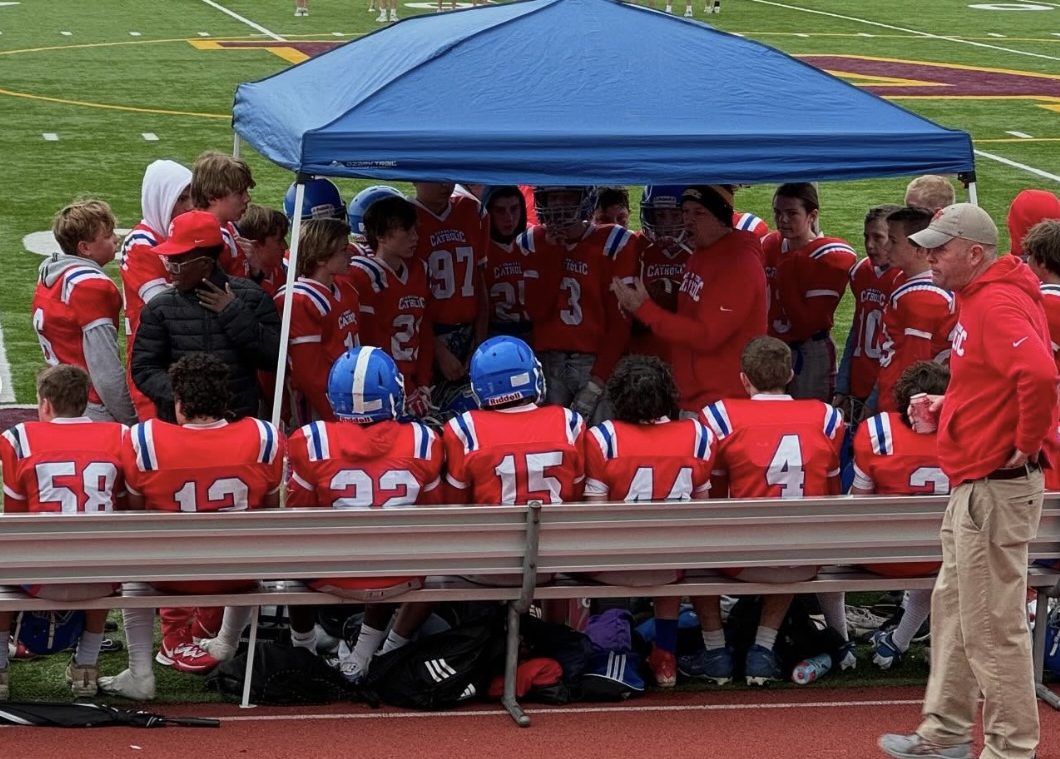 Mike Fowler via Evanston Catholic Instagram
Mike Fowler, director of Evanston Catholic Football, said his biggest advice for prospective coaches is to focus on the values that can be gained from the sport.
“Build a good framework where the team feels like they’re family and they’re all working together,” Fowler said. “Don’t just focus on winning being the only thing.”
Fowler has coached youth football since 1998. He runs the Evanston Catholic Football program across St. Athanasius School, the Academy at St. Joan of Arc and Pope John XXIII School.
Fowler said instilling a love of teamwork is key.
“One of the things we say for the parents at the beginning of the year is: ‘We know that all these kids are probably not going to be football players in high school, but our goal is to instill a love of team sports,’” Fowler said.
One way Fowler does this is through team bonding. Every Thursday night during the season, the team has dinner together where parents volunteer to bring food, he said. The goal is to instill in the kids a sense of family among their teammates.
Fowler has coached his son and daughter, who both played tackle football. He said it’s been a great experience to see them grow through sports.
“I do my best when we’re out on the football field, to be their coach, their mentor, and not be their dad,” Fowler said.
Joey Waldorf: “This isn’t just about the sport”
Joey Waldorf, co-head coach of NASA Wildcat Aquatics Swim Club (WILD), has been coaching youth swim programs for over 10 years. He oversees the 12 and under age groups and helps out with the high schoolers in the competitive age-group swim team based out of Northwestern’s Norris Aquatics Center.
Waldorf said one of the greatest rewards of coaching youth swimming is getting to see kids’ progress in and out of the pool.
“This isn’t just about the sport,” Waldorf said. “You’re helping grow and develop people.”
Waldorf said that at ages 12 and 13, there’s a lot of exploration as kids figure out what works for them and what sport or activity to focus on. WILD tries to take a holistic approach with young swimmers.
“We want them to be well-rounded people,” Waldorf said. “So if they’re doing music, if they’re doing theater, if they’re doing a second sport, we want them to be enjoying and experiencing those things and figuring out, ‘What are the things that make me me and bring meaning to my life?’”
Like many sports, swimming requires a big commitment if you go all in. Waldorf said it’s important to help kids figure out what level of commitment they want for themselves and not force it upon them.
He added that parents often have greater expectations for their kids than the kids themselves. When it comes to moving up groups, Waldorf said it can be difficult for parents to see their kids’ friends moving up while they do not. Unlike other sports, swimming is very individualized and kids tend to move up at their own pace. “We’re not just taking age or times into consideration,” he said. “We’re trying to consider them as a whole athlete.”
For new coaches, Waldorf’s advice is to make the sport fun and accessible and make yourself available for athletes and families to ensure they feel seen and heard.
Raj Jain: “Communicate with parents”
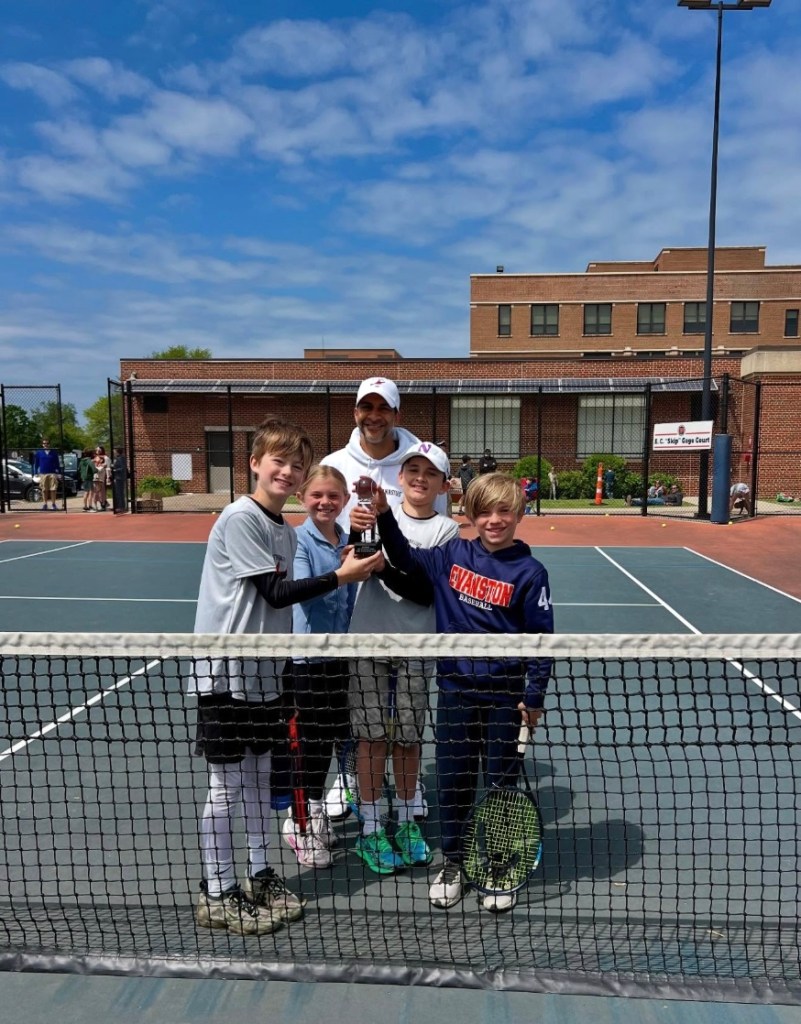 Photo via Saint Athanasius Instagram
Evanston resident and physician Raj Jain has coached his kids’ tennis, basketball and soccer teams for local recreation leagues and schools. Last year, he coached basketball and tennis at St. Athanasius School.
Like Fowler, Jain tries to separate his roles as a father and a coach. That’s why he usually defers to another coach when his kids need feedback.
“I would advise any parent who wants to coach a team with their own kid to make sure that there’s another parent who’s also going to be coaching with them,” he said.
Just as Jain tries to keep parenting out of his coaching, he said it’s important to keep coaching separate from parenting. He advises parent coaches to not talk about the sport with their kids at other times in the day so they don’t become frustrated and lose enjoyment with the sport.
Another big part of coaching youth sports is communicating with parents. For Jain, transparency is key.
“Learning how to manage parent expectations is a really important skill, and thinking about how to communicate with parents ahead of activities, ahead of games so that they don’t get upset with you when their child maybe doesn’t get as much playing time as they would expect,” he said.
Jain said it’s important for coaches to be up front with parents about their expectations and how playing time is divided throughout the season.
While coaching youth sports comes with its challenges, it’s also very rewarding. Jain said it’s been gratifying to see kids make progress throughout the season, especially those who struggled at first.
“And then you see that smile on their face,” he said. “That’s probably the greatest reward you can have as a coach.”
Related Stories