
Tista’ taqra bil-
Malti.
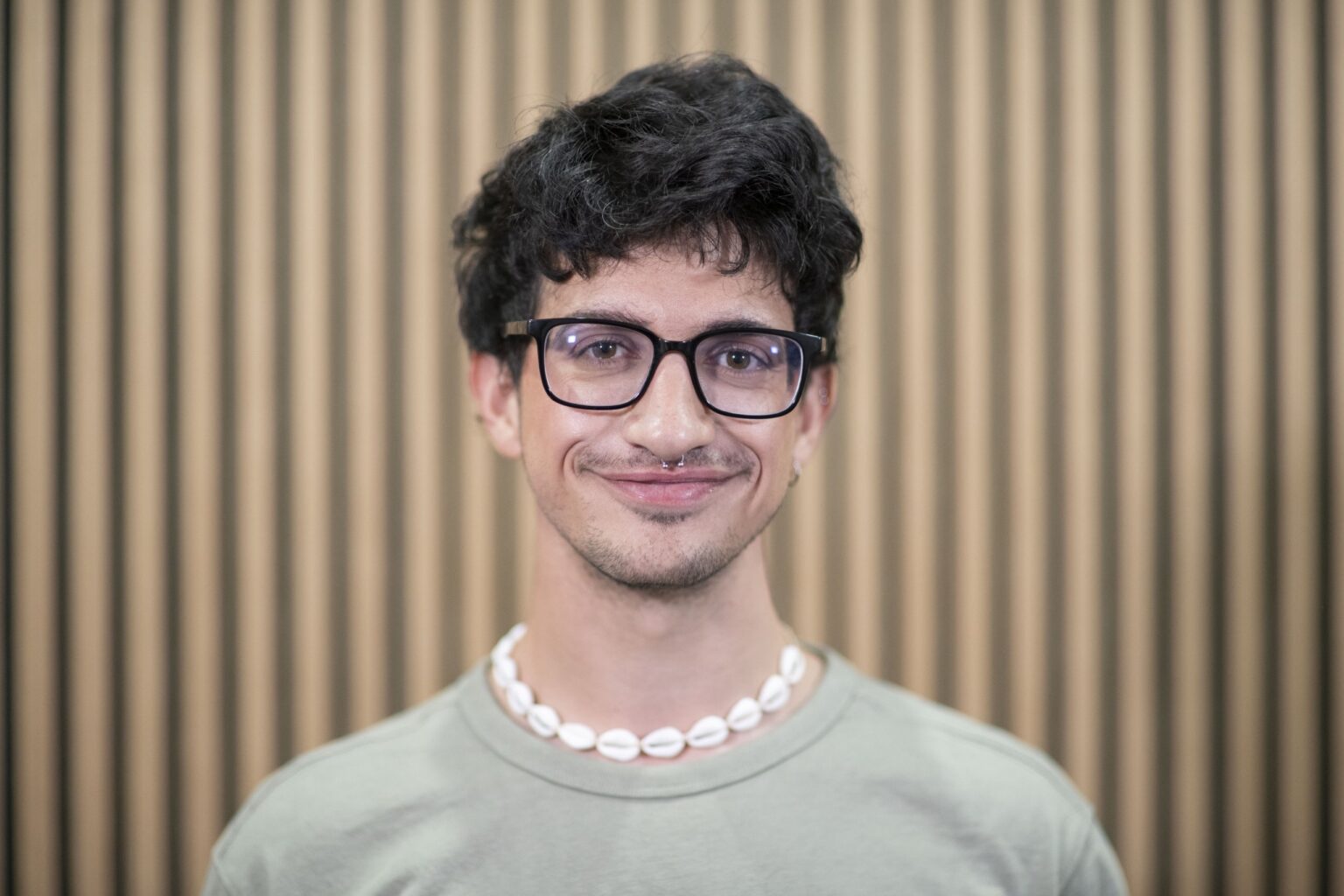
Kurt Gabriel Meli, a creator gaining popularity thanks to educational content about the Maltese language posted to his social media, argued that if Maltese were do die, it would have done so a long time ago since it managed to survive under different colonisers.
However, he stressed that its continued existence under colonising structures does not mean that people should not make an effort to use it in their everyday lives.
Meli, who works as a freelance interpreter with the EU institutions, is known as Kurt Rumbajsa on TikTok and Instagram, where he posts short videos with a humorous and educational spin.
His content also focuses on current events, as seen in a recent video he posted in which he explained why the PL and PN use ‘Mexxej’ and ‘Kap’ respectively to refer to the same position.
In an interview with Newsbook Malta, Meli acknowledged that throughout history, Maltese was never the language of the affluent and the problems it faces in an increasingly globalised world.
However, he says that he does not feel that the Maltese community should resort to “saving” their language or that it is “dying out”.
“I grew up with this language, I use it to speak to my friends and family. We feel the urgency to save in because of globalisation, but at the same time Malta is a microcosm, there are many people based here for whom Maltese is their world”, Meli argued.
At the same time, he stressed the need to be more open with our language as he knows many people hailing from different communities that are interested in Maltese, meaning that it should be much more accessible.
Language policy is considered to be essential in strengthening Maltese and making sure it spreads, a topic that Newsbook Malta reported a few months ago.
A national conference on the Maltese language had revealed an urgent need for a comprehensive language policy, with experts warning that political inaction threatens the future of the nation’s linguistic heritage.
Language policy was defined as “official decisions by the Government in the form of laws, regulations or guidelines that regulate the legal status of the language, promote and cultivate the linguistic skills of speakers.” He emphasised that such policies must evolve alongside societal changes, as “everything is reflected in the language.”
When asked about his opinion about language policy, Meli expressed his agreement but said he was disappointed with the country’s tendency towards reacting instead of immediately being proactive.
He emphasised that small aspects like signs should be bilingual in order to show respect to the national language, thus improving people’s perception towards it.
“Many people based in Malta who aren’t Maltese don’t even try to learn the language because there aren’t enough resources. If we don’t even use Maltese amongst ourselves or attempt to spread its use in practice and everyday life, what impression does that give them?”, Meli asked.
The interpreter also explained that this naturally leads to lack of motivation to learn the language, “especially since they come from abroad and only see English around them. It’s obvious that their opinion will be that Maltese is a dying language”.
“Small things like signage, for example Malta Vision 2050, are very important”, he insisted while referring to a long term governmental plan that coincidentally fails to mention any plans about the future of the national language.
The interview also delved into the effort being made in the European Union to protect small languages, with Maltese being one of the 24 official languages that is used well in all institutions.
Meli was asked if he notices any discrepancies on a political level between how Maltese is treated in the EU and in Malta.
He said that as an interpreter, he observes a significant difference as Maltese is still widely used “even if realistically no one is listening to him”, while expressing his gratitude to EU institutions who actively work to make Maltese more accessible.
“The EU aims to make Maltese accessible to whoever wants to use it, while in Malta we have an indifferent attitude to it”, said Meli while stressing how Maltese needs to be taken more seriously.
Watch the whole interview
The interview with Meli explored a number of different topic from his perspective as someone who went to live abroad and thus possesses a different view of Maltese in relation to other languages.
Apart from a language’s role in fostering a strong cultural identity, Meli was also asked about his job as an interpreter and why he describes himself on social media as ‘l-apprendist omosesswali ta’ Mikiel Anton Vassalli’ (Mikiel Anton Vassalli’s homosexual apprentice).
He concluded the interview by acknowledging that “Maltese isn’t for everyone and I don’t think that everyone needs to use it, but it must also be appreciated as it’s a language that many people use everyday”.
“A language’s value shouldn’t only be measured according to the number of speakers. In fact, many foreign communities and Maltese people themselves switch to Maltese to convey its rarity, as it offers them something other languages can’t”, Meli said.

