
Published on
August 31, 2025

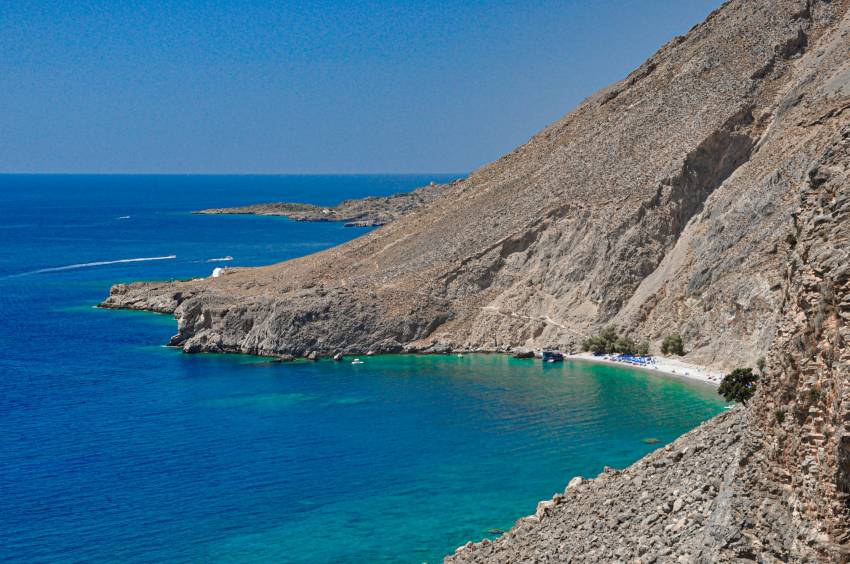
On the evening of Saturday, August 30, 2025, a 23-year-old French tourist was involved in an unfortunate accident while hiking near Glyka Nera Beach in southern Crete. This secluded beach, located between Chora Sfakion and Loutro, is a favourite spot for hikers looking for unspoiled nature and solitude. Known for its dramatic cliffs and turquoise waters, Glyka Nera attracts many adventurers each year. However, its rough terrain, with no proper infrastructure or road access, poses significant risks to those who visit.
Around 6:30 p.m., the young woman, who was hiking with her partner, slipped on a rocky part of the trail. The fall caused a serious knee injury that left her unable to move. With no nearby road access and the path becoming harder to navigate, she was stranded and could not continue her journey. Her hiking partner acted quickly and called the European emergency number 112 to request help.
The Rescue Operation
Emergency response in such remote areas can be complex, but the crews stationed in Crete’s rugged south are trained to tackle these challenges. The emergency call quickly alerted the Anopoli firefighting unit in Sfakia, a town located nearby. Seven firefighters, including both permanent and seasonal staff, were dispatched immediately to the scene, along with a local volunteer. The team made its way toward the injured hiker as quickly as possible, braving the rough terrain.
Upon reaching the stranded tourists, the rescue team worked efficiently to stabilise the injured woman. They determined that her condition required urgent attention but could not evacuate her by land due to the lack of road access. In these situations, the only feasible way to evacuate an injured person is by sea. Fortunately, at Glyka Nera Beach, there was an unexpected ally in the form of a local private boat owner. Understanding the severity of the situation, the boat owner volunteered his services, offering to transport the injured woman to Chora Sfakion. From there, an ambulance crew was ready to transport her to medical facilities.
The rescue operation unfolded smoothly, but it was a reminder of the challenging conditions of Crete’s southern coastline. While the tourist was successfully evacuated and transferred to the hospital for further care, the operation revealed the strength of community cooperation and the reliance on local resources for emergency responses in the region.
The Terrain: Beautiful but Dangerous
Glyka Nera Beach and the surrounding landscapes of southern Crete are undeniably stunning. The area is known for its pristine waters, secluded coves, and dramatic cliffs that rise sharply from the sea. These elements combine to create a breathtakingly beautiful setting, one that attracts many hikers, adventurers, and nature lovers. However, the same features that make this part of Crete so alluring also contribute to the inherent risks of hiking in the region.
The trails leading to Glyka Nera Beach are part of the European E4 long-distance hiking path, a route that spans from Spain to Cyprus. The section that runs through Crete is particularly challenging, winding through steep, rocky terrain and offering little in terms of safety infrastructure. Many of the paths cling to cliffs and are composed of loose rocks, making navigation precarious at times. Additionally, much of the area lacks basic facilities, such as safety railings, signage, or emergency access points.
The absence of a road network in much of the southern part of Crete means that hikers and adventurers are often forced to rely on foot travel or sea transport for evacuation in emergencies. These factors make rescues in the area difficult and demanding, requiring not only skilled personnel but also the cooperation of local residents who are familiar with the terrain and the logistics of evacuations.
Community Effort: A Key Component of the Rescue
What stood out most in the rescue of the French tourist was the role of the local community. While emergency services played a critical role in stabilising and evacuating the injured hiker, the involvement of a local volunteer and the private boat owner was invaluable to the success of the operation. Without these contributions, it is likely that the evacuation would have been delayed, potentially putting the tourist’s health at further risk.
In remote areas like the southern coast of Crete, emergency services often depend on the willingness of local residents to assist in such situations. Whether through offering their boats for evacuation or helping to guide rescue teams to difficult-to-reach locations, the local community plays an essential role in ensuring that hikers and tourists can enjoy the beauty of the region while also remaining safe.
The Growing Challenge of Outdoor Tourism in Crete
This rescue incident brings to the forefront a larger issue: the growing popularity of outdoor tourism in Crete’s southern regions, particularly among hikers. While the island’s rugged beauty continues to attract adventure seekers, the increase in tourism also highlights the need for improved infrastructure and safety measures to mitigate the risks associated with such activities. As more visitors flock to the trails of southern Crete, the pressure on local emergency services continues to rise, and the demand for enhanced rescue capabilities becomes more urgent.
Hiking in Crete offers a chance to explore some of the island’s most stunning landscapes, from the famous Samaria Gorge to the more secluded paths near Glyka Nera. However, many of these routes are not well-equipped with basic safety measures like clear signage, safety rails, or easy access points for emergency vehicles. As a result, hikers are advised to exercise caution, wear appropriate footwear, bring sufficient water, and, most importantly, avoid hiking alone.
Calls for Better Infrastructure
The challenges faced by Crete’s emergency services in this particular rescue operation are not unique. Every summer, dozens of similar incidents occur across the island’s hiking trails. Local authorities, particularly in the region of Sfakia, have called for more investments in infrastructure, including better trail maintenance, clearer signage, and enhanced resources for rescue teams. While these improvements would undoubtedly make the region safer for hikers, they would also help to preserve the natural beauty of the area, ensuring that both residents and tourists can continue to enjoy Crete’s wild landscapes without compromising safety.
The incident at Glyka Nera Beach serves as a reminder that Crete’s rugged terrain requires respect and preparation. As the island continues to attract visitors seeking adventure and natural beauty, the need for proper infrastructure and emergency response systems becomes increasingly vital. With better preparation and support for local rescue units, outdoor tourism in Crete can remain both exhilarating and safe.
Conclusion
The successful rescue of the 23-year-old tourist on the southern coast of Crete highlights both the beauty and danger of the island’s hiking trails. Crete’s landscapes offer some of the most stunning views in the world, but they also demand careful attention and respect from those who explore them. Thanks to the teamwork of emergency responders, local volunteers, and residents, the woman was safely evacuated and received the medical care she needed.
As the island gains popularity for hiking and adventure tourism, both tourists and authorities must prioritise safety. By improving infrastructure, providing more resources for emergency teams, and raising awareness about safety, Crete can remain a destination that offers unforgettable experiences and peace of mind for all visitors.
[Image source: Cretan Beaches Official Website]
