
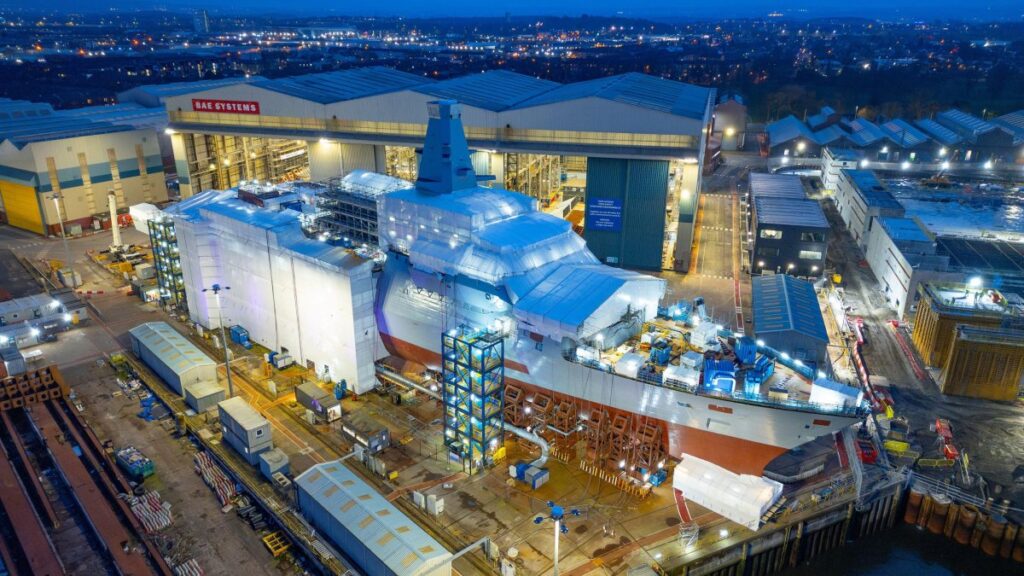
Britain has secured the largest warship export deal in the country’s history, a £10 billion contract to supply submarine-hunting frigates to Norway that will work with the Royal Navy on deterring and defeating Russian attacks.
The UK was chosen above France, Germany and the United States to supply Norway with five Type 26 frigates, seen by officials as the “best submarine-hunter on the planet”.
A further eight with very similar specifications are being built for the Royal Navy and together will form a 13-strong combined fleet to police the north Atlantic and North Sea to “detect, classify, track and defeat hostile submarines”, bolstering Nato’s northern flank.
• It’s full steam ahead for new digital-first naval frigates
The deal also represents the largest “defence capability investment” in Norway’s history.
Defence sources said it was seen within government as a “big deal” in every sense, as it will help to sustain 4,000 British jobs and support more than 400 domestic companies, including 222 small and medium-sized enterprises. The warships will be built at BAE Systems’ Govan and Scotstoun shipyards in Glasgow. Deliveries of the frigates are expected from 2030.
The Royal Navy’s frigates will be treated as like-for-like replacements for the ageing Type 23 ships, the operational lives of which cannot be extended any further.
Sir Keir Starmer spoke to the Norwegian prime minister, Jonas Gahr Store, on Saturday night to receive news of Norway’s decision.
• Karin von Hippel: Our undersea cables and pipelines need urgent protection
“The leaders agreed the decision was an important and historic moment for European security,” a Downing Street spokeswoman said. “The cutting-edge Type 26 warship would be among the most advanced frigates ever built and would deliver unparalleled interoperability for Norwegian and British forces.”
Starmer added: “This government has forged new partnerships across the world to deliver for people at home and the export of our world-leading Type 26 frigates to Norway will do exactly that, supporting well-paid jobs up and down the United Kingdom, from apprentices to engineers.”

Sir Keir Starmer was informed of the decision by Norway’s prime minister, Jonas Gahr Store
ANDY BUCHANAN/POOL/AFP VIA GETTY IMAGES
Store said: “It has been a difficult choice. The four candidates — France, Germany, [the US] and the UK — have provided strong and competitive proposals.” He added that the choice of Britain represented “a historic strengthening of the defence cooperation between our two countries”.
The masts for Type 26 frigates are already built in Norway and Britain’s Royal Marines regularly train in Norway in the Arctic Circle.
John Healey, the defence secretary, said: “For over 75 years, Britain and Norway have stood together on Nato’s northern and northeastern frontiers, keeping the UK and Europe safe. This historic defence deal deepens our strategic partnership. With Norway, we will train, operate, deter, and — if necessary — fight together.”
There had been concern that a deal with Norway could delay the building of Britain’s ships, especially as Norway is keen to take its first delivery in 2029. But a source insisted the Royal Navy’s warships would be delivered as planned. Any ships delivered to Norway will operate as part of a combined fleet with British ships.
In an update in April, the Ministry of Defence said five of the Royal Navy’s eight frigates were in various stages of their builds. HMS Cardiff is now structurally complete and has joined HMS Glasgow in dry dock to be outfitted, while the assembly of HMS Belfast and HMS Birmingham continues.
A government spokesman said: “The Type 26 features sophisticated weapons, advanced sensors and cutting-edge communications, with a flexible design that enables future upgrades to counter emerging threats.”
The UK’s strategic defence review identified Norway as a key ally on a number of fronts. A Norwegian review said the same of the UK.