
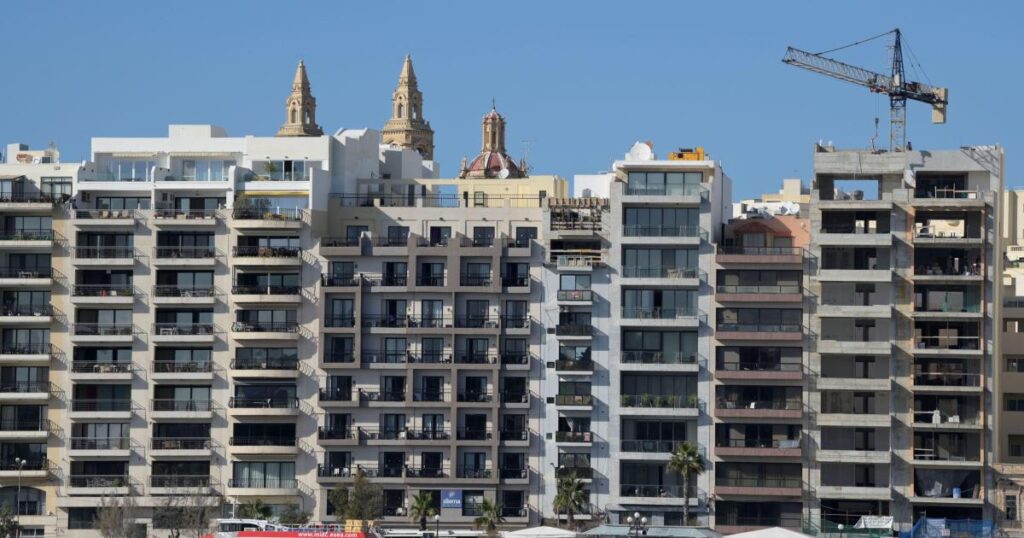
The value of Malta’s dwellings has shot up from €30 billion to a staggering €88 billion in the span of a decade, in large part due to speculation and land scarcity.
This emerges from an analysis published by the National Statistics Office on Monday, which found that the increase in land value has far exceeded rising construction costs.
Developers have frequently pointed to construction cost hikes as a reason behind declining profits and increasing property prices, with the cost of building materials and waste disposal having increased in recent years.
The NSO’s analysis shows that while in 2014 construction costs totalled €5.6 billion, this rose to €14.6 billion a decade later, an increase of €9 billion or 160 per cent.
However, the figures also show that the value of the land underlying the dwellings grew at an even faster pace, rising by €49.1 billion or 200 per cent during the same period, from €24.6 billion in 2014 to €73.7 billion last year.
The NSO concluded that the ballooning in the value of local properties “has been driven by land scarcity, high demand for central locations, and speculative investment.”
The figures suggest that the value of the land now makes up some 83% of a dwelling’s total value, with construction costs making up the remaining 17%.
Thirty years ago, in 1995, the land accounted for under two-thirds of a dwelling’s value, the report shows.
Apartments vs townhouses
Throughout the years, townhouses have consistently represented Malta’s most valuable dwellings, having only recently been overtaken by apartments collectively.
Last year, apartments were valued at €39.5 billion compared with €33.2 billion for townhouses, despite there now being almost three times as many apartments as townhouses.
According to NSO, the rising value of Malta’s building stock can be attributed to a range of factors. These include an increase in the stock of dwellings and rising labour and material costs, as well as “regulatory changes and intensified construction activity”.
This is particularly true of the post-2017 period, the report notes, pointing to policy changes, increased immigration and the rise of short-term rentals as key drivers of the sector.
The report also points to “Malta’s post-EU accession development boom and an increase in both private and public sector building projects” as having led to a rise in value.