Bacteria that ‘shine a light’ on microplastic pollution – American Chemical Society
https://www.acs.org/pressroom/presspacs/2025/september/bacteria-that-shine-a-light-on-microplastic-pollution.html

Bacteria that ‘shine a light’ on microplastic pollution – American Chemical Society
https://www.acs.org/pressroom/presspacs/2025/september/bacteria-that-shine-a-light-on-microplastic-pollution.html
1 Comment
Submission Statement:
This is a fascinating piece from ACS Sensors that could have serious implications for ESG-focused portfolios and environmental tech plays.
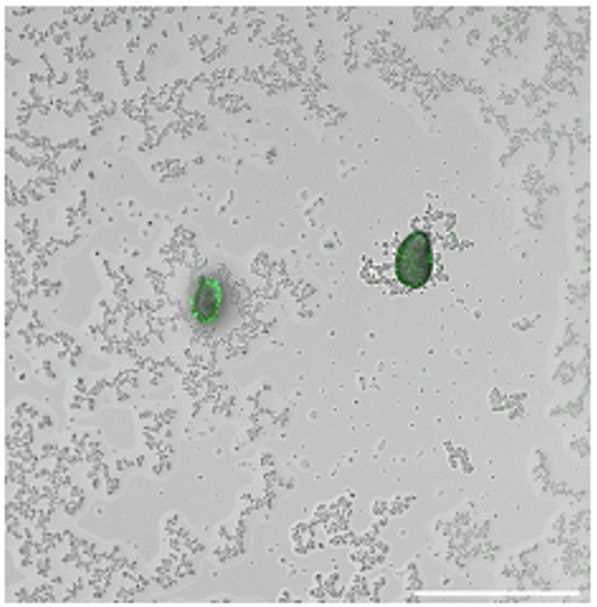
Researchers have engineered a living biosensor using modified Pseudomonas aeruginosa bacteria that literally glow green when they come into contact with microplastics. It fluoresces in real time, making detection faster, cheaper, and way more scalable than traditional methods like Raman spectroscopy.
It works in real-world water samples and can detect biodegradable microplastics too. Plus, the bacteria stay viable for up to 3 days in a fridge, which means field deployment is totally feasible.
From an investment lens, this could be a game-changer for everything ranging from Environmental monitoring startups to Wastewater analytics, and Smart city infrastructure to Green tech accelerators.