
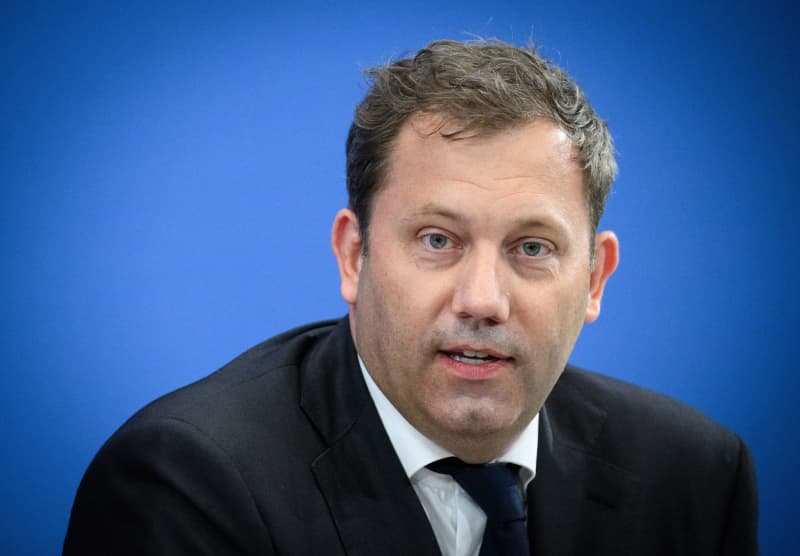

Chairman of the Social Democratic Party (SPD) Lars Klingbeil speaks at a press conference after the first meeting of the Coalition Committee after the summer break at the German Chancellery in Berlin. Bernd von Jutrczenka/dpa
The outlook for the German economy remains mixed despite the government’s announcement of a stimulus package, leading economic research institutes said on Thursday.
The Munich-based Ifo Institute, IfW Kiel, RWI Essen and IWH Halle have lowered their economic forecasts for this and next year.
The German economy will effectively stagnate this year, with minimal growth of 0.1% to 0.2%, they said.
In 2026, economists expect growth between 0.8% (IWH) and a maximum of 1.3% (Ifo and IfW), which is less than hoped for in the summer. According to the Ifo forecast, the unemployment rate could rise to 6.4% this year and then decrease again over the next two years.
Without fundamental governmental reforms, the debt-financed €500 billion ($580 billion) package from the government will remain a flash in the pan, according to Ifo President Clemens Fuest and Economic Chief Timo Wollmershäuser.
“Growth will probably fall back to zero,” said Fuest. “Then there is simply the risk that it might even lead to a contraction because we have a shrinking working population, we have burdens in the pension system, in the health-care system.”
The German economy is mired in crisis and has contracted in the past two years. Tax increases proposed by Finance Minister Lars Klingbeil and other lawmakers would be the wrong approach, Fuest said. “If we raise taxes, the contraction will accelerate.”
Calls for structural reform
The two economists’ reform proposals include faster digitalization and better tax conditions for innovation, points which have been rejected by the Social Democrats and trade unions.
“We need reforms in the labour market regarding labour costs,” said Fuest. “And in particular, we must prevent social security contributions from rising further in the coming years due to demographic change.”
For highly qualified workers, the current form of employment protection is also unnecessary, he said. Taking on debt is easy, said the Ifo president. “Anyone can do that.” The government must now show “that it can not only handle the easy part but also the challenging one.”
Ifo is not alone in its call for structural reforms, with nearly identical assessments coming from IfW Kiel and RWI Essen. “Structural competitiveness problems are not solved by expansive fiscal policy but merely overshadowed,” said RWI Essen.
Economists see the lack of investment by German companies as a major problem. Companies in Europe’s largest economy are hindered by high energy costs, bureaucracy and a lack of digital infrastructure, RWI said.
Story Continues