
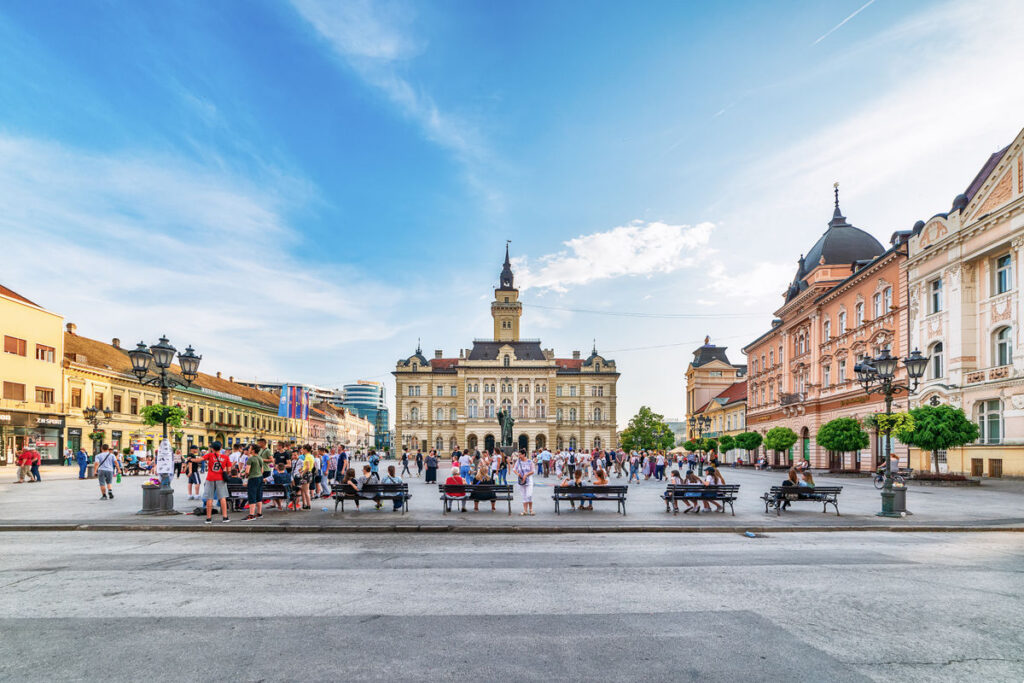
Novi Sad, Serbia’s second-largest city, sits on the banks of the Danube River in the northern province of Vojvodina. Often called the ‘Serbian Athens’ for its cultural and artistic history, the city combines Austro-Hungarian architecture with a setting that feels more relaxed than the country’s capital, Belgrade.
Visitors will find a variety of cafes, museums and riverside beaches, making Novi Sad a destination that appeals to a wide range of interests, combining history with opportunities for relaxation and outdoor activities.
Know Before You Go
Novi Sad reflects the cultural mosaic of northern Serbia, where Hungarian and Serbian communities form the majority alongside Ukrainian and Russian minorities. Its location is also strategic — just across the border from Hungary and Croatia, both European Union countries.
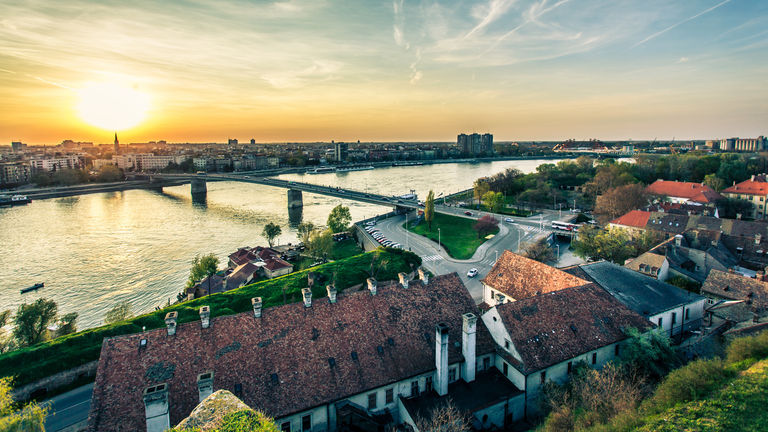 Seen from across the river, Novi Sad reveals a mix of cultural landmarks, urban life and the natural landscape of northern Serbia.
Credit: 2025 skunevski/stock.adobe.com
While Serbian is the official language, English is widely spoken in the city center, especially in restaurants, hotels and tourist areas, making it easy for travelers to get around. Visitors may also hear Russian, Romanian or Hungarian, reflecting the city’s diverse influences and proximity to the EU.
RELATED: A
Guide to EES, ETIAS and ETA: What to Know About Europe’s New Travel
Authorizations
The local currency is the Serbian dinar (RSD), and while credit and debit cards are accepted in most places, travelers should be mindful of potential international fees. Fortunately, currency exchange offices are easy to find throughout the city.
Getting Around
Belgrade’s Nikola Tesla Airport serves as the closest international airport. The airport lies about 40 miles to the south and offers flights to major European hubs as well as long-haul destinations. From there, travelers can reach Novi Sad in just over an hour by car or bus.
Novi Sad is the first Serbian city to be linked to Belgrade by the country’s modern high-speed railway, known as Brza Pruga (“fast track”). Officially opened in March 2022, the 46-mile line connects the capitals of Serbia and Vojvodina in as little as 36 minutes, with trains reaching speeds of 124 miles per hour. Operated by Srbija Voz, these sleek Swiss-made Stadler “Soko” trains offer a smooth, air-conditioned ride, Wi-Fi and comfortable seating, making it easy for visitors to pair their trip to Novi Sad with a stay in Belgrade or continue onward to other European destinations.
RELATED: Train Travel Is Trending — Here’s Why Travel Advisors Should Get OnboardWhat to DoPetrovaradin Fortress
Overlooking the Danube River, Petrovaradin Fortress is Novi Sad’s most iconic landmark. Built in the 17th and 18th centuries by the Austo-Hungarians, it’s known for its river views, maze of underground tunnels and the Clock Tower whose reversed hands are a local curiosity. Visitors can explore art studios, museums and cafes within the fortress walls, or simply walk around its ramparts for a glimpse into the city’s military past.
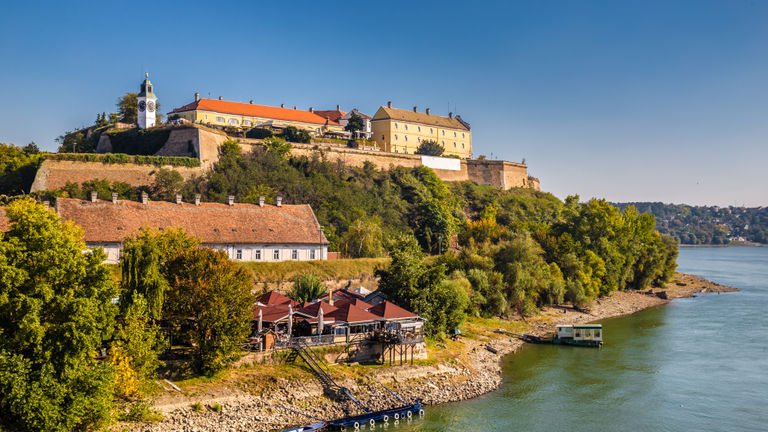 Petrovaradin Fortress, a historic stronghold overlooking the Danube River, is one of Novi Sad’s most notable landmarks.
Credit: 2025 zm_photo/stock.adobe.comDanube River
The Danube is the lifeblood of Novi Sad, offering both leisure and scenic beauty. Stroll along the promenade, relax at The Strand — one of Serbia’s most popular urban beaches — or take a boat tour for panoramic views of the city and Petrovaradin Fortress from the water. The riverside is also a notable spot for cycling, jogging and enjoying sunset views.
Exit Festival
Every July, Petrovaradin Fortress transforms into a multi-stage music venue for Exit Festival, one of Europe’s top summer events. Founded in 2000, the festival attracts international headliners and tens of thousands of visitors each year, blending global acts with the unique setting of centuries-old stone walls. The event has won multiple Best European Festival awards and is a major draw for music lovers worldwide.
Fruska Gora National Park
Just outside the city, this protected area is often called the “jewel of Vojvodina.” It offers hiking trails, vineyards and more than a dozen historic Orthodox monasteries, some dating back to the 15th century. It’s a perfect day trip for adventure lovers seeking nature and history.
Dunavska Street and Trg Slobode
In the heart of the pedestrian center, Dunavska Street is lined with pastel-colored 19th-century townhouses, boutiques and cafes. Liberty Square (Trg Slobode), framed by the ornate City Hall and the Catholic Cathedral, is a hub of local life and a must-see for architecture lovers.
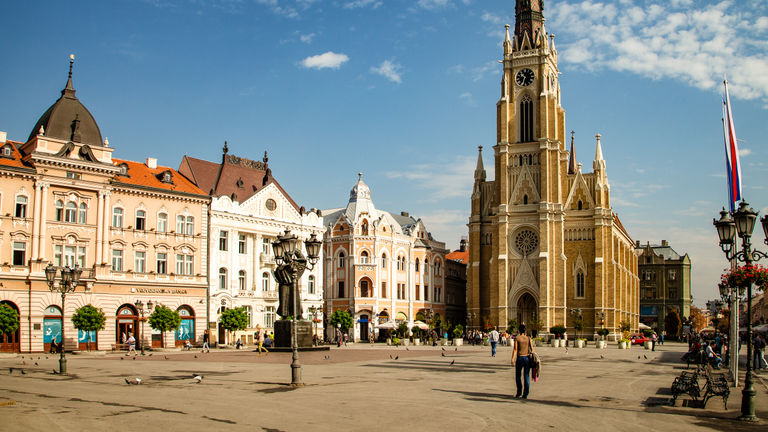 Liberty Square (Trg Slobode), framed by City Hall and the Catholic Cathedral, anchors Novi Sad’s pedestrian center.
Credit: 2025 Florian Oberkofler/stock.adobe.comRELATED: Community Voices: How Do Europeans Feel About American Visitors Right Now?Where to Stay
Prezident Hotel stands out as a premier choice for luxury travelers. This upscale, spa-equipped property offers both indoor and outdoor swimming pools, a wellness center and luxuriously furnished rooms and suites — some featuring terraces with views of Fruska Gora. It’s also walking distance to the Novi Sad Fair, where visitors can immerse themselves in Serbian culture.
If clients are part of the Marriott family, Sheraton Novi Sad is a 5-minute drive from Petrovaradin Fortress and a 3-minute drive to the Serbian National Theatre and Freedom Square. This hotel offers150 guestrooms and suites and full-service comforts, including a restaurant that serves international food, a wellness center and a spa. It also provides airport shuttle service, making it especially convenient for visitors arriving via Belgrade Nikola Tesla Airport.