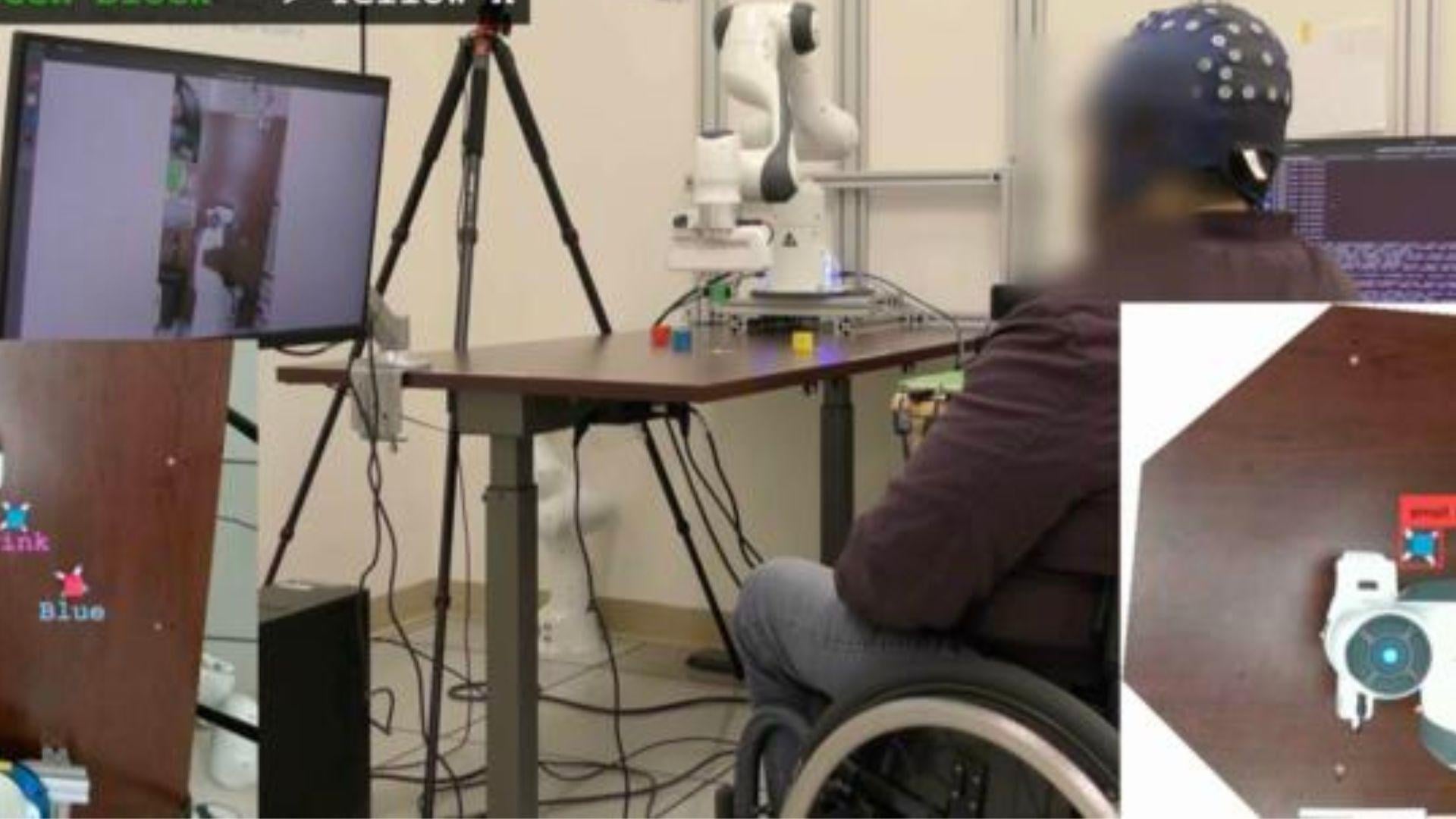
AI-powered brain chips let paralyzed patients steer robot arm with thoughts
https://interestingengineering.com/science/bci-system-uses-ai-to-interpret?utm_source=reddit&utm_medium=social&utm_campaign=reddit_share

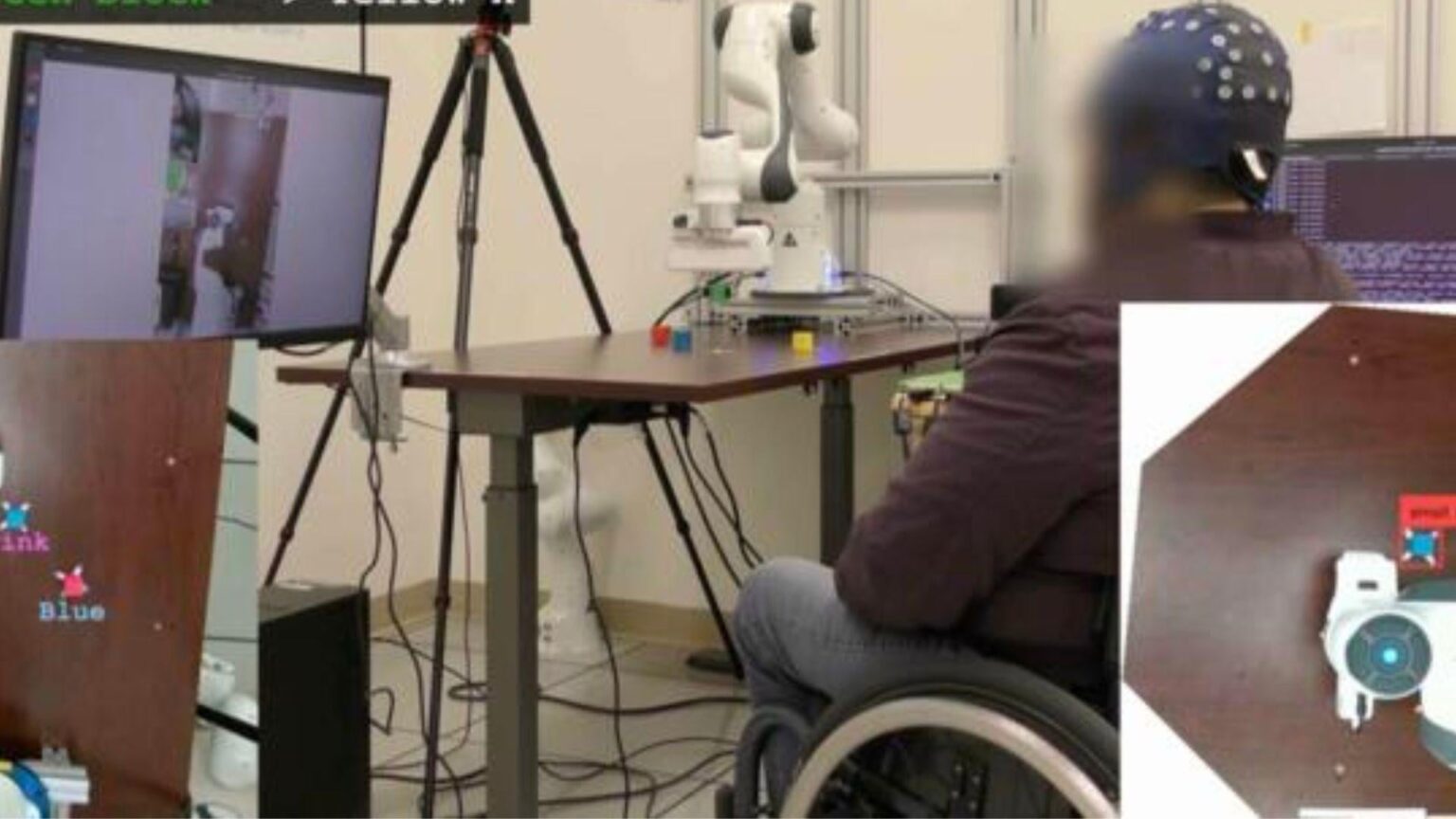
AI-powered brain chips let paralyzed patients steer robot arm with thoughts
https://interestingengineering.com/science/bci-system-uses-ai-to-interpret?utm_source=reddit&utm_medium=social&utm_campaign=reddit_share
1 Comment
A new wearable, noninvasive brain-computer interface (BCI) system that uses artificial intelligence has been designed to help people with physical disabilities.
The University of California, Los Angeles, developed this new BCI where an AI acts as a “co-pilot.” It works alongside users to understand their intentions and help control a robotic arm or computer cursor.
The system can potentially create new technologies to improve how people with limited mobility, like those with paralysis or neurological conditions, handle objects.