
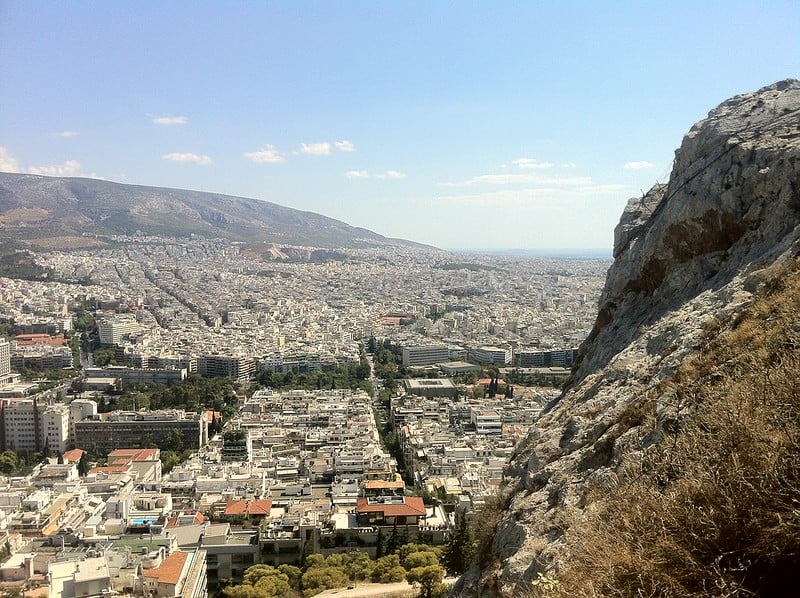
Greek PM will announce the abolition of Greece’s property tax will apply to taxpayers whose primary residence is in frontier areas Credit: Flickr/ Sandrinelle/ CC BY NC SA 2-0
Greek Prime Minister Kyriakos Mitsotakis is expected to announce at the Thessaloniki International Fair, the abolition of Greece’s property tax on primary residences in remote border regions, according to reports.
Specifically, the measure would apply to towns and villages with populations between 3,000 and 5,000 residents. It’s goal is to strengthen local communities, support national security, and address demographic challenges.
Government spokesperson Pavlos Marinakis stated that “no one will be excluded,” stressing that citizens with greater geographical or demographic needs will receive additional support.
Part of a Broader Tax Package
This initiative is expected to be part of a wider program of tax reliefs for families with children and households earning between €10,000–€50,000 ($10,800–$54,000) annually.
Since 2020, properties on 26 small frontier islands with fewer than 1,200 inhabitants have already been fully exempt from Greece’s property tax (ENFIA).
Last year, the government also increased the discount from 10% to 20% for insured homes valued up to €500,000 ($540,000) against natural disasters.
Regions eligible for the tax exemption
Greek law (Law 1892/1990 and subsequent amendments) defines border regions as both land and island areas close to national frontiers.
In particular, these include:
- Epirus: Ioannina and Thesprotia (border with Albania)
- Western Macedonia: Kastoria, Florina, Kozani (northern borders)
- Central Macedonia: Kilkis, Serres (borders with North Macedonia and Bulgaria)
- Eastern Macedonia & Thrace: Drama, Xanthi, Rhodope, Evros (borders with Bulgaria and Turkey).
- Aegean Islands: Dodecanese, Samos, Chios, Lesbos, Lemnos, Samothraki, Kastellorizo, and smaller islands near Turkey.
In many cases, all municipalities located within 20 kilometers of the land border are officially designated as frontier zones.
Existing Exemptions
Additionally, property tax relief is also available to:
- Families with three or more children.
- Individuals with severe disabilities (80% or higher).
- Properties located in disaster-stricken areas.
- Historic monuments and heritage-protected buildings.