
Published on
September 7, 2025

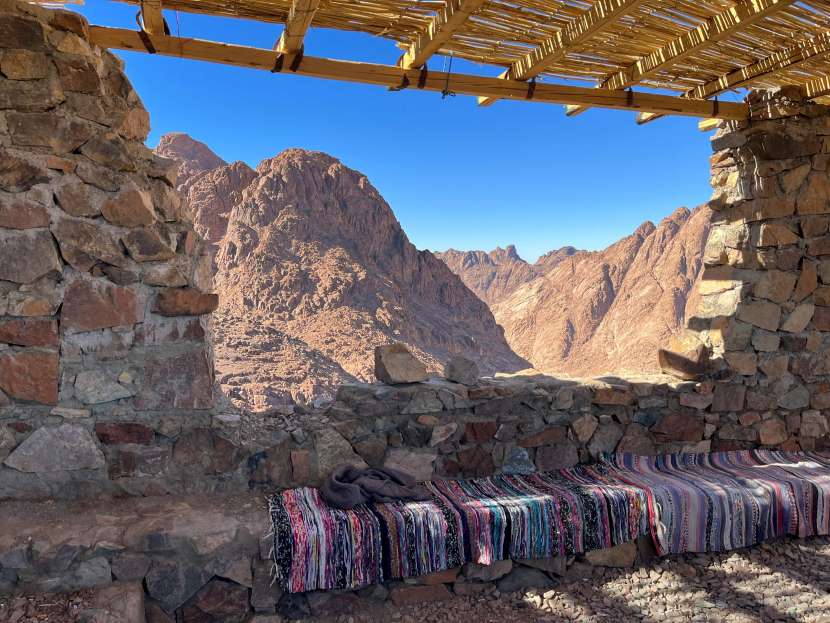
For generations, travelers have made their way to Mount Sinai to experience its spiritual significance, guided by the local Bedouin tribes who have long called this rugged desert home. Visitors would embark on hikes led by the Bedouins to witness breathtaking sunrises over the ancient landscape or explore other trails, immersing themselves in the natural beauty and deep cultural history of the region. However, this sacred place, revered by Jews, Christians, and Muslims alike, is now at the center of a major controversy that could forever alter its identity.
At the heart of the dispute is the Egyptian government’s plan to turn the Mount Sinai area, known locally as Jabal Musa, into a large-scale tourism hub, sparking tensions with the Bedouin communities and religious leaders. Mount Sinai is believed to be where the prophet Moses received the Ten Commandments and where, according to both the Bible and the Quran, God spoke to Moses from the burning bush. Additionally, the St Catherine’s Monastery, one of the world’s oldest continuously used Christian monasteries, lies nestled beneath the mountain. It is an iconic site for religious pilgrimage, drawing visitors from all faiths.
The Great Transfiguration Project: A Bold Vision for Tourism
The Egyptian government’s ambitious Great Transfiguration Project was launched in 2021 as part of a broader initiative to boost tourism and transform the region into a major tourist destination. The plan envisions the construction of luxury hotels, villas, shopping bazaars, and eco-lodges. The development includes the expansion of the nearby airport and the construction of a cable car to Mount Sinai. These new infrastructures are intended to serve as “Egypt’s gift to the world” by providing a top-tier tourism experience, while simultaneously promoting the development of the nearby town of St Catherine and its surroundings.
While the Egyptian authorities have framed this project as a much-needed boost to the region’s economy, critics argue that it threatens the very essence of the land. The Bedouin community, particularly the Jebeleya tribe, who have lived in this desert for centuries, face the destruction of their homes and traditional eco-camps, with little or no compensation offered. The tribe’s deep connection to this land, which they have long safeguarded, is under threat as the area is transformed to cater to mass tourism.
Bedouin Displacement and Cultural Loss
The Jebeleya tribe, known as the Guardians of St Catherine, has been vocal about their concerns, as they watch their traditional homes and graves being displaced. In one disturbing instance, bodies were removed from their graves to make way for a new car park. This forced displacement of the Bedouins contrasts sharply with the government’s portrayal of the development as a “sustainable” project aimed at improving the lives of local people. Ben Hoffler, a British travel writer who has spent years working with Sinai tribes, argues that this development is not being led by the Bedouins, nor was it requested by them. Instead, it is a top-down initiative that prioritizes the interests of external stakeholders over the cultural heritage of the indigenous people.
Locals, though hesitant to speak out, are facing an uncertain future. The Bedouin community, numbering around 4,000 people, is being reshaped by forces beyond their control. As luxury developments take root, their ancient way of life is increasingly incompatible with the new urban landscape being built around them.
The Greek Orthodox Church’s Role and Tensions with Egypt
The transformation of Mount Sinai is also causing tensions between Egypt and Greece. The St Catherine’s Monastery, operated by the Greek Orthodox Church, has been a focal point in the ongoing dispute. The Egyptian court ruling in May 2025 that St Catherine’s Monastery is built on state land and that the monastery only has “use rights” to the property was met with outrage in Athens. Archbishop Ieronymos II, the head of the Church of Greece, condemned the decision as a violation of the monastery’s rights. He warned that the ruling poses an existential threat to one of the world’s oldest and most revered Christian sanctuaries.
Despite these tensions, diplomatic efforts between Greece and Egypt have resulted in a joint declaration that aims to protect the Greek Orthodox identity and cultural heritage of the monastery. The Greek Orthodox Patriarchate of Jerusalem has emphasized the historical and spiritual significance of the monastery, highlighting its role as a symbol of peace between Christians and Muslims. The monastery, which houses both a Christian church and a small mosque built during the Fatimid period, is viewed as a unique representation of religious harmony in a region often plagued by conflict.
Environmental and Cultural Impacts
The development of the area has drawn sharp criticism from UNESCO, which recognizes the site as a World Heritage Site. According to UNESCO, the natural landscape surrounding St Catherine’s Monastery is of outstanding universal value, noting how the rugged terrain forms a stunning backdrop for the monastery and how the site’s remote location has fostered spiritual commitment for centuries. The transformation of the area, with new roads, construction of hotels, and other infrastructure, is seen as a violation of the environmental and cultural integrity that makes Mount Sinai so special.
The Plain of el-Raha, a site believed to be where the Israelites waited for Moses during their journey, is now being reshaped by construction. Critics argue that the unique natural characteristics of this sacred land are being destroyed in the name of development. The area’s cultural and spiritual essence, which has been preserved for thousands of years, is at risk of being lost forever.
The Future of Mount Sinai
As the debate over the Great Transfiguration Project continues, the future of Mount Sinai remains uncertain. While the Egyptian government insists that the development will be a boon for tourism and the local economy, it is clear that Bedouin tribes and religious groups are concerned about the long-term effects on the region’s heritage. For the Jebeleya tribe, and for the millions of people who hold Mount Sinai sacred, the project represents an irreversible change to a landscape that has remained untouched for millennia. As construction continues, the fate of this revered land, and the people who call it home, hangs in the balance.
