
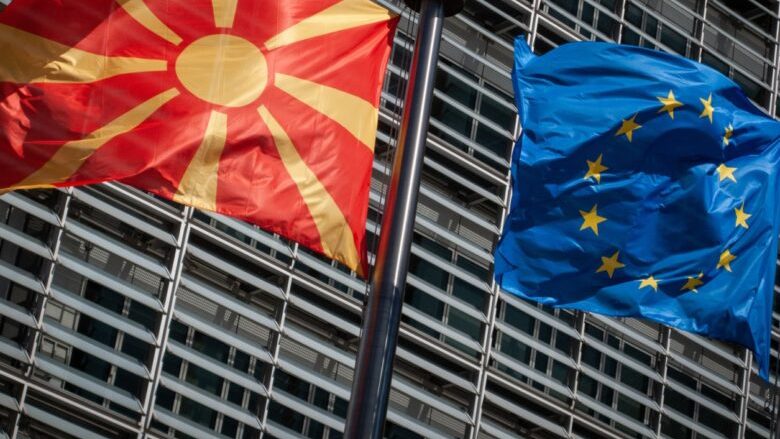
North Macedonia risks losing 134 million euros from the EU, has implemented only 40% of reforms

Express newspaper
06/09/2025 15:03
The European Commission has published the scoreboard of the Development and Reform Programme in the Western Balkans, where North Macedonia shows modest progress, while Albania and Serbia mark complete stagnation.
According to the official report of the Reform and Growth Mechanism, Macedonia has managed to fulfill only 2 out of 5 planned steps by December 2024, which represents 40% of its obligations. For this, the country received about 8.5 million euros from the EU, Portalb writes.
However, the situation for 2025 appears even more problematic.
“None of the 19 reforms planned for 2025 have been implemented,” the EC report states, warning that Macedonia risks losing 134 million euros, while a total of 205 million euros in European support is also at risk.
In the coming months, the country must implement up to 48 reforms – both new and overdue. These include reorganizing the railway system, increasing the number of labor inspectors, strengthening the Asset Confiscation Agency, reforming the energy sector, modernizing government buildings, cybersecurity, improving the judicial system, and anti-corruption measures.
“Macedonia also needs to digitalize schools, reduce informal employment, improve public procurement and management of public enterprises, and introduce spending control through internal audits,” the document notes.
The report also calls for the adoption of a new Criminal Code, equipping the Prosecution with expert staff to prosecute corruption and organized crime, and implementing transparent procedures for appointing managers of public enterprises.
Despite the poor results, Macedonia is no longer last in the region.
“Albania and Serbia have not implemented any of the planned steps – with zero percent performance and without any distribution of European funds,” the EC assesses.
The only country that has recorded a relatively satisfactory pace is Montenegro, with a completion rate of 50%.
The Growth Plan for the Western Balkans, worth €6 billion, was adopted on 8 November 2023 by the European Commission. It is based on four pillars: integration into the EU single market, strengthening regional cooperation, accelerating fundamental reforms and increasing financial assistance to support them.