
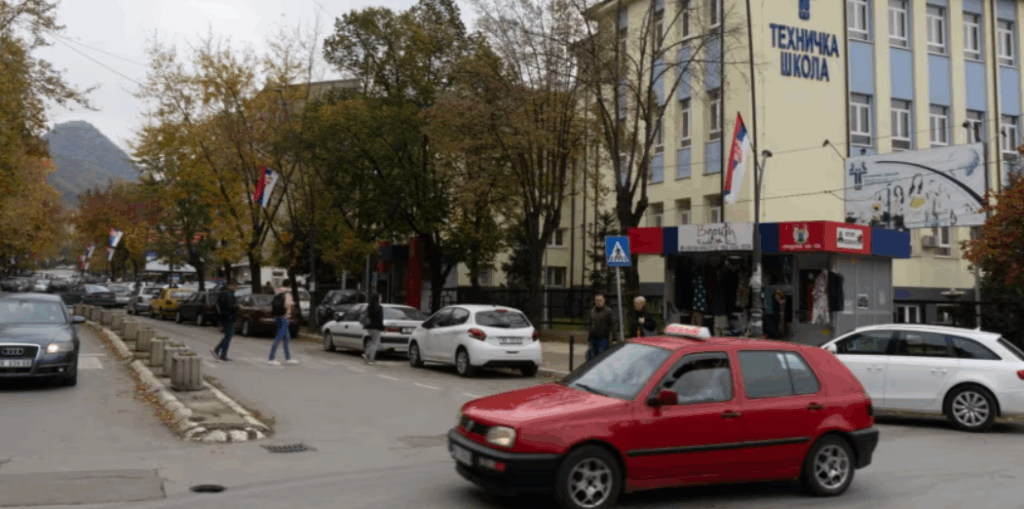
REL: The unclear path of Serbian schools and hospitals towards the Kosovo system

Express newspaper
08/09/2025 18:29
The integration of Serbian education and health institutions into the Kosovo system is inevitable, but it is unlikely to happen this year, Nenad Rašić, a member of the Serbian community in the Kosovo Assembly and a minister in the country’s acting government, tells Radio Free Europe.
These institutions currently operate under the Serbian system, namely under the supervision of the relevant ministries of the Government of Serbia.
“I know there have been some plans and discussions about what will happen when that time comes, but nothing has been done yet. I have insisted that we need to be careful and that we [the Serb community] need to be involved in this process, because we know best what challenges we face and what are the best solutions we can propose,” says Rashic.
He adds that some kind of initiative to integrate educational and health institutions could be undertaken during 2026, but does not provide details, as, as he says, there is no concrete information yet.
The chargé d’affaires at the US Embassy in Pristina, Anu Prattipati, told a Serbian-language media group on September 4 that all parallel Serbian institutions, including education and healthcare, should be integrated into the Kosovo system.
However, she stressed that the way this integration will be done is essential and, according to her, should only be developed through consultations with the Serbian community.
“This cannot be a one-sided process. It is the duty of the Kosovo Serb community and the Government of Kosovo to work together, to ensure, in particular, that institutions maintain or improve the quality and sustainability of services,” Prattipati told KoSSev, Radio Kontakt Plus, Radio Mitrovica e Veruit, Radio Kim and Radio Goraždevac.
Serbian List and Belgrade without comments
The Serbian List – the largest Serb party in Kosovo, which enjoys the support of official Belgrade – did not respond to Radio Free Europe’s questions about whether it is aware of plans to integrate educational institutions and Serbian health in the Kosovo system, and whether any discussion has taken place on this topic.
The Office for Kosovo in the Government of Serbia did not answer these questions either.
Similarly, Radio Free Europe asked the acting Kosovo Government about plans for the integration of Serbian educational and health institutions, but received no response.
In an interview given to Radio Free Europe in September 2024, the Minister of Internal Affairs of Kosovo, Jelal Svechla, said that the functioning of health and education in Serb-majority environments is specific and that these institutions will be treated specifically – separately from the closure of other Serb institutions.
He said that, according to the Ahtisaari Plan – the document on the basis of which Kosovo declared independence in 2008 – the Serbian community has broader autonomy in these two spheres.
“This means that healthcare and education have some additional rights, some privileges, which we are not interested in touching, because they are also in the law,” said Sveçla.
In 2024, Kosovo authorities began closing several Serbian institutions in Kosovo, including: the Post of Serbia, the Postal Savings Bank, temporary municipal bodies, social work centers, and others.
Kosovo Serbs’ attitude towards the integration of educational and health institutions
Members of the Serbian community, with whom the Radio Free Europe/Radio Liberty team spoke earlier, have strongly opposed any idea of integrating educational and health institutions into the Kosovo system.
Slagjana from Leposavic has stated that it is unimaginable for her that her child would attend a school that operates outside the Serbian system.
Rafaillo and Sllagjani, also from Leposaviq, said that just the idea that Kosovo authorities could start closing health or educational institutions in the coming period is “terrifying” for them.
Rashic: People need to be informed in a timely manner
When the topic of integrating educational and health institutions is raised, Rashic says that he will personally get involved and inform his community about all plans.
“I, personally, will go to most of the people who run education and health institutions, to inform them and ask them to help me in this process… or – more precisely – to help themselves to protect their rights. As for me, I will do everything in my power to make this transition period go as smoothly as possible. I want to emphasize that, currently, no one is dealing with this issue, but, when the time comes, I will try to make everything go as smoothly as possible,” Rashic tells Radio Free Europe.
He reiterates that the Serbian community must be informed about everything in a timely manner and that it must participate in the entire integration process.
According to him, the role of official Belgrade will be decisive.
He hopes that the Serbian authorities will no longer act in a “destructive” manner, as before, and that Serbs in Kosovo will not be placed “before any committed act” or in a “take it or leave it” situation.
Will Belgrade accept integration?
Rada Trajkovic, a Kosovo Serb politician living in Belgrade, believes that Serbia has already accepted the integration of Serbian educational and health institutions into the Kosovo system, and that it is now “putting the burden” on the international community to make this issue public.
“… so that she carries the burden of guilt among the Serbs in Kosovo. This is the broken Balkan policy: she does not explain to the people and does not find modalities in negotiations to avoid inciting people’s reaction. Health and education are very important things and should have their own specific features,” Trajkovic assessed for Radio Free Europe.
Trajkovic, who in the post-war period was the director of the Health Center in Gracanica, which operates within the Serbian system, and a member of the Kosovo Assembly, emphasizes that the financing of these institutions by Serbia does not need to be stopped, because “no one can stop the donations.”
“The most important thing is to maintain the staff and, in terms of education, for children to use the same education system as in Belgrade. This is a simple right of Serbs, to be able to go from Kosovo to Serbia with those diplomas. Everything should be done for the good of ordinary people,” says Trajkovic.
She adds that the statement by the US representative in Pristina, that the integration of education and health should be done in consultation with the Serbian community, is very important.
Trajkovic emphasizes that the role and purpose of the Serbian system must be understood, because “a sick person cannot be sent to someone they do not trust.”
“Serious talks need to be held and these things should be expected as a possibility and reality, so that the sick person does not feel any change, except for the administration,” says Trajkovic.
When it comes to education, she says the curriculum should be linked to that in Serbia “for the good of children.”
“We need to work very carefully on this. The problem is not math and physics, but history. I’ll tell you something very honestly – neither Serbs nor Albanians have ever learned history in school, they learned it at home, that’s why we had wars. Our problem is history, even geography,” says Trajkovic.
Integration of health and education without the Association of Serb-majority Municipalities?
Miodrag Marinković, from the non-governmental organization Center for Affirmative Social Action in northern Kosovo, tells Radio Free Europe/Radio Liberty that Prattipat’s statement that all Serbian institutions should be integrated into the Kosovo system – including healthcare and education – is unusual and raises more questions than answers.
“First of all, it is not clear whether this statement refers to the European Union plan for the normalization of relations, which has so far been the only basis for talks on the integration of education and healthcare. That plan envisages the privatization of this system, not its integration. In this context, this message is incomplete. I think that, due to the lack of US diplomatic engagement, what was safest to say was said,” says Marinković, who also notes another “difference.”
“So far, diplomatic messages on this issue have been addressed exclusively to Government in Pristina… Now, the imperative of compromise is placed before the Kosovo Serbs,” according to him.
Radio Free Europe asked the US Embassy in Pristina whether the integration of education and health is possible without the formation of the Association and is awaiting a response.
The agreement on the establishment of the Association of Serb-majority Municipalities in Kosovo was reached in 2013, within the framework of the dialogue for the normalization of relations between Kosovo and Serbia, and was supposed to regulate, among other things, the functioning of Serbian institutions, revenues and funding from the Serbian budget.
Kosovo, however, refuses to form it, arguing that it undermines the country’s laws and Constitution.
After years of unsuccessful efforts by the international community to convince Pristina and Belgrade to agree on their positions on this issue, the EU announced in late October 2023 that it had submitted to the parties a “modern draft statute” for the formation of the Association, which has also been supported by other Western countries: the US, Germany, France and Italy.
According to this draft statute, which has not been published, but which REL has had the opportunity to see, educational and health institutions operating in Kosovo under the Serbian system should become private and come under the umbrella of the Association of Serb-majority Municipalities, while Serbia should provide financial support.