

In recent decades, a wave of public support for animals has emerged worldwide, often grounded in what can be termed “sentimental ethics”. In this approach, animals—particularly domestic species such as dogs and cats—are deemed worthy of protection because they are “innocent” or “pitiful.” While such a perspective may be admirable at the personal and emotional level, it reflects, at the broader scale, a form of ethical narrowness and ecological reductionism.
In the face of today’s ecological crises, we require a shift away from this emotion-driven approach toward ecocentric ethics, a framework that values life not merely in terms of the pleasure or suffering of individual beings, but in terms of each species’ essential role in the web of life and the functioning of the global ecological cycle.
1. Ecocentrism in Environmental Philosophy
Philosophers such as Aldo Leopold, with his Land Ethic, emphasized that the moral community must expand beyond humans and charismatic animals to include soil, water, air, plants, and the entire ecosystem. From Leopold’s perspective, an action is right when it preserves the integrity, stability, and beauty of the biotic community, and wrong when it tends otherwise. This position stands in direct contrast to sentimental ethics, which tends to focus on particular species through the lens of individual emotional appeal.
Similarly, Arne Naess, founder of Deep Ecology, called for abandoning anthropocentrism in favor of an ecocentric ethic that recognizes the intrinsic value of all forms of life—even when such value is not apparent in terms of immediate human benefit or emotional resonance. From Naess’s standpoint, defending a species solely because of its beauty or popularity merely reproduces anthropocentric hierarchies in a new guise.
2. Environmental Sociology and Ethical Reductionism
Environmental sociologists have cautioned that environmental activism, when reduced to easily digestible and emotionally charged causes, risks losing its symbolic capital—a concept introduced by Pierre Bourdieu to describe the social and cultural value of actions. In this context, animal advocacy movements that focus narrowly on dogs and cats undermine their capacity for structural environmental change, ultimately becoming absorbed into the consumerist culture of the pet industry.
Moreover, Ulrich Beck, in his Risk Society theory, observed that late modernity is characterized by global, structural environmental risks that cannot be mitigated through symbolic or sentimental gestures alone. Restricting environmental concern to a handful of popular species—while keystone species in ecological food webs face extinction—not only fails to reduce these risks but actively diverts public awareness from the true scale of the crisis.
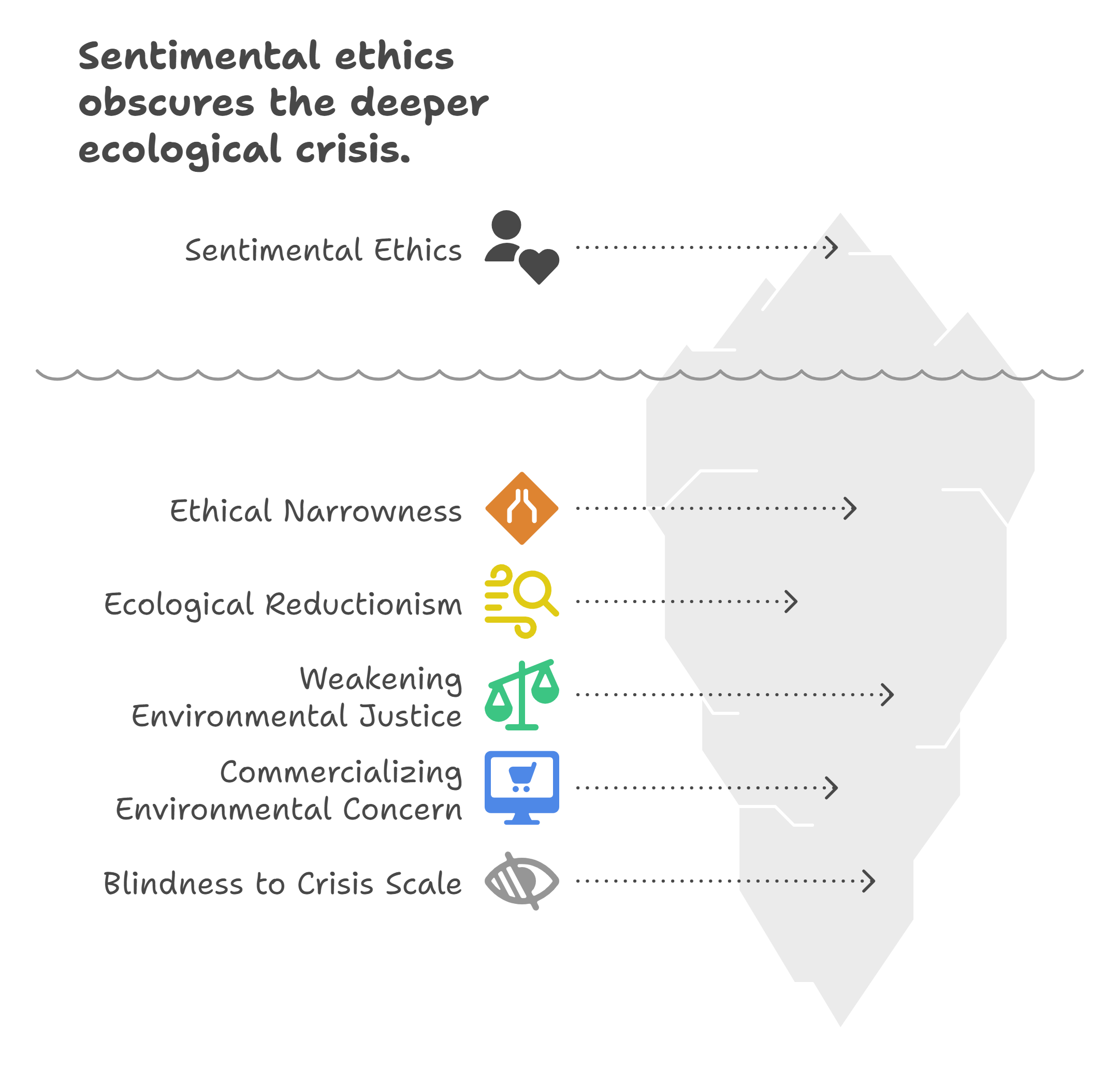
3. Consequences of Sentimental Ethics
- Weakening Environmental Justice: Species deemed less “attractive” or “endearing” are sidelined, leading to unbalanced conservation efforts.
- Commercializing Environmental Concern: Emotional support can quickly morph into consumerist campaigns, where selling pet-related products replaces genuine habitat preservation.
- Blindness to the Scale of the Crisis: While billions of animals are slaughtered daily for human consumption, activist energy is spent rescuing a small number of companion animals—without challenging the structural systems driving habitat destruction and industrial slaughter.
4. The Need for Convergent Environmental Knowledge
In response to these challenges, we must foster convergence between philosophy, sociology, and ecological science. This convergence entails:
- Redefining Environmental Ethics: Grounding it in the intrinsic value of all species and their ecological roles, rather than in human emotions alone.
- Structural Analysis of Crises: Applying risk sociology and systems theory to uncover the economic, political, and cultural roots of environmental degradation.
- Public Ecological Literacy: Educating communities about the roles species play in nutrient cycles, energy flows, and ecosystem stability—shifting the focus away from media-friendly “marketable” species.
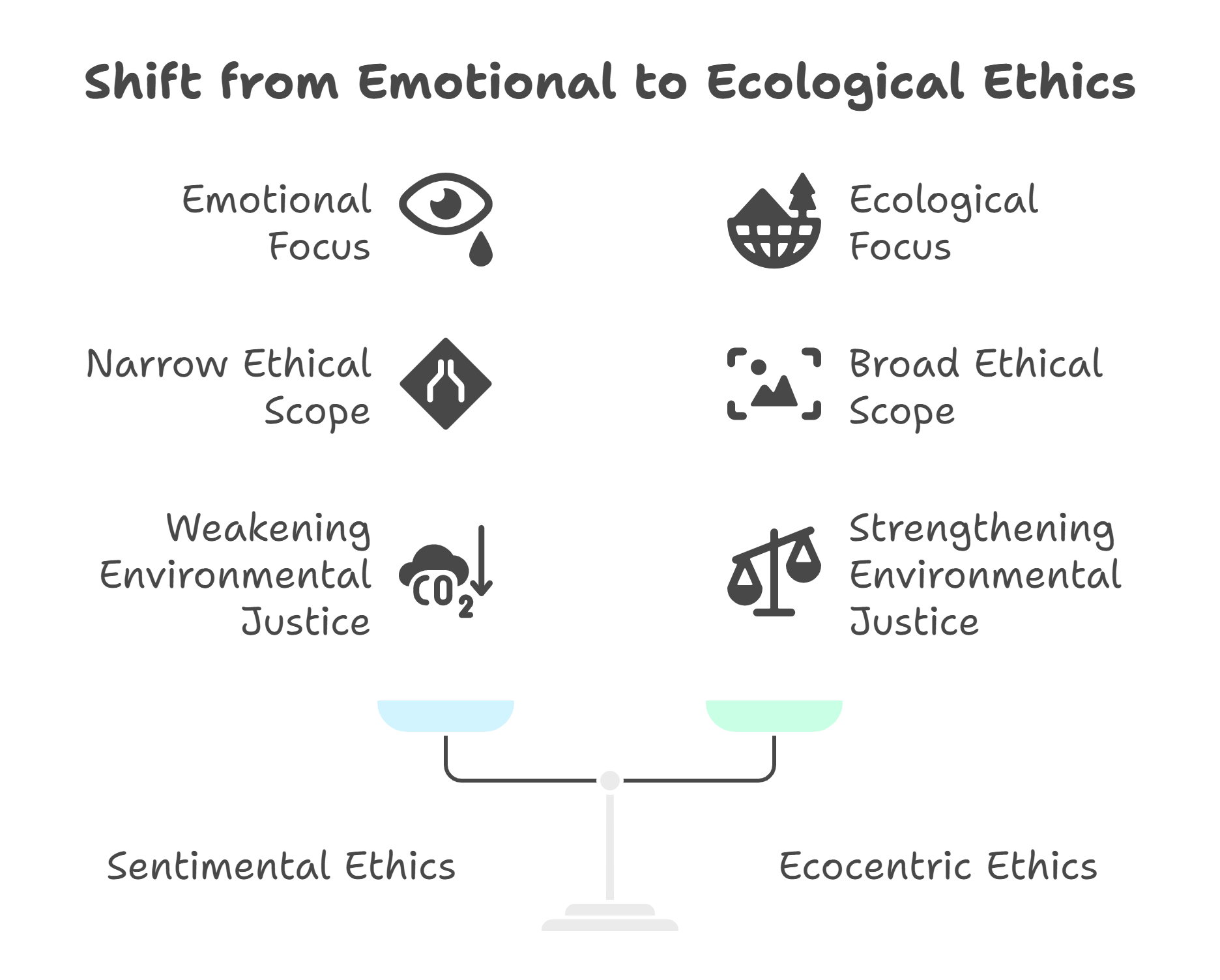
5. An Educational Warning
Environmental activists must recognize that if their movements fall into the trap of sentimental ethics limited to select species, they are, in effect, reproducing the same anthropocentric logic that created the environmental crisis in the first place. Ecocentrism does not imply indifference to animal suffering; rather, it means situating such suffering within the broader framework of life and ecological integrity.
In Leopold’s words, “The question is not whether a species is lovable, but whether it plays a role in the integrity and stability of the community of life.” This perspective compels us to fight just as fiercely for an endangered tiger as for the preservation of an obscure algae or insect species that sustains ecosystem balance.
Conclusion
Society does not need you to be an “ordinary citizen.” It needs to hear from you and see you act beyond the confines of emotion-driven responses. The time has come for environmental activists—both in local and global contexts—to critically examine and move beyond sentimental ethics toward a robust ecocentric ethic. This transition demands intellectual convergence, the advancement of ecological literacy, and a fundamental revaluation of life’s worth. In other words, we must undertake a rethinking of values within environmental movements. Only through such a transformation can we hope to address the roots of the environmental crisis rather than merely applying superficial remedies.