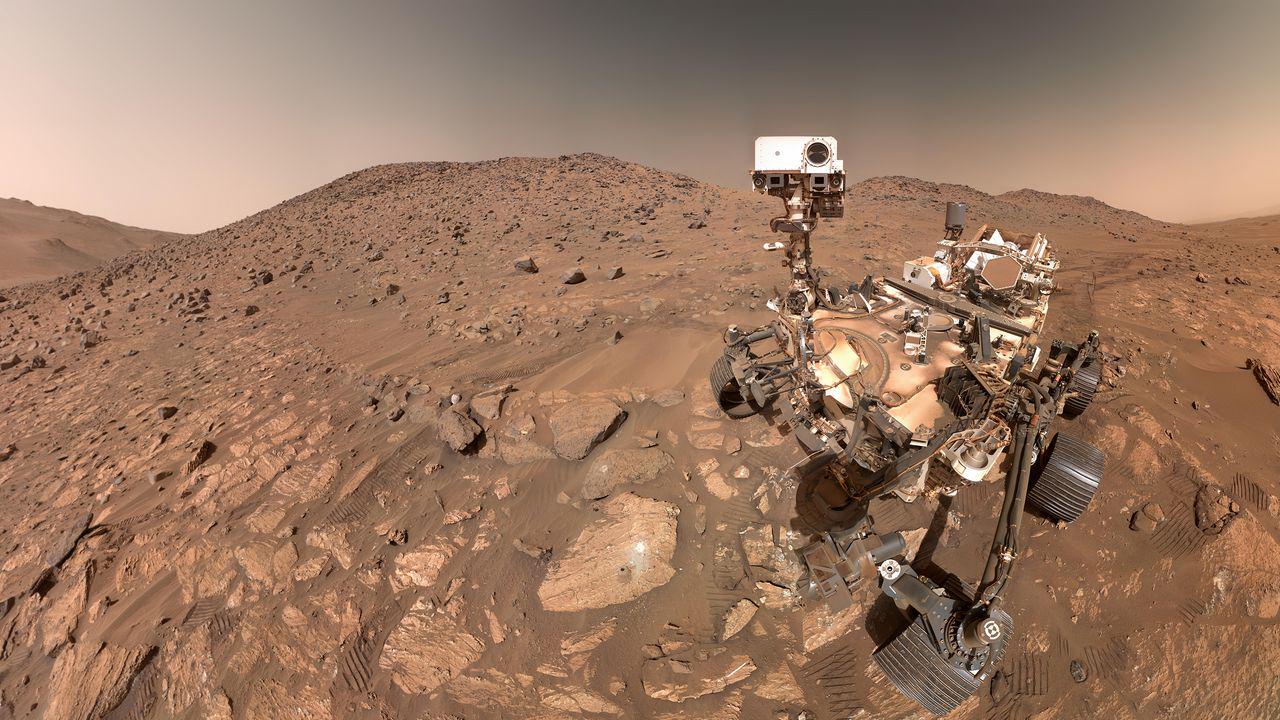
A Major Advance in the Search for Life on Mars
https://www.newyorker.com/news/the-lede/a-major-advance-in-the-search-for-life-on-mars

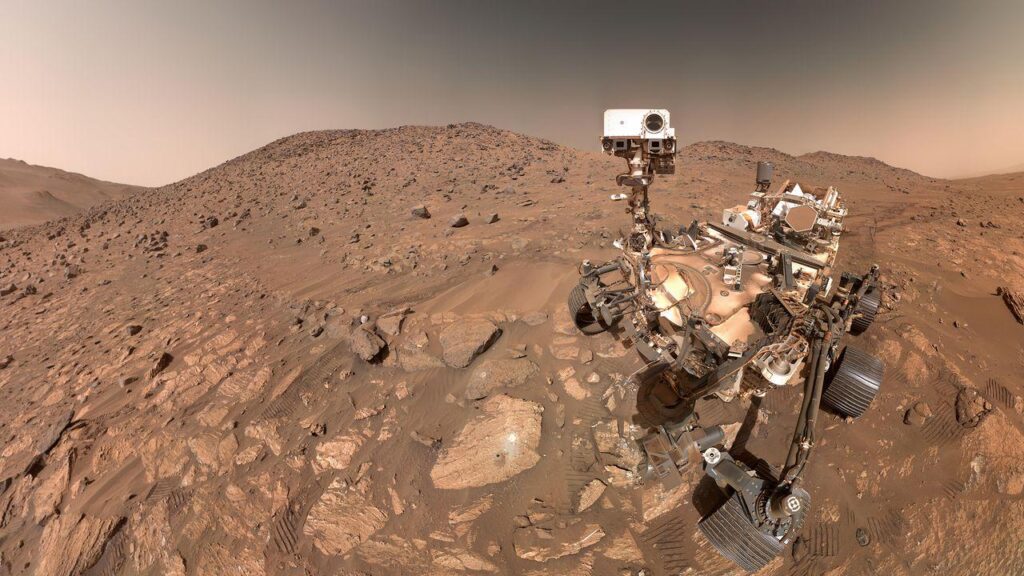
A Major Advance in the Search for Life on Mars
https://www.newyorker.com/news/the-lede/a-major-advance-in-the-search-for-life-on-mars
4 Comments
***Article Summary***
In June, 2024, Perseverance, a NASA rover sent to collect samples on the surface of Mars, came upon a cluster of rocks in what is thought to be a former riverbed. Most of the rocks were identified as mudstones—they likely formed from the sediment in slow-moving water—meaning they would be perfect vessels for any traces of aquatic life in the area. After a monthlong, systematic geological survey, scientists took a special interest in an arrowhead-shaped stone slab dubbed Cheyava Falls. The rover drilled a sample of it, which researchers called Sapphire Canyon, for an eventual return to Earth.
The discovery may go down in history. Perseverance determined that the whole area around Cheyava Falls is rich in oxidized iron, phosphorus, sulfur, and organic carbon—a combination that microbes could potentially feed on. Colorful spots on Cheyava Falls contain the mineral greigite, which some microbes on Earth excrete, and vivianite, which is often found around decaying organic matter. Producing such minerals in a lifeless place would probably require acidic conditions or high temperatures—and the area showed signs of neither. Together, these findings are a “potential biosignature,” the Perseverance’s project scientist said. This means that they are more likely to be the result of biology than the result of something else. Scientists published their findings this week in the journal Nature. Sean Duffy, the interim administrator of NASA, called them “the clearest sign of life that we’ve ever found on Mars.”
Unfortunately, NASA is currently facing its own extinction-level event: the Trump Administration has recommended a budget that cuts the agency’s over-all federal funding by nearly a quarter, and essentially halves its spending on its science program. The proposal would also cancel the mission to return the samples to Earth, stop 41 science missions, and slash Perseverance funding by 23%. The budget, which could take effect on October 1st if Congress does not pass an appropriations bill, would also effectively disable two healthy spacecraft that are orbiting Mars: MAVEN and Mars Odyssey, both of which Perseverance uses to send communications back to Earth. Did NASA headquarters seize this moment to publicize its findings in hopes of resurrecting the sample-return mission? Read more: [https://www.newyorker.com/news/the-lede/a-major-advance-in-the-search-for-life-on-mars](https://www.newyorker.com/news/the-lede/a-major-advance-in-the-search-for-life-on-mars)
This article amuses me a bit. When I was a teenager I read a Tom Clancy Netforce book that has almost the same plot.
“Private space companies are threatening to take over the space industry so NASA fabricates the discovery of life on Mars.”
I don’t actually remember much beyond that about the book but every now and then I reflect back and chuckle at Clancy’s foresight.
This is not a scientific comment by any means, but I’m curious how many of you have just had a hunch all these years we would eventually find evidence of previous life or current life on Mars, and if we do, have that “I knew it” mentality waiting to come out that you kind of want recognition for, but also realize your hunch wasn’t based on any solid evidence so it would all be just a lucky guess, but you still want to feel good about having an open mind and believing?
very exciting. Im sure people have varying opinions, but if confirmed I would put this as the greatest discovery in human history.