
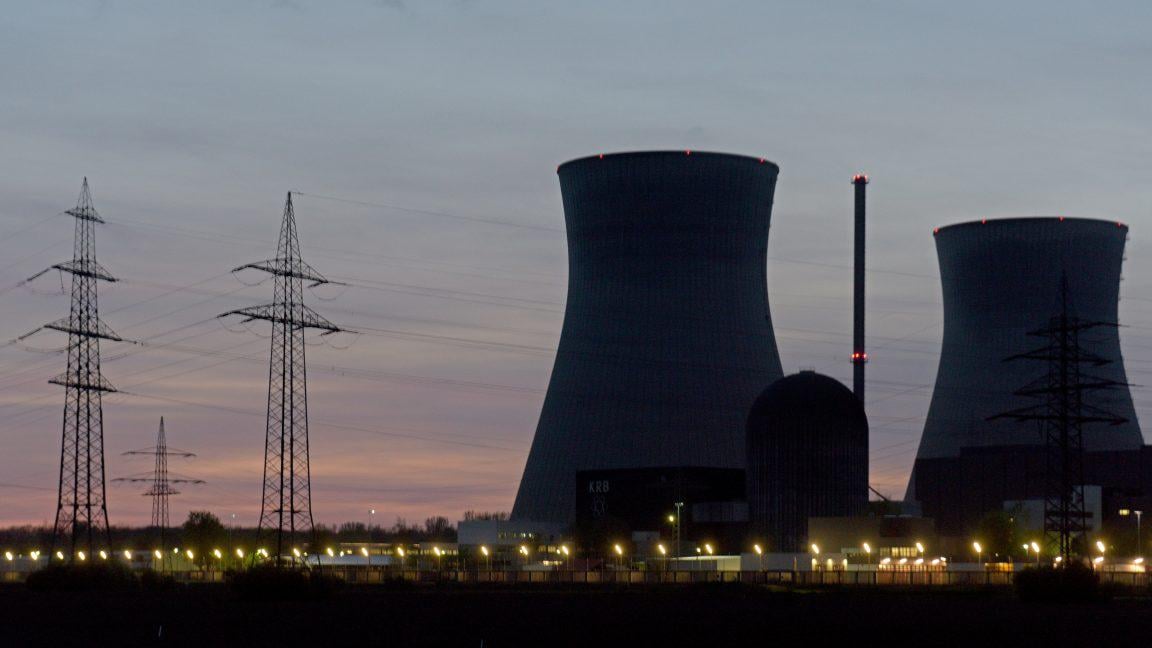
The US is trying to kick-start a “nuclear energy renaissance” | Push to revive nuclear energy relies on deregulation; experts say strategy is misplaced.
https://arstechnica.com/science/2025/09/the-us-is-trying-to-kick-start-a-nuclear-energy-renaissance/
3 Comments
From the article: In May, President Donald Trump signed four executive orders to facilitate the construction of nuclear reactors and the development of nuclear energy technology; the orders aim to cut red tape, ease approval processes, and reshape the role of the main regulatory agency, the Nuclear Regulatory Commission, or NRC. These moves, the administration said, were part of an effort to achieve American independence from foreign power providers by way of a “nuclear energy renaissance.”
Self-reliance isn’t the only factor motivating nuclear power proponents outside of the administration: Following a decades-long trend away from nuclear energy, in part due to safety concerns and high costs, the technology has emerged as a potential option to try to mitigate climate change. Through nuclear fission, in which atoms are split to release energy, reactors don’t emit any greenhouse gases.
The Trump administration wants to quadruple the nuclear sector’s domestic energy production, with the goal of producing 400 gigawatts by 2050. To help achieve that goal, scientific institutions like the Idaho National Laboratory, a leading research institute in nuclear energy, are pushing forward innovations such as more efficient types of fuel. Companies are also investing millions of dollars to develop their own nuclear reactor designs, a move from industry that was previously unheard of in the nuclear sector. For example, Westinghouse, a Pennsylvania-based nuclear power company, plans to build 10 new large reactors to help achieve the 2050 goal.
However, the road to renaissance is filled with familiar obstacles. Nuclear energy infrastructure is “too expensive to build, and it takes too long to build,” said Allison Macfarlane, a science and technology policy expert at the University of British Columbia who used to chair the NRC from 2012 to 2014.
And experts are divided on whether new nuclear technologies, such as small versions of reactors, are ready for primetime. The nuclear energy field is now “in a hype bubble that is driving unrealistic expectations,” said Edwin Lyman, the director of nuclear power safety at the Union of Concerned Scientists, a nonprofit science advocacy organization that has long acted as a nuclear safety watchdog.
Meanwhile, the Trump administration is trying to advance nuclear energy by weakening the NRC, Lyman said. “The message is that it’s regulation that has been the obstacle to deploying nuclear power, and if we just get rid of all this red tape, then the industry is going to thrive,” he added. “I think that’s really misplaced.”
Although streamlining the approval process might accelerate development, the true problem lies in the high costs of nuclear, which would need to be significantly cheaper to compete with other sources of energy such as natural gas, said Koroush Shirvan, a nuclear science researcher at the Massachusetts Institute of Technology. “Even the license-ready reactors are still not economical,” he said. If the newer reactor technologies do pan out, without government support and subsidies, Shirvan said, it is difficult to imagine them “coming online before 2035.”
Apparently, we are (UK) getting on board too:
[https://www.gov.uk/government/news/golden-age-of-nuclear-delivers-uk-us-deal-on-energy-security](https://www.gov.uk/government/news/golden-age-of-nuclear-delivers-uk-us-deal-on-energy-security)
Ironic since they crippled the LPO earlier this year which was responsible for providing nearly all loans for nuclear facilities