
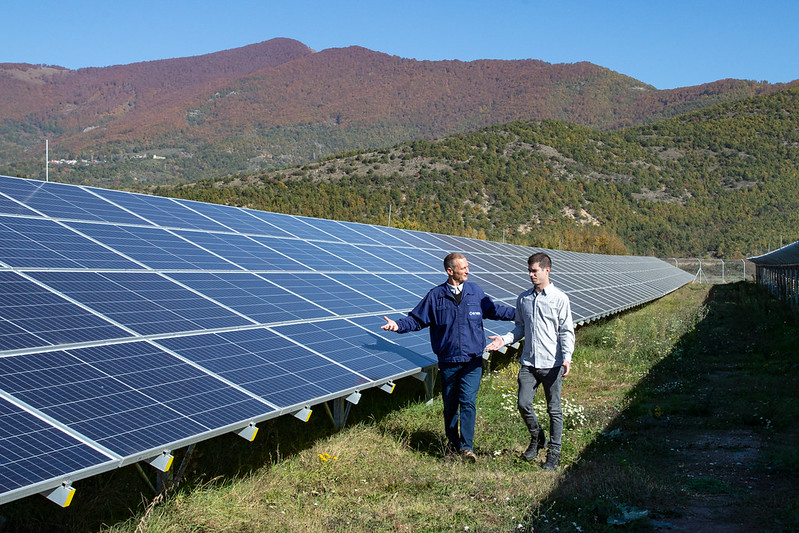
 North Macedonia, a small landlocked country surrounded by Serbia, Greece and Albania, has often flown under the radar. It is a country that has struggled with poverty for years, with about 21.6% of people living in poverty. Energy poverty is a common struggle that Macedonian households face, with more than 33.1% of the population unable to keep their homes warm due to high energy expenses, low building energy efficiency and outdated heating systems.
For many people struggling, energy bills can be a significant problem, as they risk getting disconnected from the grid due to non-payment, while others struggle with the polluted air from burning harmful substances for cheap heating. To reduce these bills, Macedonian households have started using other strategies such as minimizing the use of appliances, and while buying more efficient appliances is an option, this is often too expensive for low-income households.
As the country moves toward using more renewable energy, this is starting to improve, but there is still a long way to go. Switching to cleaner energy sources like solar and hydro power has helped make electricity more affordable and reliable, along with creating new job opportunities and helping with day-to-day life, particularly with farmers.
Renewable Energy in North Macedonia
Recently, North Macedonia has experienced a rise in their production of renewable energy by a significant 20.8%, compared to the previous year and the State Statistical Office reported that the renewable energy output for April had reached an impressive 119,821 MWh. The leading source of this green energy transition is hydropower, which accounts for nearly 82% of the total renewable energy generated. Wind power is also becoming significant as it generated 11,636 MWh in April 2025, which was a 5.4% increase from the year before. The Bogdanci farm is the first wind farm in Macedonia and is producing about 100 GWh, which is enough to fulfil the needs of 15,000 households. The construction of this wind farm has opened up a new chapter in energy strategy.
The country has also installed its first solar power plant within an irrigation system, with a 500 kW facility on the Streževo dam, which is the first of its kind in the Western Balkans. The project, supported by Spain through a EU Recovery and Resilience Facility grant, aims to boost sustainability in agriculture. These activities funded are divided into three phases of which the first one identifies locations for floating solar power plants. The second one develops a feasible project design and the third one oversees the preparation of project proposals. As a result, the agricultural sector becomes more independent and more sustainable.
Projects like solar-powered irrigation are cutting costs for farmers, helping them earn more and making it easier for people to stay in rural areas instead of moving to cities. Use of renewable energy in North Macedonia, particularly solar power, is paving the way for a sustainable future as it generated 8,062 MWh in April 2025, which was a 21.7% increase compared to the previous year.
Looking Ahead
Still, the transition has not been easy. Upfront costs for things like solar panels are still too high for many households. Up to 30% of people still struggle to heat their homes in the winter. And in some rural areas, the electricity grid is not strong enough to support solar and wind power. That is why better planning and more inclusive policies are needed to make sure no one is left out.
Renewable energy in North Macedonia is already transforming the country, with locals stepping up to help steer their country on a sustainable path for the future, such as seen through the Bogdanci wind farm and their efforts to generate electricity. There are efforts from the government and collaboration internationally to allow for a brighter future for the country of North Macedonia. Progress is happening and while there is still a lot of work ahead, every small step forward matters.
– Amaira Katyal
Amaira is based in London, UK and focuses on Technology and Solutions, and Global Health for The Borgen Project.
Photo: Flickr