
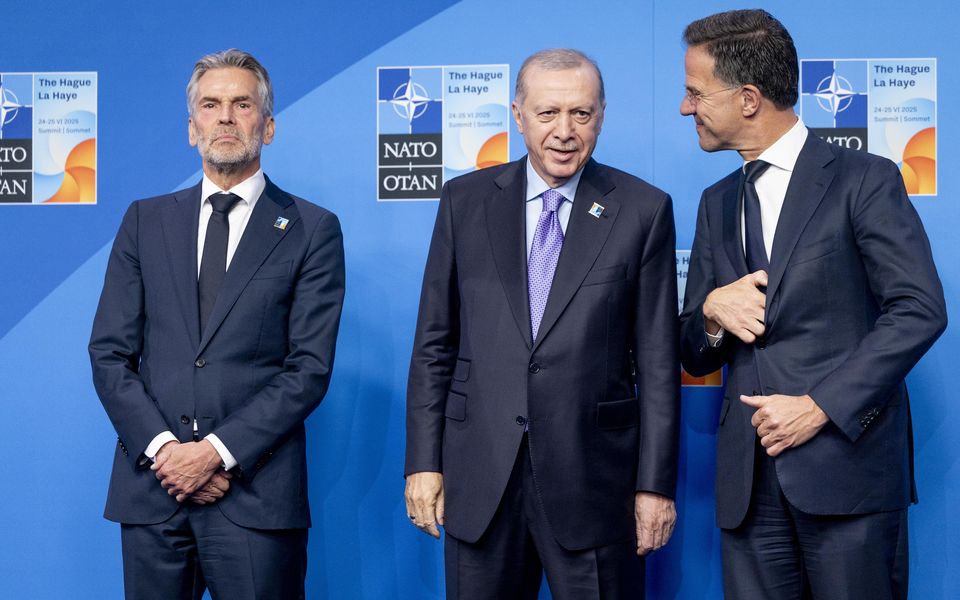
NATO chief Mark Rutte (R), along with outgoing Dutch Prime Minister Dick Schoof (L), welcomes Turkish President Recep Tayyip Erdogan (C) to the World Forum for the NATO Summit in The Hague, The Netherlands, on 25 June 2025. [Koen van Weel/EPA]
NATO Secretary-General Mark Rutte signaled support for Turkey’s participation in the European Union’s SAFE (Security Action for Europe) defense program during a meeting with EU ambassadors last Thursday, according to European diplomatic sources.
It was Rutte’s first appearance at a meeting of the EU’s permanent representatives (Coreper), timed shortly after the European Commission confirmed Ankara’s application to join SAFE, a €150 billion program aimed at boosting Europe’s defense industry.
Rutte argued that closer EU-Turkey engagement is essential for stronger NATO cooperation. He suggested Turkey’s involvement in SAFE could ease Ankara’s long-standing objections to sharing sensitive NATO-EU information.
A diplomatic source described the issue as complex, tied to NATO defense standards. While Rutte has already shared unclassified standards with the EU – reportedly angering Turkey – classified data require unanimous NATO approval, giving Ankara leverage. Rutte urged EU states to recognize Turkey’s military capabilities and extend a gesture of goodwill.
Turkey has increased engagement with Western defense initiatives, participating in meetings on post-war Ukraine and signaling willingness to deploy forces in a future peace mission, a position backed by French President Emmanuel Macron.
Rutte, who once clashed openly with President Recep Tayyip Erdogan as Dutch prime minister, has repeatedly defended Turkey’s role since becoming NATO chief in October. In May, he opposed German restrictions on Eurofighter jet sales to Turkey, saying, “There should be no restrictions on arms sales between allies.”
However, an EU diplomat stressed that SAFE is a European program, and participation decisions remain with EU member-states.
The debate centers on NATO standards needed for EU-funded defense projects. “NATO cannot set conditions while blocking defense development financed with external funds,” one diplomat said.