
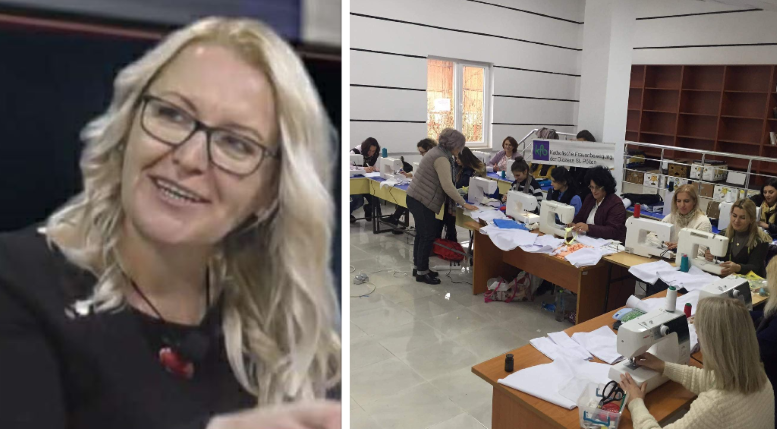
The immigrant from Austria is financially emancipating women in Kosovo with her project

Merita Miftari
17/09/2025 19:19
Antigona Shala from the village of Cermjan in Gjakova, today works as a professional seamstress, living her dream that once seemed distant. Her journey began in 2018 when she enrolled in a free tailoring course, a project brought to Kosovo from Austria by migrant Ganimet Bajraktari, known as Ganja. The project aims to provide professional training and employment to women, mainly from rural areas.
Among the many women who have successfully completed this course is Antigona, 45, who has now reached a significant number of clients, ensuring a good living from the income she earns from this job. Through this profession, she is also able to educate her children.
“I have loved this profession since I was little, I dreamed of being a seamstress. At the age of 12, I completed a course (for tailoring), but I was not skilled enough. Since we are in the village and we do not have support from the state or from associations, Ganimet Bajraktari offered us this opportunity. I also had the support of my husband,” said Shala as she recounted her journey in tailoring.
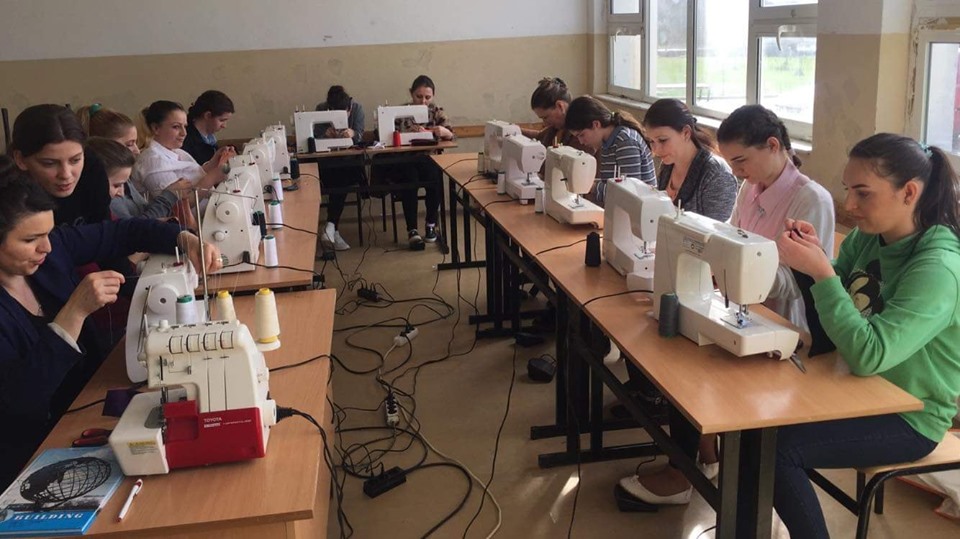
The mother of four children says that she started the course in the village of Drenovc in the municipality of Rahovec, but due to the great demand from women to become part of it, the lessons continued in the village of Denjë, in a larger space.
“The course lasted 12 months, it was very professional, the teacher trained us in detail, everything was perfect. I have mastered the tailoring craft 100% and I have gained a lot of knowledge,” said the 45-year-old during an interview with Gazeta Express.
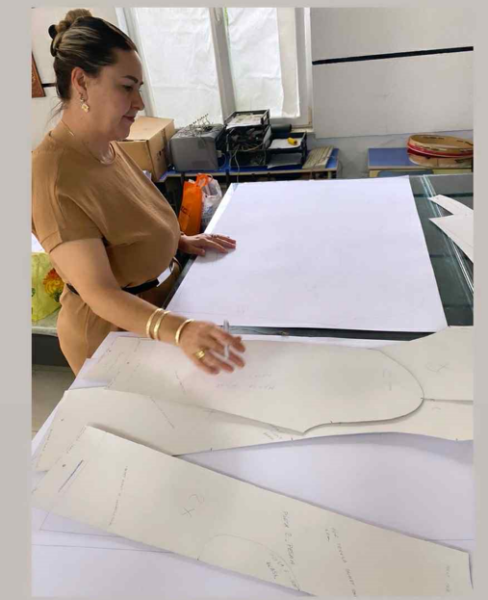
Antigona, thanks to her dedication, managed to become skilled enough to teach other women how to sew.
“The teacher chose me as her assistant for a year. I taught students in Kruše e Madhe (it was 2024).”
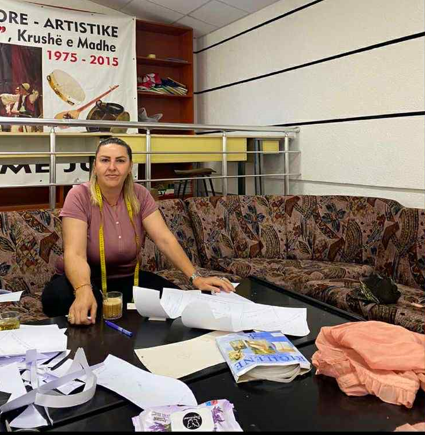
Antigona, who also makes heavy bridal gowns, is very satisfied with the work she does.
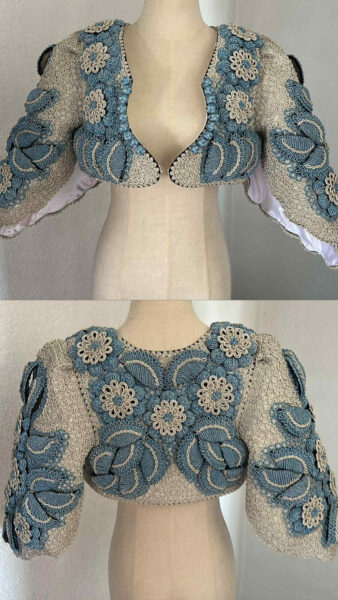
“I continue to work at home, I have my circle in the village who trust my work and know how I sew and how I work, I am making a very good living from this profession,” said the seamstress.
She adds that she has so many requests from her clients that sometimes she is unable to fulfill them all.
“I work at home, I educate my children with this profession, I help my husband (financially). I educate my children entirely with this profession,” the 45-year-old concluded.
Migrant women not only bring remittances, but also development and employment to Kosovo
Physically in exile and spiritually in Kosovo, Ganimet Bajraktari worked hard to help women in rural areas since 2014 to become skilled in the tailoring profession, which today counts hundreds of certified and financially independent women.
Through the donations she received in Austria, Bajraktari feels happy when she sees that from the courses she offered to women, they are now working and have even opened their own businesses.
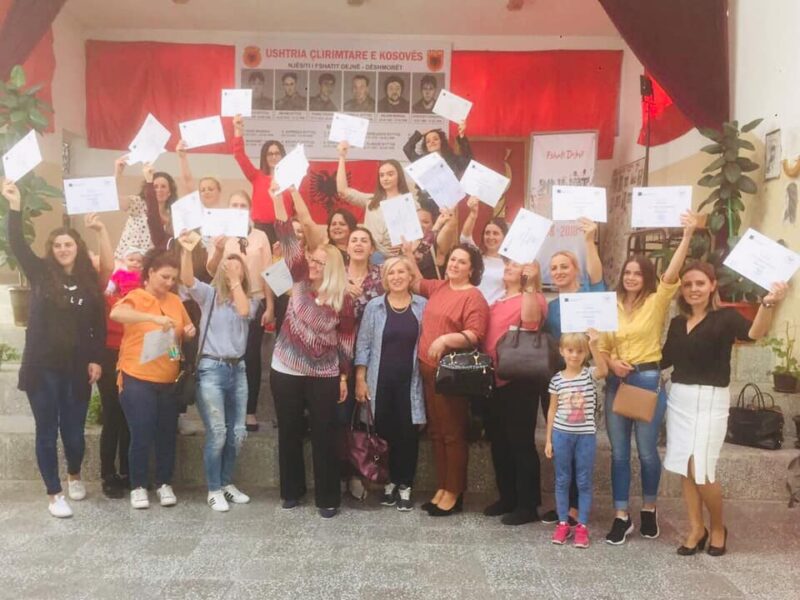
“In Austria, I have connected with a women’s association, I have managed to receive donations from the women of the Catholic Church, to do projects for women in Kosovo. So far, approximately 300 women in Kosovo have taken tailoring courses. Some of them work, sew privately, have opened businesses, are certified, etc.,” Bajraktari told Gazeta Express.
These women are mainly from the regions of Rahovec, Prizren and Gjakova.
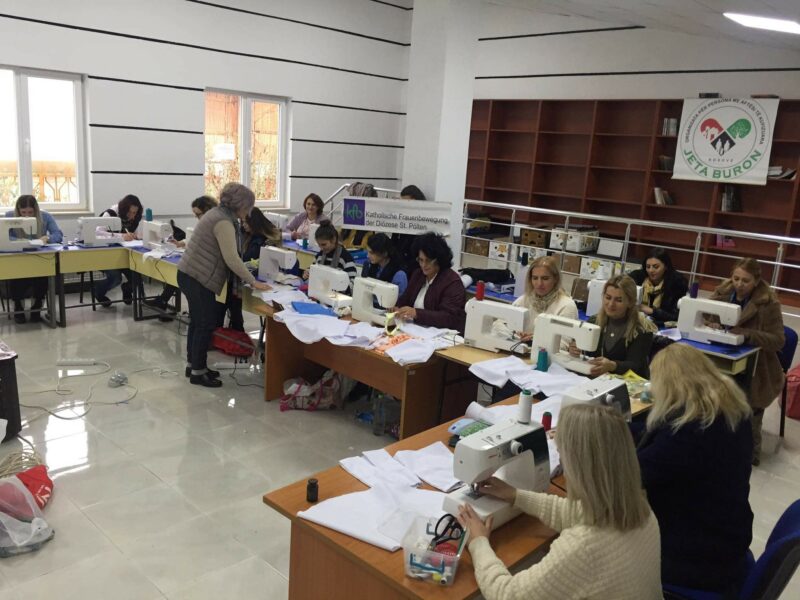
“Some have gone abroad and with this certificate they have been employed abroad,” she said, emphasizing that the certificate is also valid outside of Kosovo.
Bajraktari: Women contribute equally to men, and there are some who contribute even more
The woman, who has lived in exile for 29 years, first in Germany and then in Austria, says she left Kosovo due to political persecution. However, even from afar, during the war, she contributed material aid to our country.
“…Even during my pregnancy, I was involved in many activities in Austria for aid collected for Kosovo, various clothing items,” said Bajraktari when asked when she started her activity to help our country’s economy.
Ganimet Bajraktari, originally from Rahovec, married in Prizren, states that she is present in Kosovo 10 to 15 times a year.
“I never take a vacation in Kosovo, my vacation is to engage in activities in Kosovo. I am in Kosovo every month,” she told Gazeta Express.
In addition to projects for women, the immigrant had also implemented projects for people with disabilities, bringing various donations that make their lives easier.
Ganimet Bajraktari, after an analysis she had done in Kosovo, claims to have identified around 24 thousand families with people with disabilities. Through her association “Jeta Buron”, founded in 2012, she says she has brought many donations, such as prostheses, orthopedic shoes, strollers, children’s toys, beds for immobile people and other aid for children.
However, like almost all expatriates, she also continuously financially supported her family in Kosovo, specifically her parents.
Investment plans in Kosovo
For years now, she has dreamed of opening a business in Kosovo through which she aims to employ women.
“I want to have a production-farm, where women are employed, something is produced and it goes outside of Kosovo, it is exported,” she concluded.
Diaspora plays a major role in Kosovo’s economic development
The Kosovo diaspora, through regular financial transfers, has caused remittances to increase over the years.
The Central Bank of Kosovo (CBK) has confirmed to Gazeta Express that during 2025 there was an increase in remittances of 3.91%, compared to the same period, January-June, of 2024.
Meanwhile, the value of remittances for the period January-June 2025 has reached 654.70 million euros, confirms the CBK.
Undoubtedly, diaspora women are major contributors to remittances, but the CBK does not have data disaggregated by gender of senders.
“Data on remittances are not compiled by gender of the sender or recipient as this information is not required in accordance with international statistical manuals and is difficult to implement in practice,” the CBK response states.
Economics professor Shkumbin Misini also claims that the role of women as remittance senders in Kosovo is “a relatively little-analyzed and difficult aspect to analyze in economic discourse.” However, he emphasizes that “women constitute an important part of remittance senders, supporting their families in their countries of origin.”
Economics Professor Shkumbin Misini states that remittances play a key role in Kosovo’s economy.
“Their contribution is to family incomes, which directly affects the socio-economic well-being of Kosovo. Remittances also affect the standard of living for Kosovars through increased consumption and healthcare, and are very large contributors to real estate investments, which directly affect the turnover of Kosovar businesses,” Misini tells Gazeta Express.
He claims that “Remittances provide an important source of income for Kosovars that helps families and contributes to Kosovo’s economic growth, this financial support is often used mainly for daily consumption expenses, not for long-term investments or sustainable economic development of Kosovo.”
However, the professor estimates that “the heavy dependence on remittances may discourage active participation in labor demand, reducing motivation for formal employment and creating a negative effect on the country’s economic dynamics.”
The professor emphasizes that “dependence on remittances affects the increase in passive participation and reduces active participation in the demand for work. According to the latest KAS report, Kosovo has a large number of citizens who are passive in the labor market.”
Over the years, Kosovo has received billions of euros in remittances, most of which come from Germany, Switzerland and the USA./Gazeta Express