
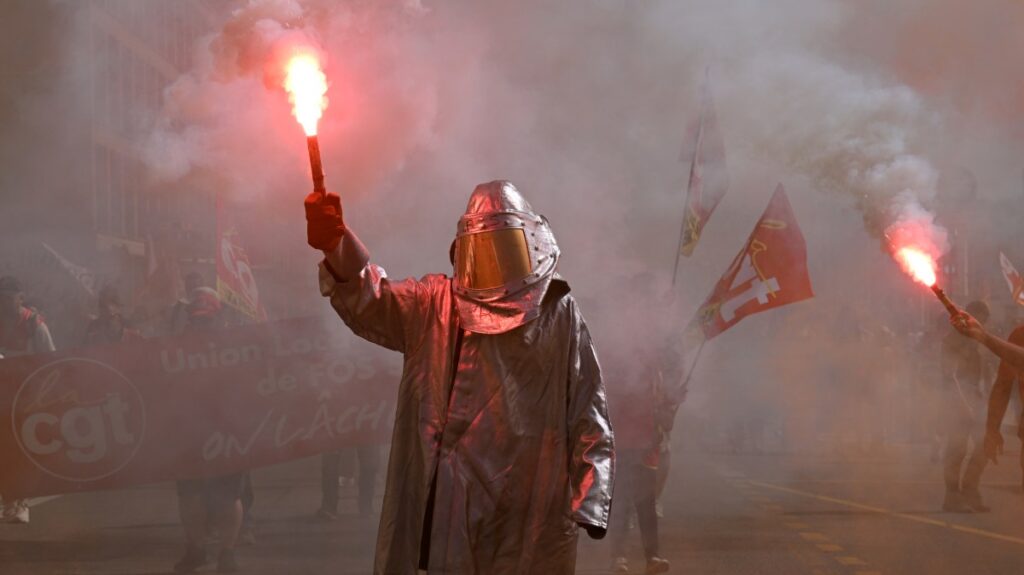
Dozens of people have been arrested across France amid clashes between police and protesters after unions called a general strike on Thursday, in a show of opposition to President Macron’s embattled government.
The clashes came as demonstrators sought to block schools, universities and public transport, deepening the sense of crisis in a country beset by economic difficulties, political turmoil and widespread unrest.
Bruno Retailleau, the right-wing interior minister, said 58 arrests had been made by mid-morning at 230 gatherings and protests, including 95 attempts to block roads and other infrastructure.
However, he said the disruption was less widespread than expected. He said radicals had been “destabilised” by the deployment of 80,000 police officers to maintain order.
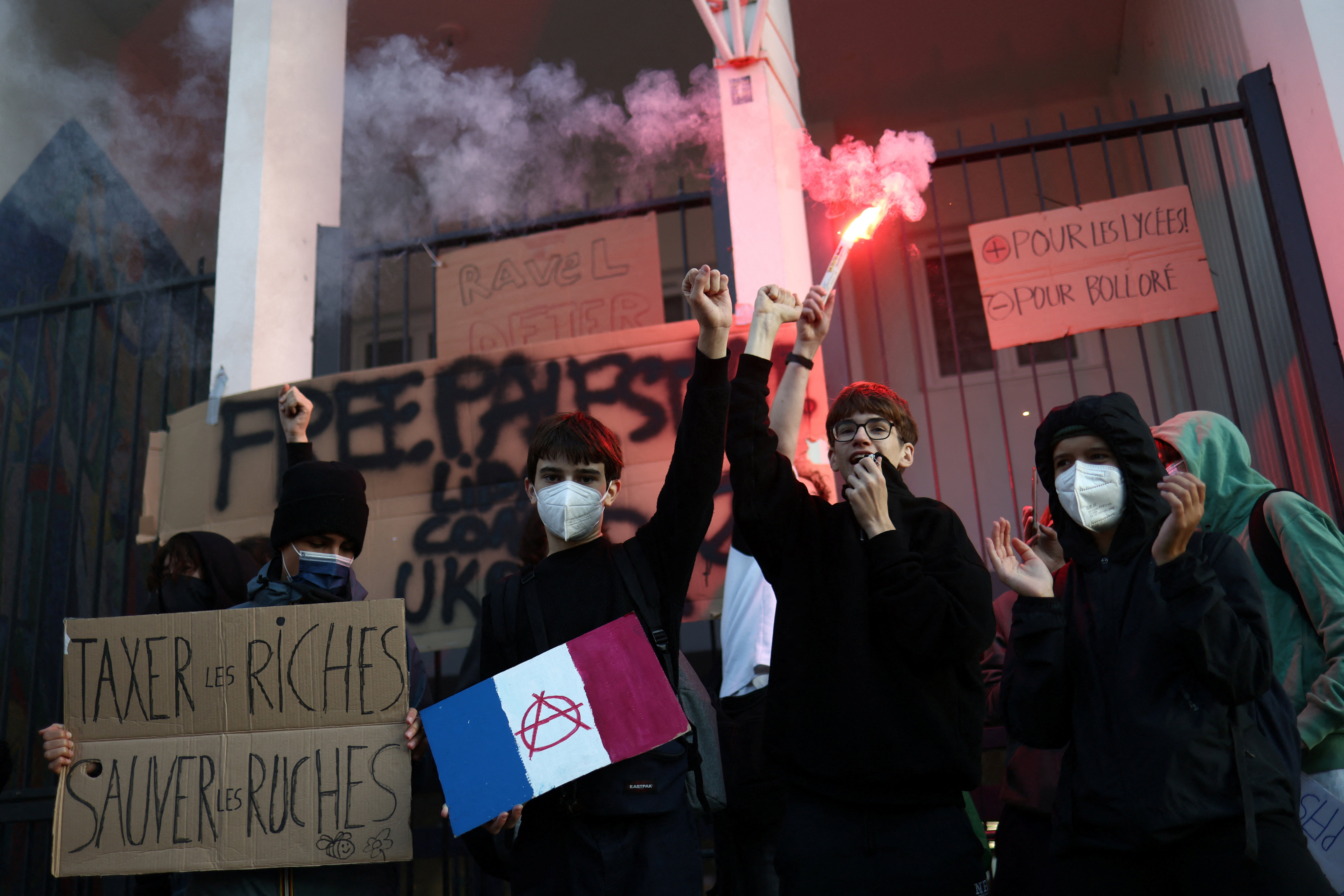
Students block the entrance of a high school in Paris as part of a day of nationwide strikes and protests against the government
TOM NICHOLSON/REUTERS

Riot police on the streets of the southern city of Marseille
MIGUEL MEDINA/AFP/GETTY IMAGES
Retailleau is seeking to depict himself as a pillar of stability in a country with a centuries-old tradition of uprisings.
The turbulence follows a day of protest last week by groups seeking to “block everything”. Not wanting to be outdone, unions decided to stage a general strike that is mainly affecting schools, energy operators, public transport networks, hospitals and chemists.
They say their aim is to force Sébastien Lecornu, Macron’s new prime minister, to jettison plans for an austerity budget and instead to push through public spending hikes financed by higher taxes on the rich.
• Can France’s ‘gherkin’ PM get Macron out of his pickle?
Their campaign has ratcheted up the pressure on Lecornu, a little known former armed forces minister who is close to Macron. He is struggling to put together a government and a budget amid widespread predictions that he will fare no better than François Bayrou and Michel Barnier, his two predecessors, who were both ousted after a matter of months when they proposed spending cuts to try and tackle a national debt of €3.3 trillion.
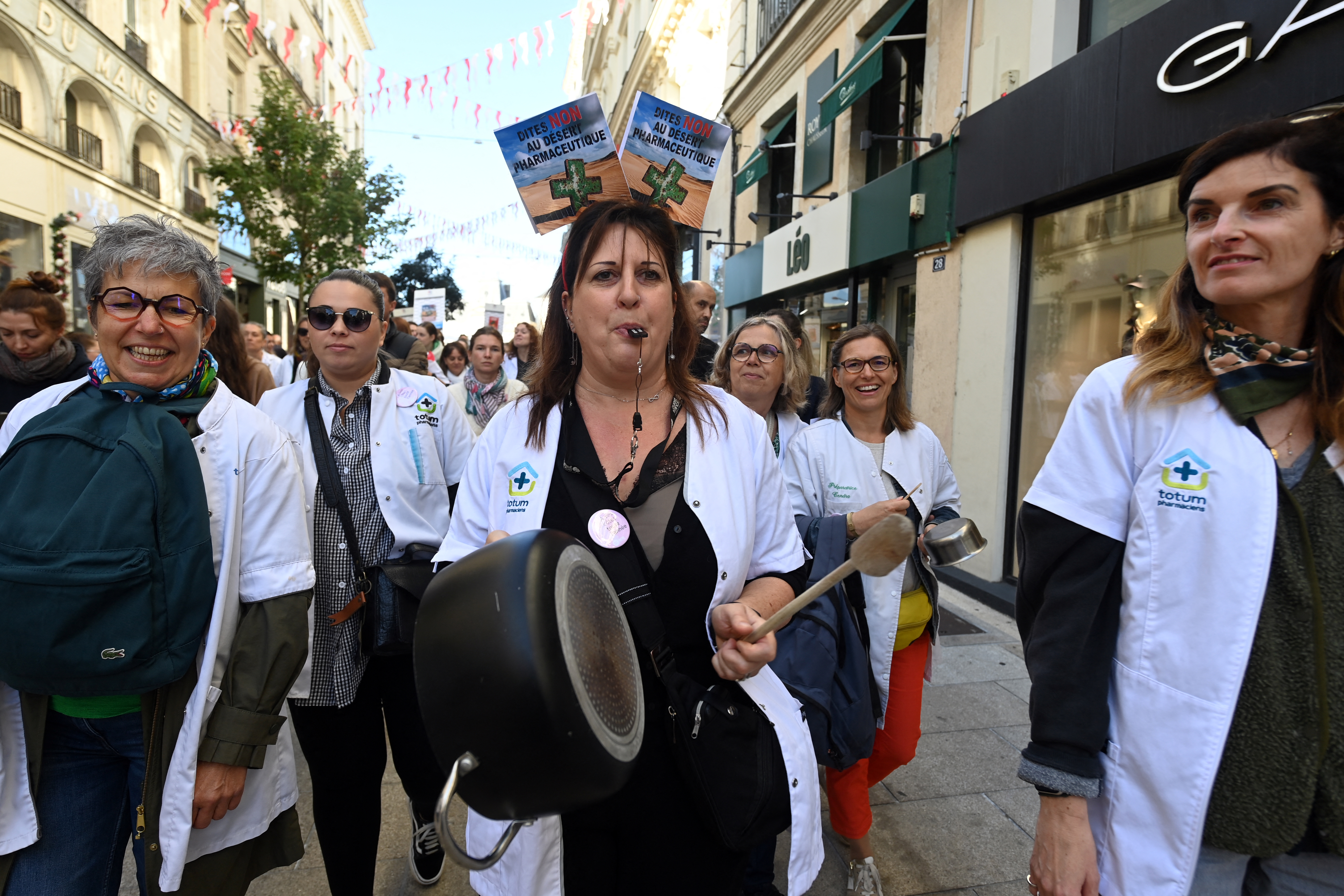
Pharmacists demonstrate in Le Mans, western France
JEAN-FRANCOIS MONIER/AFP/GETTY IMAGES
Unionists said more than 100 protest marches are scheduled, with officials estimating that about 800,000 people would take part. Police said they were preparing for about 1,000 violent left-wing radicals, raising fears of riots.
• Daunting challenges lie ahead for Macron’s new prime minister
The Metro in Paris was disrupted, as were transport systems in many provincial cities and some intercity rail lines. A third of primary school teachers and 45 per cent of their colleagues in secondary education walked out, unions said.
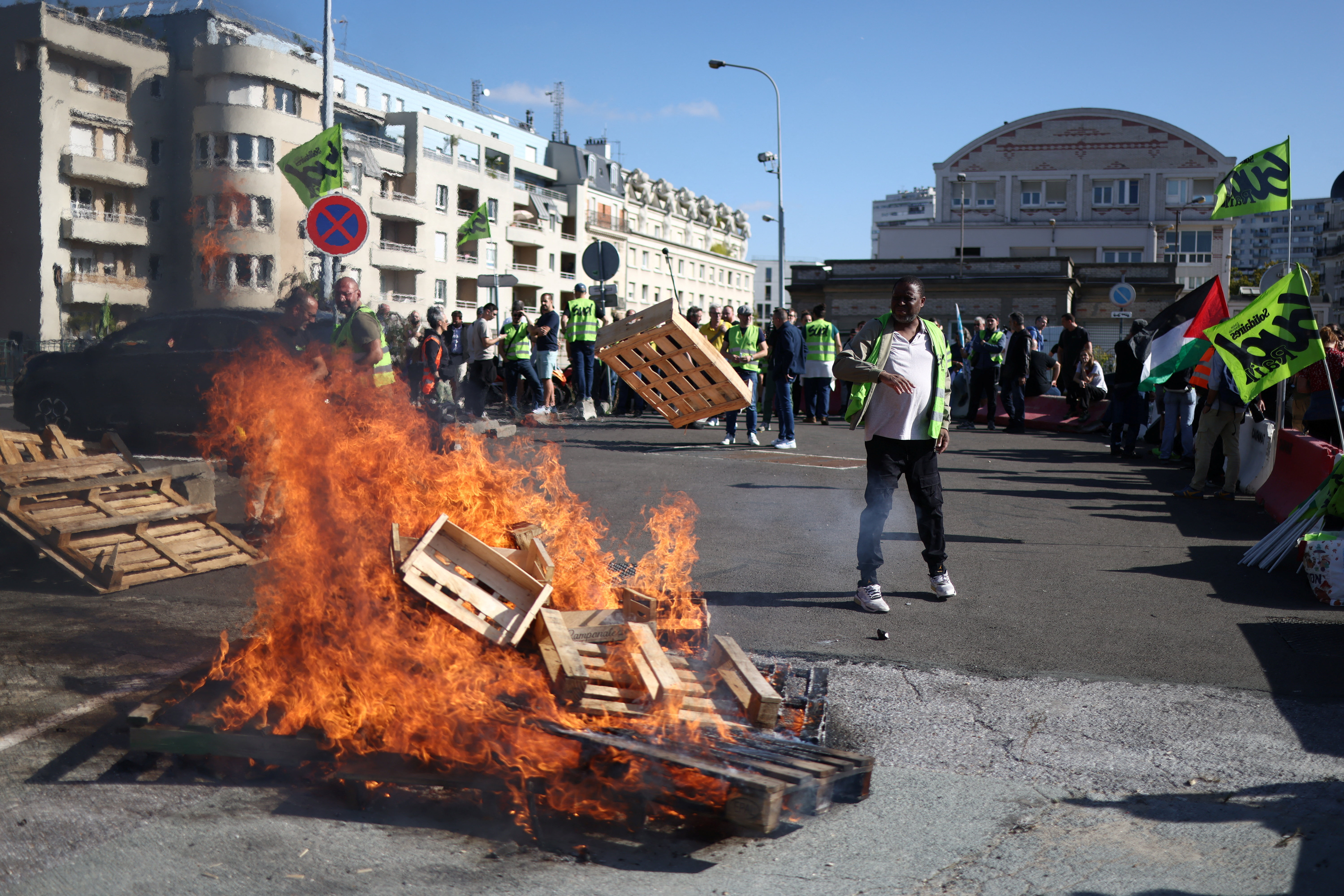
A fire outside the Gare de Lyon in Paris as public transport was blocked across the country
TOM NICHOLSON/REUTERS
There were pickets outside nuclear sites and gas plants as energy workers also took action. Hospital staff went on strike as did swathes of other public sectors. About 90 per cent of chemists were closed in a protest over a plan to reduce the revenue they earn from welfare-funded medicines.
Sophie Binet, secretary general of the hardline Confédération Générale du Travail union, said she was enjoying a “beautiful day of demonstrations”.