
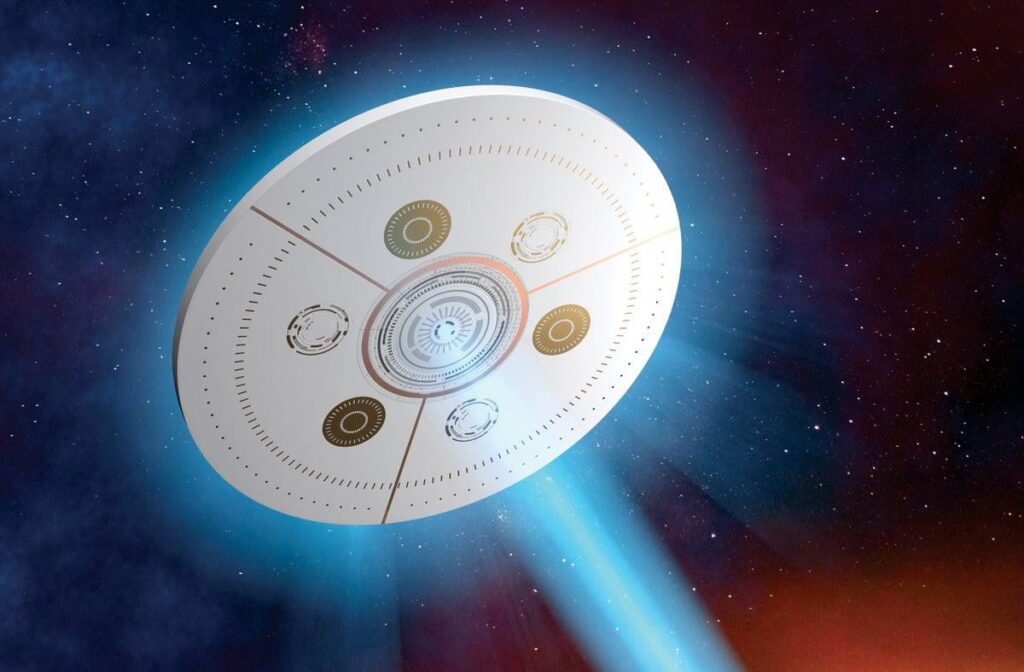
I would have loved to see this project go somewhere, but the technical challenges, alongside the geopolitics of having ultra-powerful lasers, likely doomed this project.
https://www.scientificamerican.com/article/the-quiet-demise-of-breakthrough-starshot-a-billionaires-interstellar/
10 Comments
Kinda never really was alive in the first place. The implications of lasers on that magnitude alone doomed the project
If you haven’t seen it there is a cheaper “inspired by” idea called TARS to do similar to starshot but slower. Much more useful for solar system exploration in the short term but could be used for interstellar exploration.
https://youtu.be/MDM1COWJ2Hc?si=L9oGyu_mNhheNGnY
>>”It’s hardly worth sending a ship to another star if you won’t be able to prove you’ve done it. Starshot would need to not just reach Proxima Centauri but also find a way to send back a signal strong enough to be detectable on Earth. It’s a considerable challenge, however, to point a signal in the right direction from light-years away when both the probe and Earth are moving. Plus, both those feats must be accomplished with diminutive instruments on a spacecraft the mass of a pen cap or two.”
On this point- just what kind of signal could such a tiny probe send? Assuming it physically survived the trip, I’d figure any signal such a tiny machine could send would be far too low powered to be read back home.
shame, and yet…the point it makes towards the end about how fast technological development is moving vs when cathedrals were built is interesting in the context of the mission itself. the fact that it might only send back some very basic information, not even a picture: the article suggests
“Perhaps the probe could send a yes-or-no answer to a single question—is there a certain percentage of oxygen in the planet’s atmosphere, for instance, or does the radiation environment seem suitable for life?”
but in the meantime while we spend billions for this answer, we might get better at answering those questions with locally based observatories, for example. Essentially it doesn’t seem worth doing unless you’re going to be able to send back a decent amount of data.
I always thought the idea was cool, but realistically money would NEVER be poured into this unless we found strong evidence of life in a nearby system. There just isn’t enough political interest to do it without a very strong prospect for life in a star system close enough where starshot would be achievable
On the plus side, this kills another current entry in Avi Loeb’s CV.
[deleted]
The article doesn’t really match the headline- its an extremely long term project that’s has published papers within the last year. Developing and refining the needed technologies was expected to take a few decades from the beginning, and they only need to launch by 2076 to meet their end of the century goal (20 years to reach Alpha Centarii, 4 years to get the data back)
Well maybe somehow someday I can pick up where they left off.
I’m usually not overly saddened by my own mortality in terms of missing out on what comes after, but I gotta be honest, knowing humans will see (and maybe land and live on) exoplanets etc. one day is a real bummer.