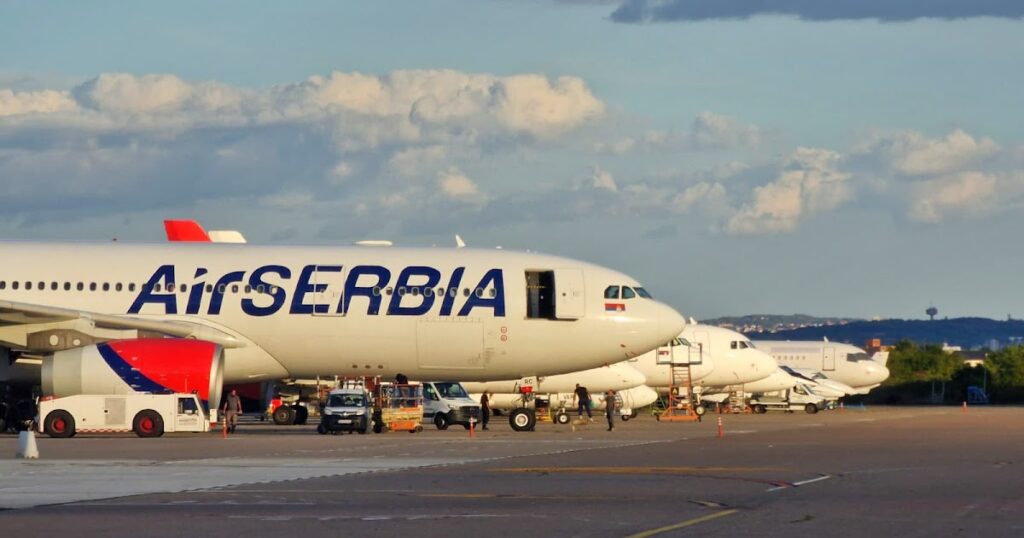

Air Serbia is preparing for network expansion in 2026, with the Embraer fleet to play a central role in the airline’s growth. Following several years of steady development, the carrier is moving towards a fleet of 32 aircraft by 2026, including additional Embraer E195s, which will allow it to pursue new opportunities across Europe and beyond. The regional jets, which are well suited for short and medium-haul routes, are expected to provide the flexibility to test new markets, maintain year-round connectivity to secondary destinations and adjust capacity without the risk of oversupplying demand with larger aircraft. The airline has already indicated several markets that are on its radar in the upcoming period.
In recent months, Air Serbia has signalled plans to expand its network with a mix of returning and entirely new destinations. Among the routes under consideration are Helsinki, services to either Baku or Yerevan, or potentially both simultaneously, as well as seasonal leisure points such as Ibiza and Olbia. Commenting earlier this year, Boško Rupić, the carrier’s General Manager for Commercial and Strategy, noted, “When we launch certain routes, such as those in the Caucasus region, where we’re also considering additional points, the Embraers strengthen our position. They allow us to test new markets with more flexibility and achieve stronger initial results, which we can then build on by upgauging to larger aircraft”. Mr Rupić also confirmed the airline is evaluating mid-haul opportunities, including the potential introduction of flights to the Canary Islands. At the same time, the carrier has reiterated its intention to return to the Middle East. However, it stressed that while the region remains strategically important, more profitable opportunities currently lie elsewhere.
On the long-haul front, the airline has already indicated that both Miami and Toronto are under consideration. Earlier this year, Emir Pineda, Director of Marketing and Air Service Development at the Miami Dade Aviation Department, said the new service from Belgrade could be announced by the end of 2025 or early 2026. A key consideration for the airline is its widebody fleet. One of its A330 aircraft, registered YU-ARC, is scheduled to be returned to the lessor in November 2026. Extending the lease would require immediate investment in cabin upgrades, while at the same time, other A330s are beginning to appear on the market. Until any deals for additional aircraft are finalised, the carrier faces limitations in committing to the launch of a new long-haul route with full certainty that the necessary capacity will be available.
Air Serbia’s CEO, Jiri Marek, has confirmed that the airline plans to add between five and six new routes in 2026. Outlining the carrier’s network development strategy, he explained, “We’re shifting our focus toward destinations like Tbilisi, where there’s a critical mass to support both connectivity and network development. These are markets where adding flights can also help feed the broader network. That said, the number of completely new destinations we can introduce is becoming more limited. So going forward, it will be a mix: a few new launches, realistically five to six per year, combined with route densification and seasonal adjustments”.
Air Serbia will participate in next week’s Routes World 2025 conference in Hong Kong, the industry’s largest annual forum for airlines and airports to explore new route opportunities for the year ahead. The airline will be represented by its Head of Network Planning, as well as its Airport Development Manager.