

The Bulgarian and Turkish flags. (Adobe Stock Photo)
September 19, 2025 11:42 AM GMT+03:00

Members of the Bulgarian Turkish minority living in Turkey are expressing growing concern over the political situation in Bulgaria, emphasizing a need for stability and effective governance. According to BNR, frustration is particularly pronounced among long-term emigrants and pensioners, many of whom feel disconnected from political developments in the Bulgaria.
Political turmoil and its impact on minority
Keeping track of Bulgaria’s complex political scene has become increasingly difficult for the community abroad. Only a small portion of expatriates follow key developments, such as Constitutional Court rulings or the fact that parliament now includes nine political formations. Kenan Ozgur from Izmir said awareness of these issues remains very limited, with only a tiny fraction of the diaspora actively engaged.
Ozgur also voiced his disappointment with how Bulgarian politics treats emigrants. Although he has participated in every election since 2007, he believes that little has changed. Many elderly voters continue to face stagnant pensions, while others endure lengthy delays in obtaining the medical assessments needed for retirement. According to him, ongoing political gridlock and the inability of parties to agree on fundamental state matters have left citizens feeling frustrated and powerless.
Rafet Uluturk, chairman of the Bulturk organization in Istanbul, criticized Bulgarian political parties for neglecting the rights of the Turkish minority. “Equal treatment under the law should be more than a promise,” he said, urging all citizens to work together toward the country’s overall development, regardless of ethnic background.
Calls for stability
Hulya Alton, who has coordinated parliamentary elections in Istanbul for years, highlighted the diaspora’s interest in new political initiatives. She suggested that if Ahmed Dogan takes the lead of his newly announced party, it could attract support from Turkish-based Bulgarians. At the same time, Ozgur cautioned that it is too early to measure the potential impact of Dogan’s project, reflecting the community’s cautious approach to political shifts.
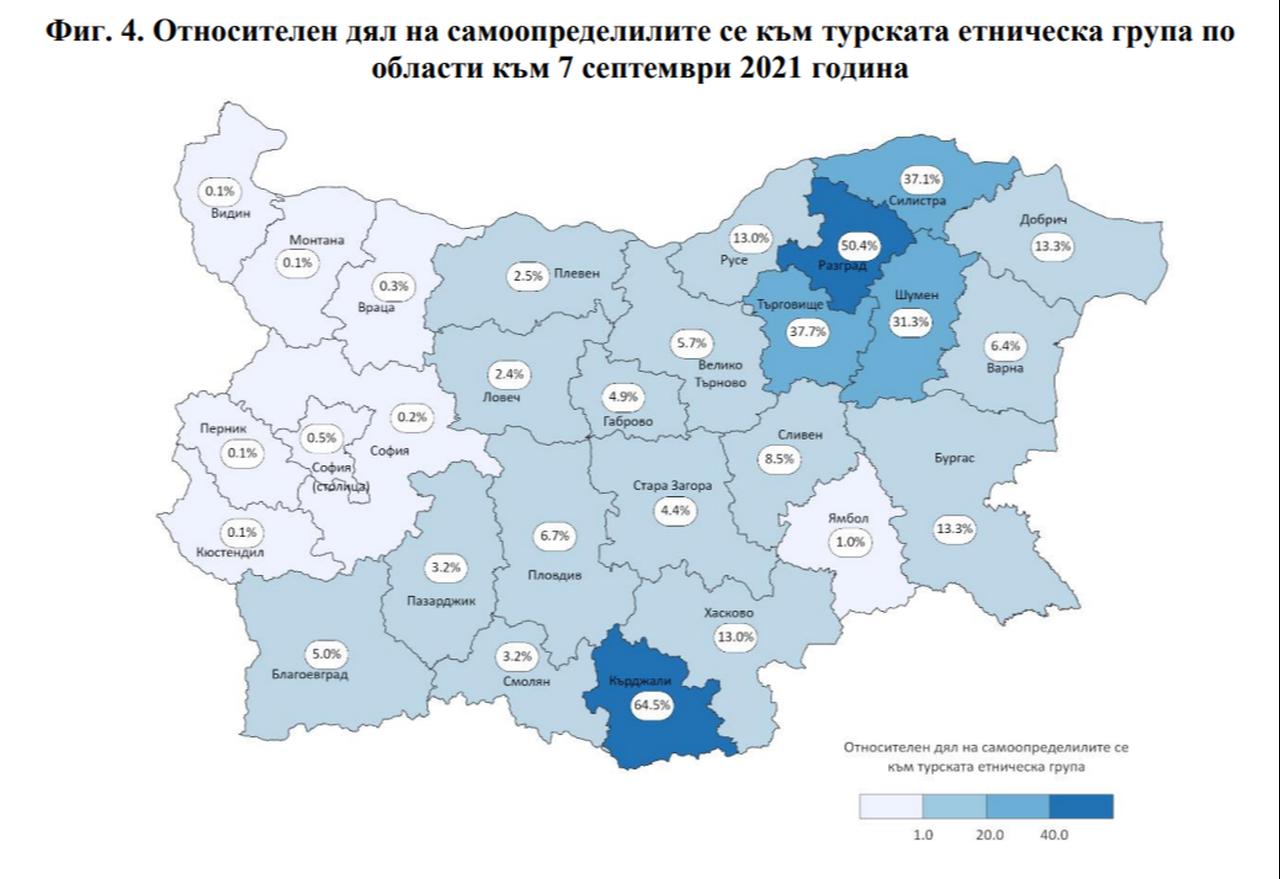

Regional distribution of individuals who identify as ethnically Turkish, 2021. (Graph via National Statistical Institute of Bulgaria)
Both Alton and Sevil Dostum from Bursa emphasized the urgent need for a stable government capable of delivering meaningful change. They warned that frequent elections and political instability only prolong uncertainty, leaving emigrants and residents alike frustrated and disengaged.
Ahmed Dogan, former honorary chair of the Movement for Rights and Freedoms (DPS), launched the Alliance for Rights and Freedoms (APS) amid ongoing political fragmentation. The move follows an internal split within DPS, which saw the formation of the DPS–New Beginning coalition led by Delyan Peevski. The APS positions itself as a continuation of the original DPS mission, offering an alternative for those dissatisfied with current party directions.
September 19, 2025 11:50 AM GMT+03:00