
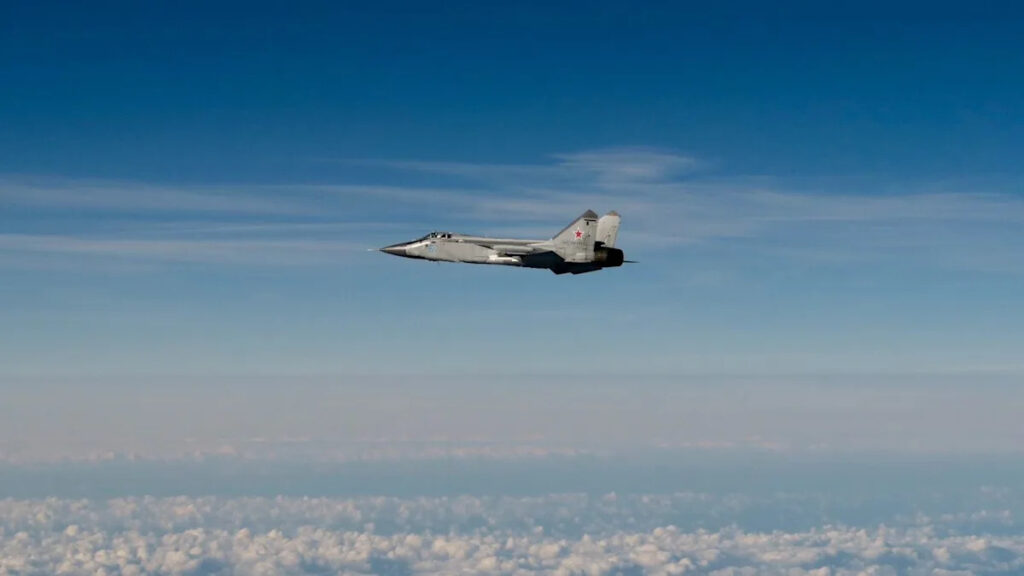
Foreign Secretary Yvette Cooper has said that the UK “stands with our Estonian allies” after Russian jets violated the northeastern European country’s air space.
Nato jets were scrambled on Friday after three Russian fighter aircraft entered Estonian airspace without permission and remained there for 12 minutes, Estonia’s foreign ministry said.
Estonia summoned Russia’s senior diplomat in Tallinn over the incident.
The incident comes just over a week after Nato jets shot down Russian drones over Poland, raising concerns that the war in Ukraine could spill across the border.
UK to deploy RAF jets to Poland after Russian drone incursion
Poland ‘closest we have been to open conflict since WWII,’ says PM Donald Tusk
The Russian MiG-31 fighters entered Estonian airspace near Vaindloo Island on Friday, a small island in the Gulf of Finland in the Baltic Sea, the Estonian military said in a separate statement.
The statement said the aircraft had no flight plans, their transponders were switched off, and they were not in two-way radio contact with Estonian air traffic services.
Cooper wrote on social media on Friday: “The UK stands with our Estonian allies, following yet another reckless incursion into Nato airspace by Russia.
“We must continue to increase pressure on Putin, including driving forward the important new economic sanctions announced by the UK & EU in recent days.”
Italian F-35 fighters that were stationed in Estonia as part of Nato’s Eastern Sentry operation, in addition to Swedish and Finnish aircraft, responded to the intrusion, Nato Allied Command Operations headquarters said.
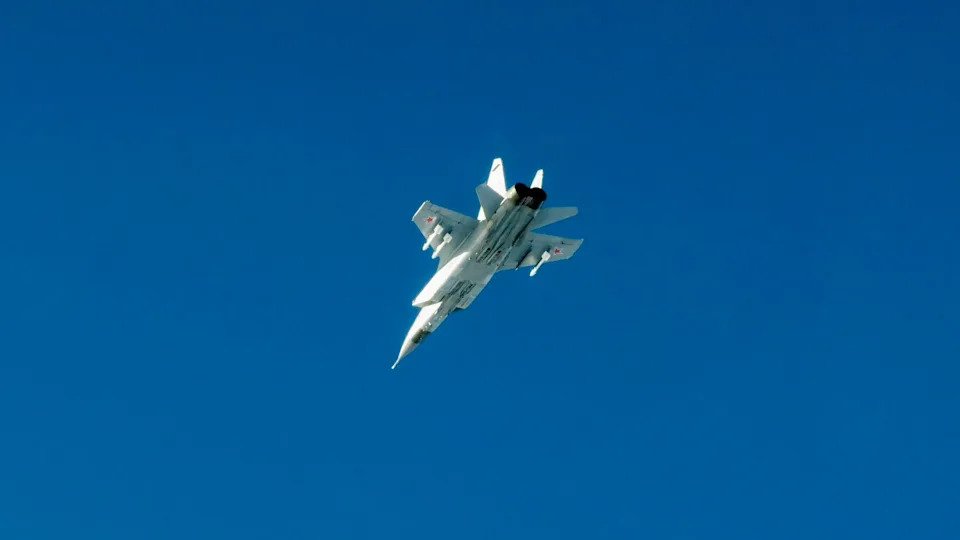
Russian planes flew parallel to the Estonian border from east to west and did not head toward the capital, Tallinn. Credit: Swedish Armed Forces
Estonian Prime Minister Krisen Michal said the Russian jets were subsequently “forced to flee”, while Nato secretary general Mark Rutte praised the alliance’s response as “quick and decisive”.
Nato spokesperson Allison Hart said the North Atlantic Council will convene early next week to discuss the incident in more detail.Article 4 of the Nato treaty states that any member country can formally bring an issue to the attention of the council, the alliance’s principal decision-making body, to meet and discuss next steps when the territorial integrity, political independence or security of the member country is threatened.
Estonian Foreign Minister Margus Tsakhna said that Russia violated Estonian airspace four times this year, “but today’s incursion, involving three fighter aircraft entering our airspace, is unprecedentedly brazen”.
Russian officials did not immediately comment.
The European Union high representative for foreign affairs, Kaja Kallas, described the incident as an “extremely dangerous provocation” which “further escalates tension in the region”.
She also warned that Russian President Vladimir Putin was “testing the West’s resolve”.
Asked if the incursion was a threat to Nato during an executive order signing in the Oval Office, US President Donald Trump said: “Well, I don’t love it. I don’t love it. I don’t like it when that happens. It could be big trouble.”
Russia’s violation of Poland’s airspace was the most serious cross-border incident involving a Nato member since Russia’s full-scale invasion of Ukraine in February 2022.
Other alliance members have reported similar incursions and drone crashes on their territory.
The incidents have increasingly unsettled European governments, as US-led efforts to end the war in Ukraine have so far failed.
Estonia, along with its Baltic neighbours Lithuania and Latvia, is seen as being among the most likely targets if Russia were ever to risk an attack on Nato.
Nearby Poland, though much larger, also considers itself vulnerable. All four countries remain staunch supporters of Ukraine.
In a post on social media, Nato spokesperson Allison Hart described the incident as “another example of reckless Russian behaviour and Nato’s ability to respond”.
Subscribe free to our weekly newsletter for exclusive and original coverage from ITV News. Direct to your inbox every Friday morning.
Nato fighter jets are scrambled hundreds of times each year to intercept aircraft, many of them Russian warplanes flying too close to the airspace of member states in northwest Europe, though it is rarer for planes to cross the border.
Dozens of Nato jets remain on round-the-clock alert across Europe to respond to incidents such as unannounced military flights or civilian aircraft losing communication with air-traffic controllers.
Separately, Major Taavi Karotamm, spokesperson for Estonian Defence Forces, told The Associated Press the Russian planes flew parallel to the Estonian border from east to west and did not head toward the capital, Tallinn.
“Russia’s increasingly extensive testing of boundaries and growing aggressiveness must be met with a swift increase in political and economic pressure,” Tsakhna, the foreign minister, said.
Subscribe free to our weekly newsletter for exclusive and original coverage from ITV News. Direct to your inbox every Friday morning.