
Quick Read
- Serbia staged its largest-ever military parade, named ‘Power of Unity’, in Belgrade.
- Ten thousand troops marched, displaying equipment from Russia, China, Israel, UAE, and France.
- International dignitaries from Bahrain, UAE, and Azerbaijan attended the event.
- The parade showcased Serbia’s balancing act between EU ambitions and Eastern partnerships.
- Opposition groups criticized the parade as a political tool for President Vučić.
Serbia’s Largest-Ever Military Parade: A Calculated Display of Strength
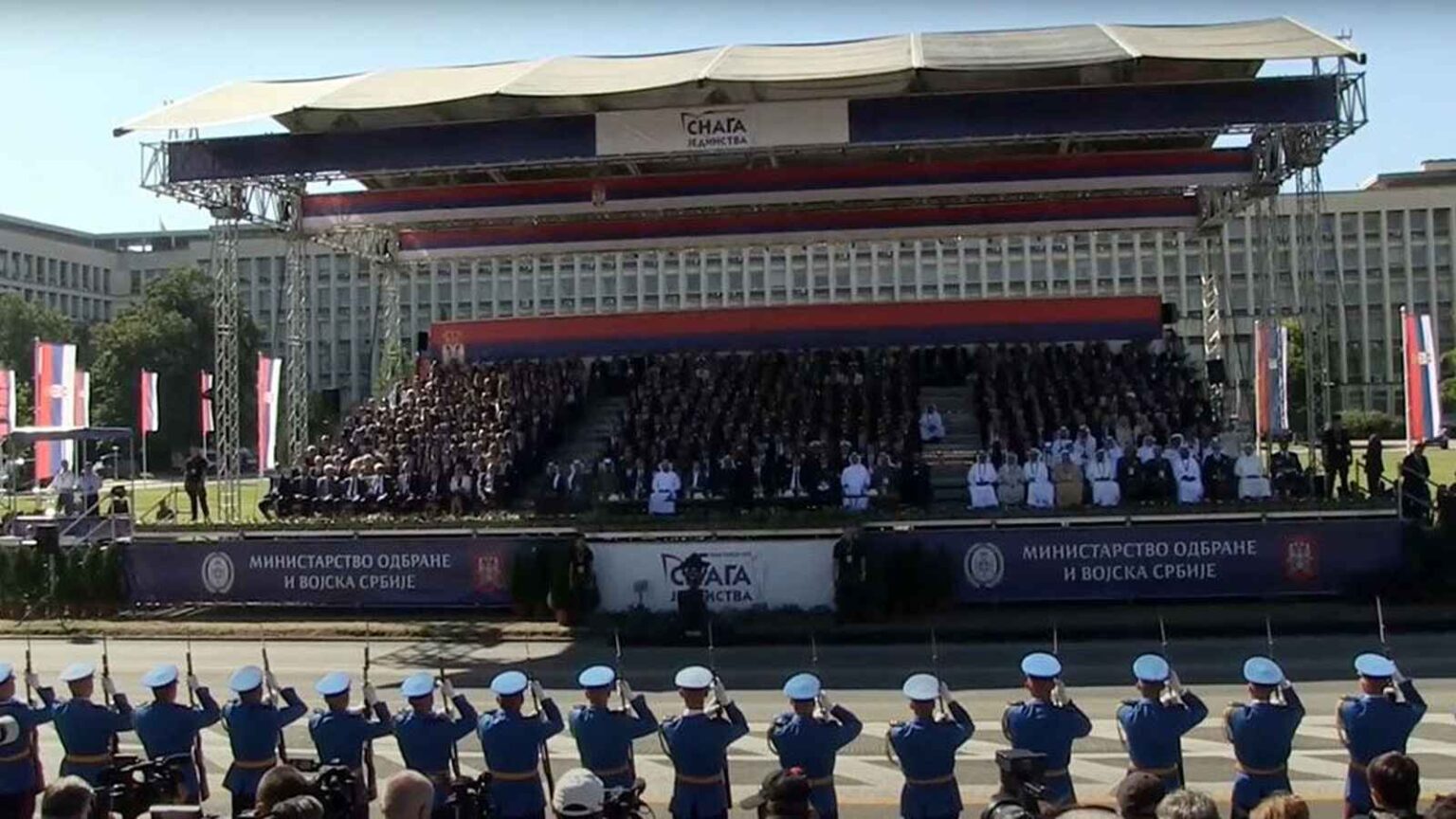
On September 20, 2025, the streets of Belgrade pulsed with the thunder of engines, the snap of marching boots, and the roar of fighter jets overhead. Serbia staged its most extensive military parade to date, dubbed the “Power of Unity,” in celebration of the Day of Serb Unity, Freedom, and the National Flag. The spectacle was more than just a show of hardware—it was a statement, both to its own citizens and to the world.
Ten thousand troops swept through the New Belgrade neighborhood, their formations flanked by rows of tanks, missile systems, and a dazzling array of modern weaponry. The parade’s centerpiece was a 300-metre Serbian flag, carried before the main podium—a potent visual of national pride and unity. Above, aircraft sliced through the sky, while the ground displays moved in lockstep, reflecting the discipline and efficiency of Serbia’s armed forces.
As reported by Euronews, this was the country’s biggest military display yet, intended to underscore Serbia’s commitment to defending its independence and sovereignty. President Aleksandar Vučić, flanked by his government and military leadership, declared that the parade was a deterrent to foreign aggression and a symbol of the nation’s ability to chart its own course.
International Guests and Diplomatic Signals
The parade was not only about Serbia. The guest list was a tapestry of regional power and global interests. His Highness Lieutenant General Shaikh Nasser bin Hamad Al Khalifa, National Security Advisor and Royal Guard Commander of Bahrain, attended alongside dignitaries from the United Arab Emirates, including President Sheikh Mohamed bin Zayed Al Nahyan and Crown Prince Sheikh Hamdan bin Mohammed bin Rashid Al Maktoum. Their presence signaled the strengthening of ties between Serbia and Gulf nations.
Also in attendance were military leaders from Azerbaijan. Colonel General Karim Valiyev, First Deputy Minister of Defense and Chief of the General Staff of the Azerbaijan Army, was invited by General Milan Mojsilović, Chief of the General Staff of the Serbian Armed Forces. Before the parade, Valiyev paid tribute at the monument of National Leader Heydar Aliyev in Tašmajdan Park, reinforcing the growing military cooperation between Azerbaijan and Serbia, as documented by AzerNEWS and AZERTAC.
Such international representation was more than ceremonial—it was a reflection of Serbia’s multi-pronged foreign policy. The country continues to walk a diplomatic tightrope, balancing aspirations to join the European Union while maintaining robust military and economic relationships with Russia, China, the UAE, Israel, and France.
Modern Arsenal and Strategic Partnerships
The hardware on display was as diverse as Serbia’s foreign ties. Domestically produced weapons rolled past the crowds, but foreign imports stole much of the spotlight. Tanks from Russia, anti-aircraft systems from China, drones from Israel and the UAE—all symbolized Belgrade’s broad procurement strategy and its willingness to diversify sources of military technology.
Two standout pieces of equipment included the Israeli-made rocket artillery platform, capable of launching munitions with payloads reaching up to 300 kilometers, and the French Rafale fighter jets—12 of which Serbia has ordered. The Rafales, revered for their versatility and advanced avionics, marked a significant shift towards Western European defense integration, even as the parade highlighted continued reliance on Russian and Chinese technology.
This mix of equipment underscored Serbia’s nuanced approach: keeping channels open with Moscow and Beijing while steadily edging closer to Brussels and Paris. As noted by Euronews, this balancing act is central to Serbia’s strategy, allowing it to leverage partnerships for both security and political capital.
Political Underpinnings and Public Reaction
For the government, the parade was an opportunity to project confidence and unity. President Vučić used the occasion to reinforce his administration’s narrative—Serbia as a strong, independent actor, capable of defending its interests. Yet, not all voices in Belgrade were in harmony with the official line.
Opposition leaders critiqued the parade as a political tool, designed less to showcase military strength and more to bolster Vučić’s authority. For months, university students and activists have protested against alleged corruption, seeking reforms and greater transparency. On the day of the parade, riot police prevented opposition supporters from joining the crowds, a move that drew sharp criticism and underscored the underlying political tensions.
Meanwhile, for many spectators, the event was simply a celebration—a rare chance to witness the full scope of Serbia’s military evolution, and to feel the pulse of national pride.
Regional Implications and Future Prospects
The parade in Belgrade was more than an isolated display. It was a message to neighbors and partners across the Balkans and beyond. By inviting foreign dignitaries, especially from Azerbaijan and the Gulf, Serbia signaled its intent to deepen regional and international cooperation. The presence of Bahrain’s Shaikh Nasser bin Hamad Al Khalifa, who praised the discipline and progress of Serbia’s armed forces, highlighted the potential for expanded security and diplomatic ties.
Discussions between Serbian and Azerbaijani military chiefs focused on future collaboration, reflecting a broader trend of bilateral defense agreements. Such moves could reshape regional security dynamics, especially as Serbia continues to navigate its relationships with both Western and Eastern powers.
The parade also served as a reminder of the evolving nature of military power in the Balkans—a region where historical rivalries linger, and alliances are constantly in flux. As Serbia invests in advanced technology and cultivates new partnerships, it is positioning itself as a pivotal actor in regional stability.
Ultimately, the Belgrade parade was a carefully choreographed event, blending spectacle, symbolism, and strategy. It showcased Serbia’s growing capabilities, its diplomatic agility, and the complex interplay of domestic and international politics that will shape its future.
In the final analysis, Belgrade’s military parade was more than a show of strength—it was a mirror reflecting Serbia’s ambitions, anxieties, and alliances. While the pageantry captured public imagination, the underlying message was clear: Serbia is intent on forging its own path, balancing the demands of East and West, and asserting its role as a key player in the region’s evolving security landscape.