
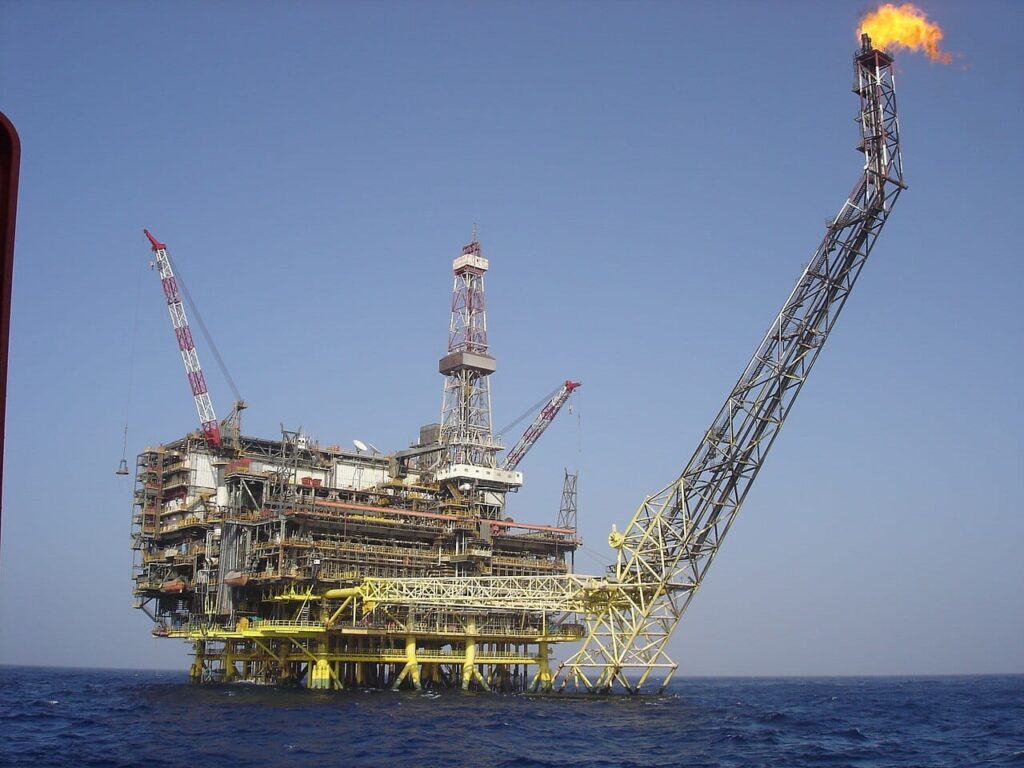
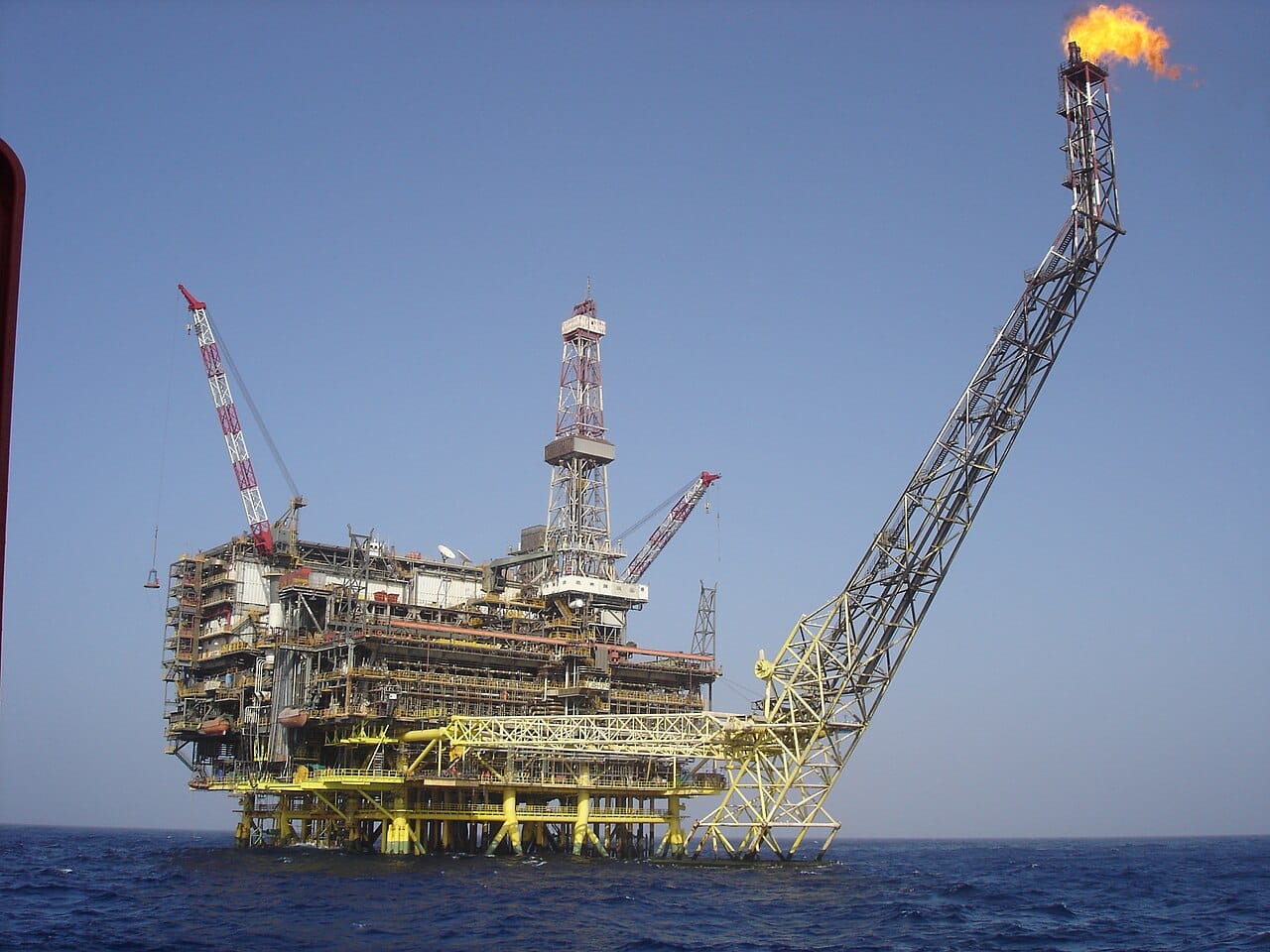
Libya and Greece have started talks for the demarcation of an EEZ between the two countries. Photo of oil exploration platform. Credit: Cipiota / Wikimedia Commons CC BY-SA 3.0
Greek Prime Minister Kyriakos Mitsotakis revealed on Sunday that talks have begun for the demarcation of an Exclusive Economic Zone (EEZ) between Greece and Libya.
An agreement on the EEZ would solve the ongoing maritime dispute between the two countries, which is why Greece had invited Libya to talks in July.
The start of the demarcation process comes just twenty-four hours after the announcement of the participation of US energy giant Chevron in the international competition for the four offshore blocks south of Crete and the Peloponnese and the clear recognition by the US of the energy and geopolitical importance of Greece in the Eastern Mediterranean, Mitsotakis stressed in his weekly update message on Facebook.
Greece Libya technical committees start works
The first meeting of the technical committees of Greece and Libya for the demarcation of an EEZ between the two countries was held in Athens, and the next one will be held in Tripoli, the Greek Premier said.
“We still have a long way to go until we reach an agreement, but this is a positive development for Greece in relation to our neighboring country,” Mitsotakis commented.
In an obvious hint to the recent diplomatic tensions between the two countries, following Libya’s maritime claims in the Eastern Mediterranean, the Greek Prime Minister added that “the path to broader regional stability lies through agreements between genuinely neighboring countries, based on International Law, and not through arbitrary and non-existent memoranda.”
Libya’s maritime claims in Eastern Mediterranean leads to dispute with Greece
A maritime dispute between Greece and Libya stems from conflicting claims over their respective Exclusive Economic Zones (EEZs) and continental shelves in the Mediterranean Sea.
At the heart of the dispute is the 2019 Memorandum of Understanding (MoU) between Turkey and the then-Government of National Accord (GNA, predecessor to the GNU). This MoU mapped out a vast sea area that disregards the existence and maritime rights of Greek islands, including Crete and Rhodes, effectively establishing a corridor between Turkey and Libya.
Last August, Greece formally rejected all allegations made by the transitional government of Libya regarding maritime claims in the Eastern Mediterranean. In a statement submitted to the UN, Greece reaffirmed its position, grounding its arguments in international law and existing agreements with neighboring countries.