
I wonder how much of this is down to AI? Maybe not much yet. Concerns about it and employment have only started going mainstream in the 2020s. That suggests there is more decline ahead for people's regard for the worth of college education.
It's striking how much opinions differ according to politics. 39% of Republicans rate college as "Not too important", versus 9% of Democrats who feel the same way. The article wonders if the perceived left-wing bias of colleges is to blame. But if right-wing people desert colleges, won't that just make them more left-wing? The student body certainly will be, and that's where the future staff members come from.
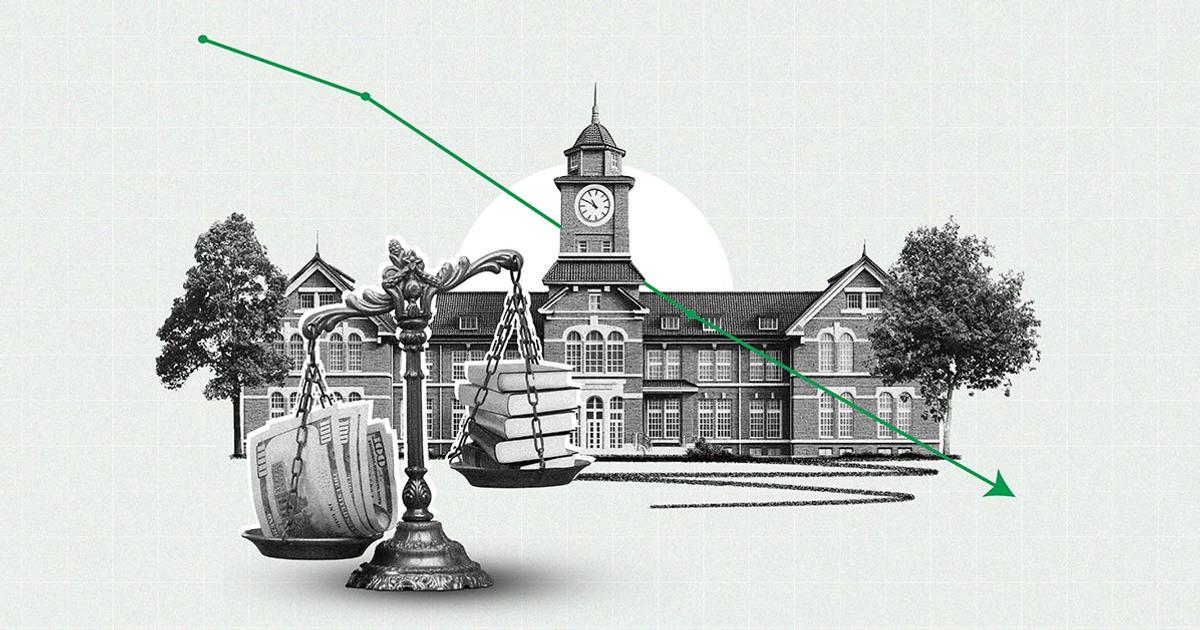
Between 2010 and 2025, the percentage of Americans who say college is "very important" has shrunk from 70% to 35%, though there are sharp differences depending on political affiliation. Will AI soon make this fall further?
byu/lughnasadh inFuturology
20 Comments
A person with 3 years job experience will always get role over person with a degree and no experience
It’s almost like degrees stopped helping people get jobs and looked at as an anchor of debt now.
I just think we let it get away from “No, actually, the university is about making you a better human,” and let it become “You need to go there to get a job, and only that.”
There’s not one single responsible party for that lapse, corporations wanted that way, people with grudges against universities wanted it that way, and the people within the university system who sat on fat endowments also wanted it this way. And the political forces of the society sat back and did nothing or actively made it worse.
I’m glad I went, I believe it made me a compassionate, global citizen. But it did not get me a job, not in my field, not out of it. I had to start from scratch with fast food. And I’m still not in my field. And I really could use some of that money right about now.
And all that was long before AI nightmares of AI papers being checked by AI graders. That sounds absolutely kafkaesque.
Yes, there’s an increasing divide between pro education and anti education sentiment in the US. MAGA took this to the next level.
I think the hope is AI changes this in the sense that it makes getting a real education easier through a personalized tutor. But for this to work we’d need to fix the politics first, and stop demonizing knowing things objectively as an evil.
Colleges for difficult fields are useful as a filter and training ground for those fields, but those are now too easily conflated with general adult education. You still want neurosurgeons and bridge engineers who are in charge of human lives to be fully trained, vetted, and have the alcoholics and slackers among them kicked out. No such rigor is required for sculptors and Costco managers.
There’s a lot of talk about the impact LLMs and other AI will have on the job market. If job losses actually amount to 20-30% or more, then yes, a big chunk of the economic motivation for a college degree will also go away. At some point, colleges already under stress will fail. A scenario in which maybe 5-10% of existing universities survive in 50 years is possible.
If you subscribe to the rosy “abundance for all” outcome, it could go the other way. Universities could become less about job skills and more about knowledge for its own sake.
If you’re not going into STEM, the insane amounts of debt just aren’t worth it.
The U.S. education system used to have a strong network of trade schools up until the 70s/early 80s. This included vocational high schools. Then they became viewed as racist as the perception that minorities and poorer kids were being filtered and pushed towards vocational and not towards 4 year colleges which had higher earning potential. Probably some truth to that. Pair that with the liberal view that people should “follow their dreams” and the simplified view that a college degree by itself was the ticket to a good job – led to the dissolution of vocational high schools and kids majoring in areas that realistically had few job prospects. Thus you now have tons of college graduates earning low wages and unable to find major aligned jobs
Yes. There will not be the need for as many people in all areas. That doesn’t mean zero, just a lot less. Hopefully, college enrollment will decrease and the price will drop too.
Declining college enrollment is pretty sad. This future-plan where all kids will aspire to be plumbers and electricians for our ai-enabled overlords is as dystopian as it gets. I get that the us government is making a concerted effort to take college away from middle class folks, but america became “great” when we were educating more people.
Actual college costs (when you factor in grants and scholarships), interestingly, have actually gone down in the past few years: https://www.aei.org/research-products/report/trends-in-net-college-tuition-and-financial-aid-1990-2020/
It won’t help when people realize their loans are bundled, diced and jacked up then sold as a security to their parents 401k. And that their highly profitable “rates” are purposefully set to stupid by the motherfuckers they elected to represent them.
Only insofar as AI is operationalized to spread FUD and generally pipelining the message from the hard right, who have made denigrating tertiary education central to their breathless screeds for some years now.
degrees became a business and the government wrote blank checks. Grade inflation plus the number of degrees fat outstripped the demand for them.
The average income of graduates went from 15.50 to 15 in 10 years. That is not counting inflation.
They let everyone in, made classes easier, and ruined their industry to the point that most graduates didn’t even get enough return on investment to pay off their loan.
Colleges combined with the government are the predatory lenders.
Almost all of the technology that we take for granted, like your Iphone, are based on technological advances that came out of academia.
I’m just outsider observer here, but I think the fact in America it’s legal to study a completely imaginary field and lots of people have degrees probably doesn’t have affected the public perception towards college degrees
The number of high school students who go to college has remained around 35%. The issue in the last few years is the proliferation of for-profit colleges and private loans. Students are aggressively sold on a degree by these for-profits and they take on loans with high interest rates or have a bad repayment strategy. If a student drops out or doesn’t pay back the loan at a reasonable rate, they will end up losing their earning potential and still be shackled by the debt.
I loved college and thought it was very important. Once what little scholarship money and grant money I got ran out it became wildly unaffordable.
We had a whole generation who was told that going to college would secure our future, and that turned out to be a huge lie. Of course, no one wants to go to college anymore.
The biggest flaw of society is treating universities as job training. Universities are for the inquisitive to go learn and research. Most of us just need two-year degrees to learn the foundations for our career path, and the rest should be learned on the job.
So many young people go into college with no idea how it is going to help them establish a career.
There is no plan, amd when you fail to plan, you plan to fail.
It is less true of medical, legal, and some STEM degrees.
IT is a tough one,,because a degree does not instantly get you a job. Part because of H1b visas, and part because of oversupply, and now the pressure from AI.
Right now 61% go to college.
Let that sink in, and then realize *11% have an IQ under 100.*