
Published on
September 23, 2025

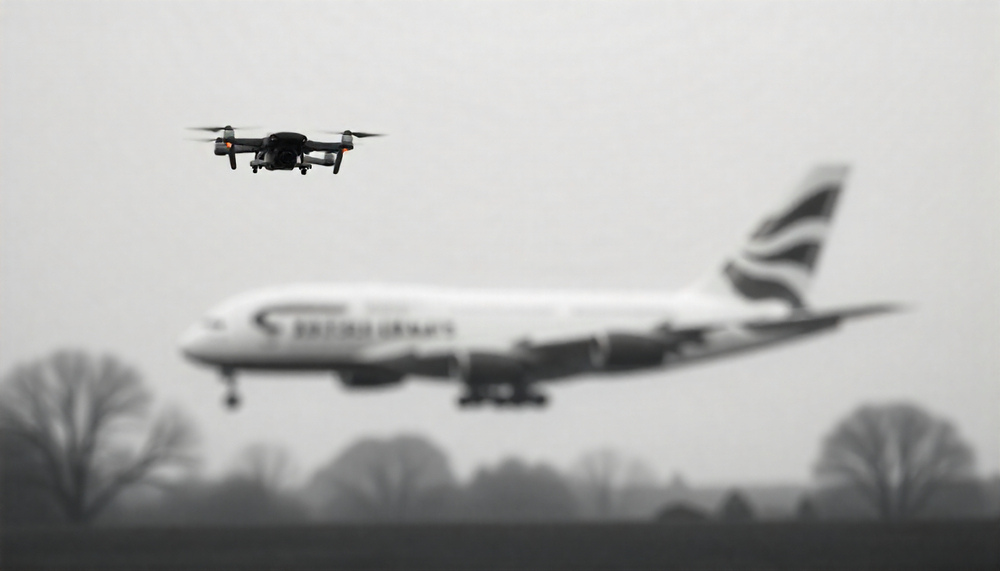
On Monday evening, authorities at Copenhagen and Oslo airports appeared to face their worst nightmare scenario, as multiple drones entered their restricted airspaces and hovered for over two hours, forcing officials to ground all flights and creating chaos at both airports. Both drones hovering over Copenhagen and ignoring the 5km exclusion zone around Oslo set off a wave of flight cancellations and delays. In Scandinavia, the dangling passengers had to be surprised, as they were suddenly shifted to northern and eastern Sweden for onward travel. The relative ease of drone use paired with the ability to breach airspaces which are crucial to international flights and travel raises a lot of strong security issues.
In a series of highly disruptive events, both Copenhagen and Oslo Airports were forced to ground all air traffic due to multiple drone incursions that significantly affected travel across Scandinavia on Monday evening. These incidents led to flight delays, cancellations, and diversions, disrupting the schedules of thousands of passengers. Authorities are investigating the source of these incursions, but as of now, the identity of the drone operators remains unknown. The disruptions have raised critical questions regarding airport security, the growing threat of drone activity near major airports, and the impact on passengers and airlines.
A Chaotic Evening at Copenhagen Airport
Copenhagen Airport, the largest travel hub in Scandinavia, experienced an extraordinary level of disruption on Monday night when several large drones were sighted hovering over its airspace. This led to a complete shutdown of all operations for over four hours, grounding flights and diverting others to neighboring airports, including in southern Sweden and parts of Denmark. Witnesses described the drones as being equipped with flashing lights, further complicating the situation and causing widespread concern. The presence of these drones, hovering intermittently for over two hours, prompted immediate action from local authorities.
The closure of Copenhagen Airport brought air traffic to a standstill, with hundreds of flights delayed or diverted. Passengers were forced to wait in uncertainty, with minimal information provided as authorities scrambled to identify and neutralize the potential threat. Despite extensive efforts, no drones were brought down, and no arrests were made. Copenhagen’s Chief of Police confirmed that the drones disappeared on their own, leaving questions about the effectiveness of current airport security measures in dealing with such incidents.
Similar Disruptions in Oslo
The chaos continued as Oslo Airport, Gardermoen, experienced a similar intrusion. Just as Copenhagen was reopening to air traffic, Oslo Airport was grappling with its own drone-related crisis. The situation worsened around midnight when drones breached the airport’s 5km exclusion zone, causing officials to close most of the runways and operate with just a single runway. The threat from the drones forced authorities to ground flights temporarily, leaving thousands of travelers in limbo.
The situation at Oslo Airport mirrored that of Copenhagen, with multiple flights being redirected to other airports and significant delays experienced by those still in the air. However, by the time the second wave of drone sightings was confirmed, Oslo was also forced to shut down completely. Flights that were already in the air were diverted, and many were forced to return to their point of origin, causing frustration among passengers who found themselves stranded in the skies.
Most Affected Routes at Oslo Airport (Gardermoen)
Based on the airlines listed and their general routes, the following are likely the most disrupted routes at Oslo Airport:
Most Affected Routes at Copenhagen Airport
The following routes were likely most affected at Copenhagen Airport based on the airlines’ operations:
Insights on Most Affected Routes:
- Oslo to Copenhagen and Copenhagen to Stockholm were among the most disrupted routes due to the large number of cancellations and delays by SAS.
- Popular European routes like Oslo to London (Lufthansa), Oslo to Frankfurt, Copenhagen to Paris, and Copenhagen to Amsterdam also experienced significant disruption due to the drone activity.
- Domestic routes, especially those within Norway like Oslo to Bergen and Oslo to Trondheim, also faced heavy delays, particularly with Norwegian Air Shuttle flights.
This breakdown reflects the specific routes that were most likely impacted by the drone incursions at both airports. The data provided earlier indicated significant delays and cancellations across these routes, especially those operating by high-volume carriers like SAS and Norwegian Air Shuttle.
Major Impact on Airlines
Both Copenhagen and Oslo Airports are vital for many international and domestic airlines, and the drone disruptions severely impacted their operations. The number of cancellations and delays reported was staggering. In total, Oslo experienced 104 delays and 11 cancellations on the day of the incident, as reported by FlightAware.
Airlines such as SAS, SAS Link, Norwegian Air Shuttle, and easyJet were among those most affected, with significant delays impacting travelers’ schedules. In the aftermath of the drone incursions, travelers faced delays of up to several hours, and cancellations disrupted their travel plans. The massive volume of diversions further added to the congestion at surrounding airports, straining available resources and creating a ripple effect throughout the Nordic region’s airspace.
At Copenhagen, the situation was similarly dire, with 214 delays and 77 cancellations reported. SAS and Norwegian Air Shuttle were among the hardest-hit airlines, with dozens of flights affected. In addition to flight cancellations, numerous flights were delayed, and passengers were diverted to nearby airports, exacerbating the congestion at neighboring airports. The ripple effect of the disruption continued for several hours as airlines worked to rebook passengers and mitigate the ongoing impact.
The drone-related incidents resulted in significant operational challenges for these airlines, and the logistical headache of rebooking and rerouting flights led to widespread frustration among travelers. Furthermore, airlines such as Lufthansa, Air France, and easyJet reported that their flights were affected by the delays and diversions, adding to the strain on air travel in the region.
Passenger Impact and Stranded Travelers
The most significant impact was felt by passengers who found themselves caught in the chaos. With flights delayed, canceled, or diverted, thousands of travelers were left stranded in airports or rerouted to alternative locations. Many passengers faced confusion and anxiety as they waited for updates from their airlines, with little information provided about the situation on the ground.
One particularly affected passenger described how his flight from Rome was diverted over 275 miles to Stavanger, only to learn that the airport in Oslo had shut down due to drone activity. The frustration among passengers was palpable, as many were forced to wait for hours without clear communication from their respective airlines. With no indication of when normal operations would resume, many passengers were left wondering how their travel plans would be affected in the coming days.
The diversion of flights caused by the drone incursions was not limited to just a few airlines. Multiple carriers had to adjust their operations, which led to further confusion and long waits for passengers. As delays mounted, passengers were left with no choice but to endure the inconvenience and uncertainty brought on by the unexpected shutdowns of the airports.
Investigation and Ongoing Efforts
Authorities in both Denmark and Norway have launched extensive investigations to determine the origin and intent behind the drone activity. At Copenhagen, local police were unable to capture the drones or identify their operators, but they did confirm that the drones had disappeared without being intercepted. The Danish authorities have not released further details on their efforts to track down the operators, but they continue to work in conjunction with Norwegian authorities to determine whether the two incidents were connected.
Given the severity of the disruptions, both countries are likely to reevaluate their security protocols around airports to address the increasing threat posed by drone activity. While airports across the world have taken measures to prevent drone incursions, the events at Copenhagen and Oslo have highlighted the vulnerability of even the most advanced airports to drone-related threats.
As drone technology continues to evolve, the aviation industry faces a growing challenge in safeguarding airspace from unauthorized drone activity. In light of recent events, both authorities and airlines will likely be forced to accelerate their adoption of counter-drone technology to mitigate future risks and protect the safety of air travel.
Airlines’ Response and Travel Advisory
In response to the disruptions, affected airlines have urged passengers to check the status of their flights before arriving at the airport. Many airlines have proactively rebooked passengers on alternative flights, but delays and cancellations remain prevalent. SAS, Norwegian Air Shuttle, easyJet, and other major carriers have provided information on their websites and social media platforms, advising passengers to stay informed about their flight status and to contact customer service for assistance with rescheduling.
FlightAware has continued to track the delays and cancellations in real-time, providing up-to-date information for passengers. As the situation improves, airlines are working to get flights back on schedule, but many passengers will still experience significant delays in the coming hours.
Looking Ahead: Improving Security and Preventing Future Disruptions
The drone incursions at Copenhagen and Oslo Airports have prompted calls for greater security measures at major travel hubs around the world. While drones have been a concern for aviation authorities for some time, these incidents serve as a wake-up call for the aviation industry to take more aggressive action to prevent future disruptions.
As technology advances, drones are becoming more accessible and powerful, making it increasingly difficult for airports to detect and neutralize them quickly. Many countries have implemented no-fly zones around airports, but incidents like the one at Copenhagen demonstrate that these measures are not foolproof. Going forward, airports will likely adopt more sophisticated counter-drone systems to enhance their ability to respond to these kinds of threats.
Additionally, both Denmark and Norway are expected to work together to strengthen international cooperation on drone surveillance and response. The goal will be to improve detection capabilities, share intelligence, and create a more coordinated approach to mitigating the risk of drone incursions across Europe.
The drone incursions that plagued Copenhagen and Oslo Airports on Monday night have cast a spotlight on the growing threat posed by drones in the vicinity of major transportation hubs. These events, which caused widespread flight delays, cancellations, and diversions, highlight the need for airports and airlines to adapt to the increasing use of drones in airspace.
As investigations continue and the aviation industry reevaluates its security protocols, the incidents at Copenhagen and Oslo serve as a stark reminder of the vulnerabilities facing modern air travel. It remains to be seen what long-term changes will be implemented to address the drone threat, but one thing is clear: the need for effective counter-drone measures has never been more urgent.
Multiple drone interceptions were reported at both Copenhagen and Oslo Airports on Monday evening, resulting in the suspension and enormous delays of numerous flights as authorities attempted to restrict the airspace and redirect the carriers to adjacent airports, thus heightening the prevailing unease over security within the aviation domain.
For now, passengers affected by the disruptions at Copenhagen and Oslo Airports are urged to stay informed and remain patient as the situation continues to unfold.
