
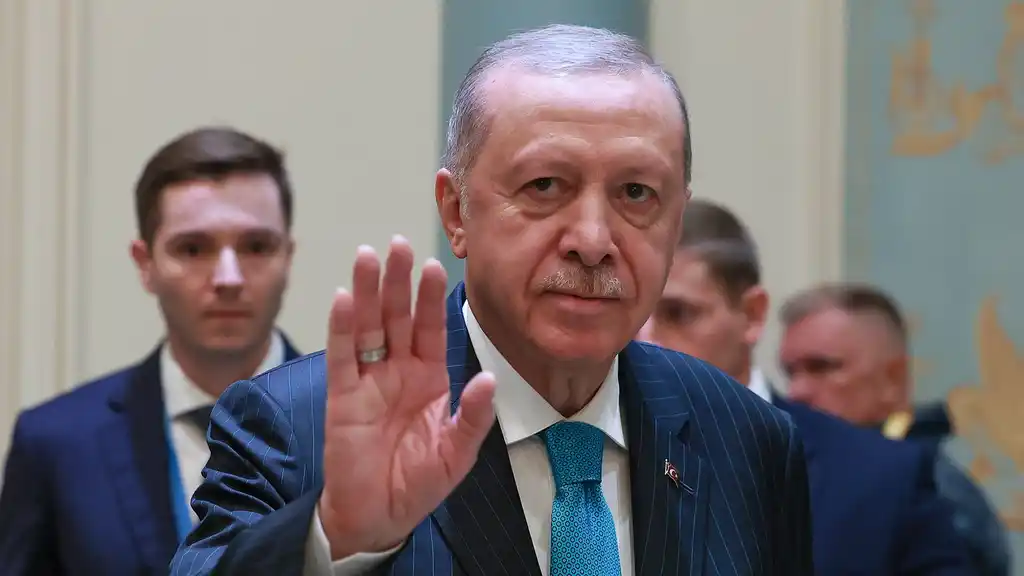
Turkish President Recep Tayyip Erdoğan attends a meeting with Russian President Vladimir Putin as part of the Shanghai Cooperation Organization (SCO) summit in Tianjin, China, on September 1, 2025. REUTERS/Sputnik/Vladimir Smirnov/Pool
According to Bloom berg News? No.
The President of Turkey, Recep Tayyip Erdoğan, intends to carry out large-scale purchases from the United States: hundreds of Boeing aircraft and F-35 fighters with partial local production of parts in Turkey, to offset costs exceeding $10 billion. Such plans were disclosed by insiders close to the defense sector.
According to sources, Erdoğan aims to link these purchases with a demand for partial localization of production. It is expected that signing the deals will require a meeting with the U.S. president at the White House, scheduled for September 25.
Context: F-35, CAATSA and relations with the United States
Negotiations are taking place against the backdrop of strained relations due to Turkey’s delivery of Russian S-400 systems, which previously led to CAATSA sanctions and isolation from the F-35 program. Ankara is counting on easing restrictions that would allow it to return to participation in the F-35 program and ensure the involvement of Turkish companies in producing components for aircraft.
As part of the plan, there is also mention of the intention to acquire about 40 modern F-16 Viper and hundreds of missiles, munitions and spare engines. Such an upgrade will enhance the capabilities of the aviation fleet, which currently numbers about 240 aircraft.
Engines and other technologies
Ankara has asked the United States for permission to import and assemble GE Aerospace F110 and F404 engines, which are used in American fighters and Turkish Kaan and Hurjet aircraft. A response from Washington has not yet been received.
According to sources, these steps could influence the future dynamics of defense relations between the two countries and Turkey’s participation in the global system of defense contracts, but final decisions depend on further negotiations and the political situation.
In the future, such agreements could stimulate the development of Turkey’s defense industry, ensure a higher degree of localization of production and strengthen the country’s position in the global arms market. However, a significant impact on the dynamics of relations with the United States and dependence on external markets remain key factors that will determine the final format of the deals and the delivery schedule.
Related news for you: