
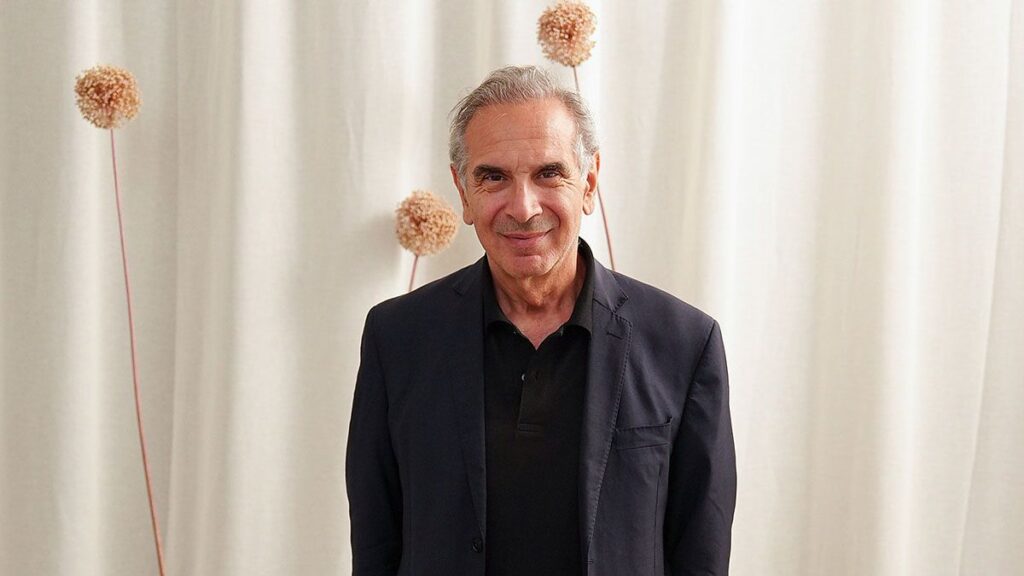
Capasa’s job is therefore a tough one. He has to walk a thin tightrope between supporting and defending the industry, while being seen to actively condemn any form of exploitation or abuse, and discouraging the scapegoating of migrant communities (the investigations repeatedly mention Chinese-owned factories or workshops located in Italy, which are being used as subcontractors).
So, while he says only a small proportion of Italy’s production — thought to be around 2 to 3 per cent — is made by “irregular” workers (those hired without contracts, who often face poor working and living conditions, and low pay), he is careful to acknowledge the seriousness of the issue. He emphasises the need to improve standards and controls not just to protect the brands, but also the people that are potentially being subjected to violations of their basic human rights, wherever they are from.
“In a sense, what happened [with the supply chain probe] was good, because we’ve discovered some areas that we were not aware of,” says Capasa. “And we have understood that we need more precise regulations to help those migrants that arrive in Italy find good working conditions.”
In June, the prefecture of Milan, which has been leading the supply chain investigation, proposed a ‘Memorandum of Understanding for the Legality of Procurement Contracts in the Fashion Production Chains’, which aims to improve working conditions and combat exploitation, tax and social security evasion throughout Italy’s fashion supply chain. However, Capasa — among others — says a voluntary agreement is not enough. Instead, the CNMI is working with the Ministry of Enterprise and Made in Italy to develop a legally binding, third-party certification system to ensure compliance with labour and ethical standards.
It won’t be easy to apply to a fragmented industry, but he believes Italy can turn the current crisis into a positive outcome, eventually becoming a leader in supply chain transparency. “This for me is a win from something that was not so good,” he says. “We will be probably the first to have a supply chain that is completely monitored in terms of workers. And believe me, while we’re talking about Italy today, this [illegal subcontracting] is happening everywhere in the world.”
The transparency challenge
The question, though, is why is it happening in Italy, which has a long and proud history of making high-quality, expensive clothes. Some 70 per cent of luxury fashion sold around the world is made in Italy, according to the CNMI. “Made in Italy represents a very unique approach to making fashion,” says Capasa. “Other countries are very good at satisfying needs, at a much cheaper price. But here, what we are good at is creating dreams.”