
Today’s edition is powered by the Party of European Socialists (PES)
PES Congress 2025: Progressive Mobilisation.
Not politics-as-usual, but a large conference uniting prime ministers, mayors, politicians, journalists, activists, artists, academics, trade unionists, and entrepreneurs from across Europe and beyond to tackle Europe’s big questions – and turn ideas into action. 16–18 October 2025, Amsterdam.
——————————————————————————————–
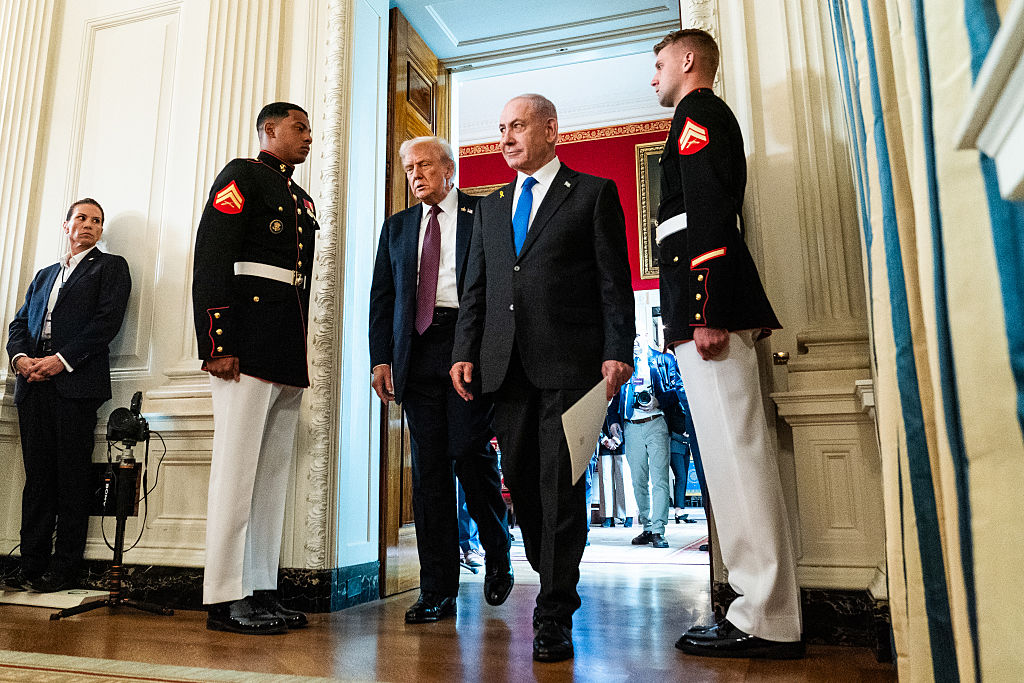
There is no longer any time for hesitation in stopping the abysmal slaughter of the Palestinian population and securing the release of Israeli hostages. To this end, the plan put forward by Donald Trump must be subject to serious and urgent consideration.
But let us be clear: Without offering a political resolution to the conflict, the roadmap unveiled in Washington on Tuesday will not bring lasting stability to the region.
After the reconstruction of Gaza, and if the Palestinian Authority were to reform itself, “the conditions may finally be in place for a credible pathway to Palestinian self-determination and statehood,” Trump argued. This idea was dismissed just minutes later by Benjamin Netanyahu.
And setting aside the Israeli Prime Minister’s motivations to push against Palestinian self-determination, it should be noted that conditional promises generally bind only those who are compelled to believe them. History offers a sobering precedent.
On 10 June 1999, United Nations Resolution 1244 authorised the deployment of NATO forces to Kosovo, ending the war between Albanian UÇK fighters and Serbian security forces. But it also reaffirmed the territorial integrity of what remained of Yugoslavia, then comprising Montenegro and Serbia.
The resolution established a wide-ranging Interim Administration Mission (UNMIK), empowered to oversee policing, justice, health, education, and more, effectively creating a civilian governance structure for what was still legally an “autonomous province” of Serbia.
On the ground, Serbian troops gave way to NATO soldiers and tens of thousands of international officials poured into Pristina to replace Belgrade’s administration.
It was a plan destined to breed resentment: Serbia was stripped of one of its regions while still being recognised as its sovereign, and the Albanians were rid of Serbian authority but deprived of any legal pathway to independence.
The guerrilla leaders who had seized power in Pristina quickly grasped that only armed struggle could shift the status quo. By 2001 they were exporting violence to Albanian areas of northern Macedonia and southern Serbia, and by 2004 launching a wave of attacks against Serbian enclaves in Kosovo.
The West had no appetite for further war and feared that the “Balkan powder keg” might ignite once more. Independence was therefore proclaimed unilaterally in Pristina on 17 February 2008. It was swiftly recognised by many Western capitals but not by Russia. Not surprisingly, Serbia also rejected Kosovan independence and to this day clings to the provisions of the 1999 resolution.
The point here is not to revisit the legitimacy of recognising a Palestinian state, nor to reopen the debate on Kosovo’s independence. It is rather to highlight a lesson already taught: International protectorates, when not anchored in clear political objectives accepted by all parties, and when not bound by strict time limits, are never a sound foundation for peace.
Roundup
Clear legal path to Ukraine reparation loan – Brussels has a legally “sound” basis for using hundreds of billions of euros’ worth of immobilised Russian central bank assets to fund a so-called “reparation loan” to Ukraine, Ursula von der Leyen said on Wednesday. “Russia is the perpetrator, it has caused the damage, and it has to be held accountable,” she said.
Merz sets sights on red tape – Germany’s Chancellor Friedrich Merz warned that Brussels needed a “fundamental correction” in its approach to regulations. “At present, there is simply too much of it,” he said, adding that he would press the European Commission to “shoulder its responsibility in reducing bureaucracy.”
Frederiksen vs. drones – Recent drone threats over Denmark have Prime Minister Mette Frederiksen to the test, as Copenhagen hosts two major European summits. Frederiksen has received criticism over her handling of the incursions, with some saying her government is relying on ally states to do the heavy lifting.
Across Europe
Oktoberfest bomb threat – The Munich Oktoberfest temporarily closed after receiving a bomb threat, hours after an arson attack and bomb rocked a residential building in southern Munich. Police said they were investigating any potential links to the beer festival, held annually near the centre of the Bavarian capital.
A regional win for Meloni – The right-wing coalition of Giorgia Meloni secured victory in Italy’s central region of Marche – the first regional contest of seven. A loss there would have been read as a national setback for Meloni but the victory bolsters the perception that her government, which has been in office since 2022, remains firmly in control.
Sarkozy takes on the judiciary – Following his five-year sentence in the case concerning Libyan financing of his 2007 campaign, Nicolas Sarkozy declared he would not “bow to lies, conspiracy, and insults”. His remarks were denounced by lawyers as “a deliberate act of discrediting the judicial institution”.