
Royal historian Michael van Orsouw on the question of why Switzerland was never ruled by a queen or king. A conversation about defensive Confederates, the Habsburgs and cantonal elitism.
- Switzerland was not only a free peasant nation, but was once ruled by an aristocratic elite.
- Unlike our neighboring countries Germany, France, Italy and Austria, however, there was never an emperor or queen at the head of our country.
- Why have the influential aristocratic families in this country never had one of their own proclaimed King of Switzerland?
- “Ultimately, that was the decision of the Swiss people, who stipulated in their constitution of 1848 that they did not want a queen or a king – instead, they decided that we wanted to be a democracy,” says van Orsouw.
Michael van Orsouw is a Royal historian, playwright and author. In his latest book “Sisi’s Refuge. Empress Elisabeth and Switzerland”, Elisabeth of Austria plays the leading role. The Empress visited our country nine times.
Although Switzerland has no royal tradition, the stories of the royal houses fascinate people here too. This is also demonstrated by the current exhibition “Royals on a visit” at the National Museum in Zurich, which van Orsouw co-curated.
Michael van Orsouw, as a historian, how do you notice the passing of time?
Of course I also notice how one minute passes after another. But I don’t have a special relationship with the passing of time. As a historian, I’m more concerned with the long dimensions anyway. I try to put small things into the big picture.
If tabloid media and the internet had already existed in the Middle Ages or early modern times: Would royal families like the Windsors in London also have been as popularly mentioned in them as they are today?
Yes, I am convinced of that. But I didn’t always think so.
Why not?
I used to think that interest in blue bloods was purely a media product. I was proved wrong by the fact that I was studying Emperor Joseph II’s visit to Switzerland in 1777. Although there were hardly any newspapers at the time, people in this country crowded to the roadside to catch a glimpse of the Habsburg monarch.
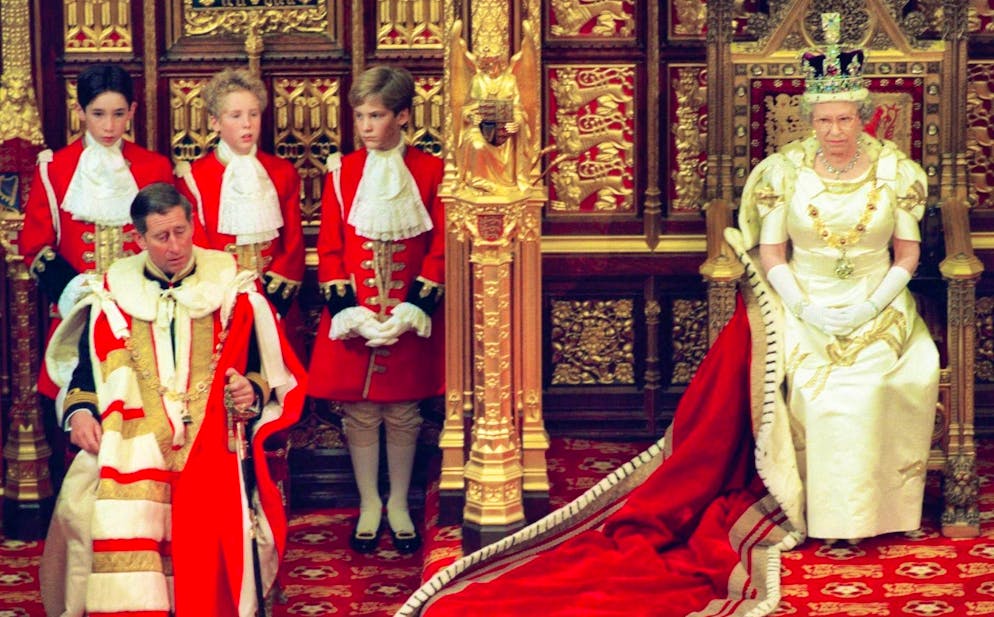
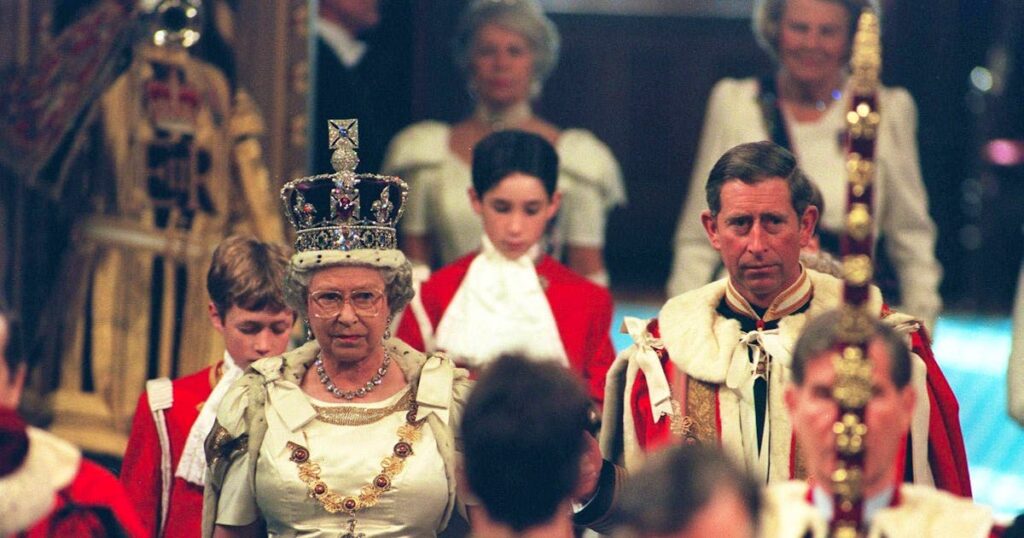
Royal pomp that the Swiss have always done without: Queen Elizabeth II and her eldest son Prince Charles, then heir to the throne, in October 1996 during the annual opening of Parliament at the House of Lords in London.
Picture:
Keystone
Where does the fascination with the aristocracy come from for the Swiss – even though many of us are proud of our democratic roots?
It may have something to do with the fact that Switzerland has never had its own royal family. That’s why it’s all the more exciting for many of us when a queen or king comes to visit us. The royals of yesterday and today are something like super celebrities.
But people in Switzerland also seem to have a soft spot for royalty. In the national sport of wrestling, the best wrestler is not crowned Swiss champion, but wrestling king.
And Migros, which likes to be so democratic, has a type of coffee called Café Royal in its range. In Switzerland, a coffee brand should be called “Café Democratie”. But that wouldn’t have the same appeal. That’s why the major distributor prefers to use a royalist coffee in its stores (laughs).
Does our fascination with royalty perhaps have something to do with the search for role models?
I believe less in the role model function – partly because today’s aristocrats lead a life in a glass house. What can be fascinating is the ostentatious, the glamorous and the pompous – as well as their failures.
Our neighboring countries Germany, France, Italy and Austria were once ruled by empresses and emperors or kings and queens. Why not us?
Ultimately, this was the decision of the Swiss people, who decided in their 1848 constitution that they did not want a queen or king – instead, they decided that we wanted to be a democracy.
A friend recently said that Switzerland is probably too small for a royal house. But that can’t be right: Belgium is even smaller and still has a royal family today.
You are right, there was and is no requirement as to how big a country has to be to call itself a kingdom.
The Habsburgs were a particularly influential aristocratic family in this country from the 13th century onwards. The family was based in the canton of Aargau before moving to Austria.
The family probably believed that they would have a better future in our neighbouring country to the east in order to realize their idea of a pan-European empire.
And so it came to pass: the Habsburgs ruled for over 600 years in the lands that later formed Austria-Hungary with many subject territories before the monarchy collapsed in 1918.
Why didn’t the Habsburgs, in their heyday, have one of their own proclaimed King of Switzerland – or at least send a prince to our country as the new leader?
That would certainly have been an option. There were also repeated efforts to this end. However, the Habsburgs suffered a series of defeats in war against the Confederation in the 14th and 15th centuries, which secured its independence.
There were several influential aristocratic families in Switzerland who played a dominant role for centuries. The von Wattenwyl family from Bern alone owned more than 60 castles, palaces and manor houses between the 16th and 19th centuries. Didn’t these families have any characters who thought they were destined for greater things? After all, Napoleon I crowned himself emperor in 1804.
Of course, there were also families in this country who were convinced that someone in their ranks was “born to greatness” because he was a really smart guy. But nothing ever came of it. With the French Revolution, the collapse of the Ancien Régime in 1798 and Napoleon’s seizure of power, such aspirations were completely swept away.
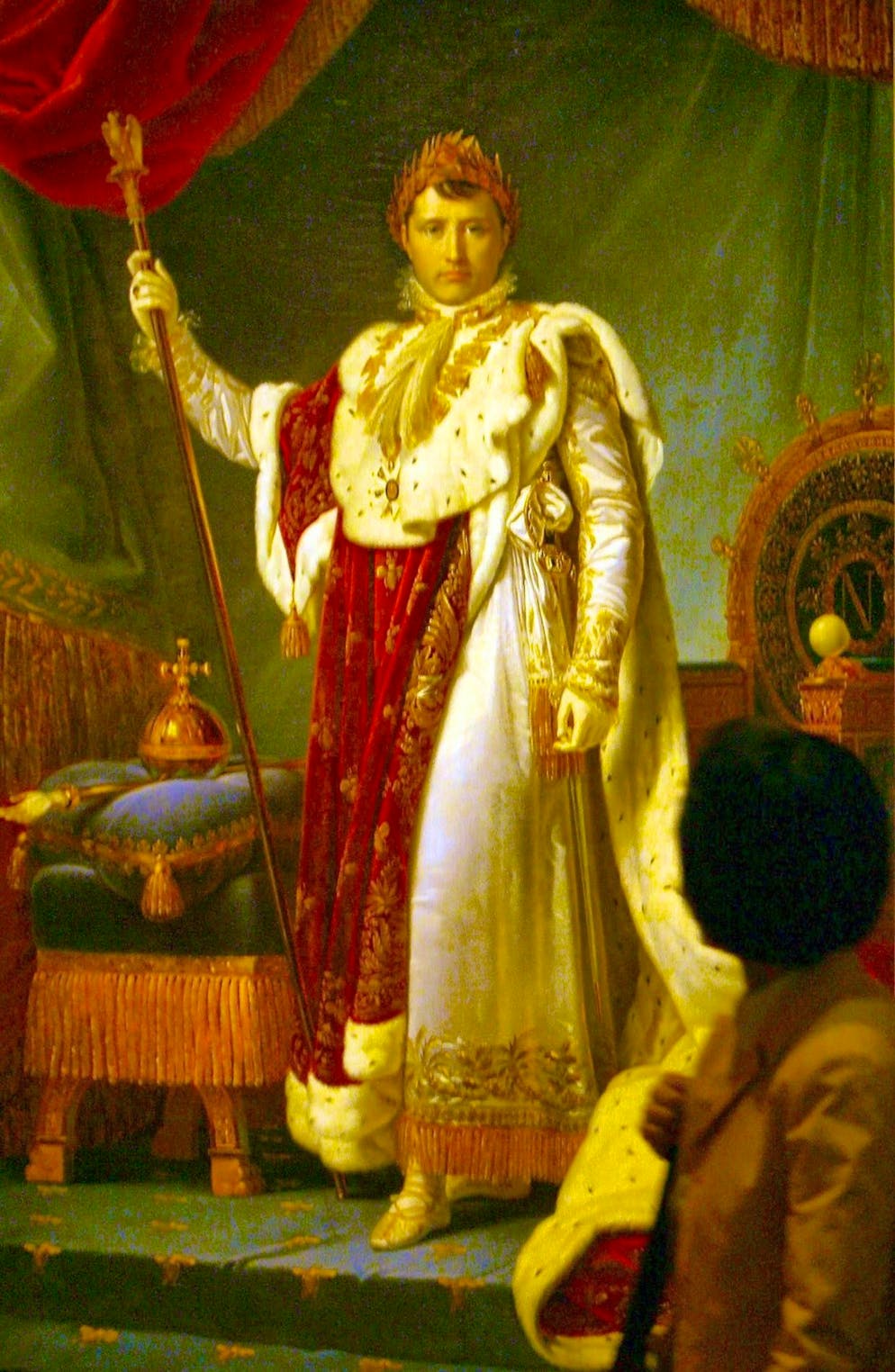
This painting by French portrait painter Francois Gerard (1770 to 1837) shows Napoleon I after he crowned himself emperor on December 2, 1804.
Image:
Keystone
The new ruler supposedly wanted to make democrats out of everyone – at least on paper. Today we know that the democratic achievements of the time were only maintained by a regime of terror. Among other things, the guillotine was invented during this period.
Around 1800, Napoleon I dominated Europe – Switzerland was also under his thumb. How should we imagine this?
His generals marched into the country and occupied it. Switzerland became a vassal state, a new constitution was proclaimed and Aarau was made the capital.
After Napoleon’s fall in 1814, the European monarchs were firmly back in the saddle. At the same time, according to historians, the Confederation was at its lowest point.
Whether it really was at its lowest point is not for me to judge. The fact is that the 22 cantons at the time were bound together by a problematic form of government. The Confederation was not a federal state as it is today, but a confederation of states.
What does that mean in concrete terms?
The cantonal governments were able to make many decisions themselves, while the federal government didn’t really have any say – unlike today. As a result, the Confederation was often unable to act politically, economically and militarily. For a long time, it was not clear whether the Confederation would survive as an independent state.
Some of the Swiss cantons had different currencies and units of measurement at the time …
Exactly. And customs duties were levied on the transportation of goods: A barrel of wine transported from Geneva to Rorschach was taxed several times along the way. Although these tariffs were not as high as the 39% that US President Donald Trump recently imposed on Switzerland, they were still annoying and anti-business.
At the time, Germany suggested that a “Kingdom of Helvetia” should be established. The “Frankfurter Allgemeine Zeitung” wrote in 1818: “Truly, it is high time that Switzerland had a master.”
There were also voices within the Confederation that considered a kingdom to be the best solution. However, such ideas did not gain majority support. This was also due to the fact that there was hardly any public spirit: each canton looked out for itself above all. It was only at the last moment, in 1815, that the 22 cantons came together to form a new federal treaty.
Since the Federal Constitution of 1848, there has officially been no nobility with state-recognized privileges in Switzerland.
The abolition of the nobility in this country had already begun half a century earlier. With the invasion of French troops in 1798 and the proclamation of the Helvetic Republic, the privileges of the estates and nobility were officially abolished.
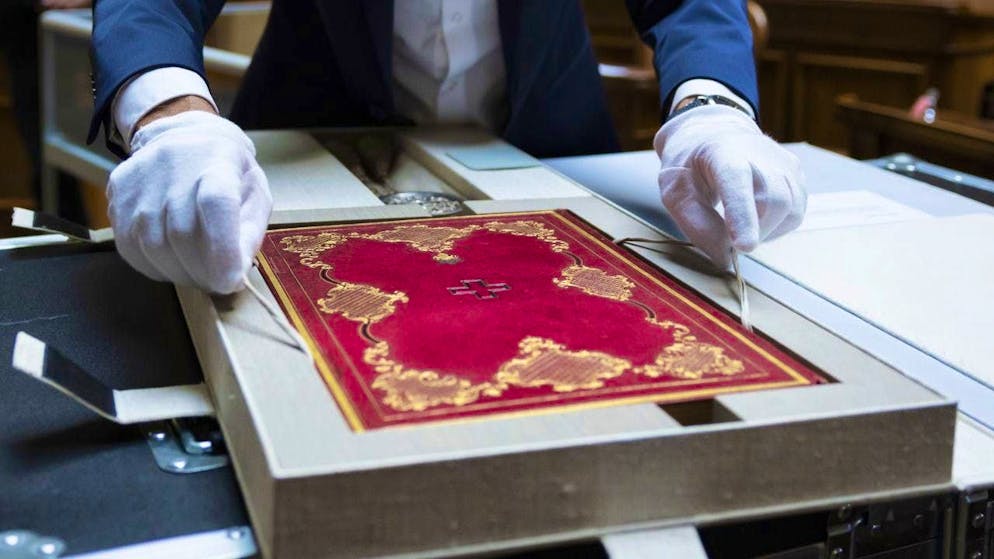
The original Federal Constitution of 1848 at a ceremony in the Parliament building in September 2023. (archive image)
Image:
sda
After 1815, the old upper classes returned to positions of power, but without any special legal status. With the Federal Constitution of 1848, the legal equality of all Swiss citizens was finally enshrined and the “Kingdom of Switzerland” chapter was finally buried.
So it is not the defensive Swiss who are “to blame” for the fact that there has never been a queen or king at the head of our country, but the still proverbial cantonal elitism?
At first glance, you might think so.
What do you think of the headline “Kantönligeist as King Preventer”?
I admit that would be a nice headline, but in my opinion it’s too short-sighted because there was a lot more at play.
More videos from the department