Vineeta Rao
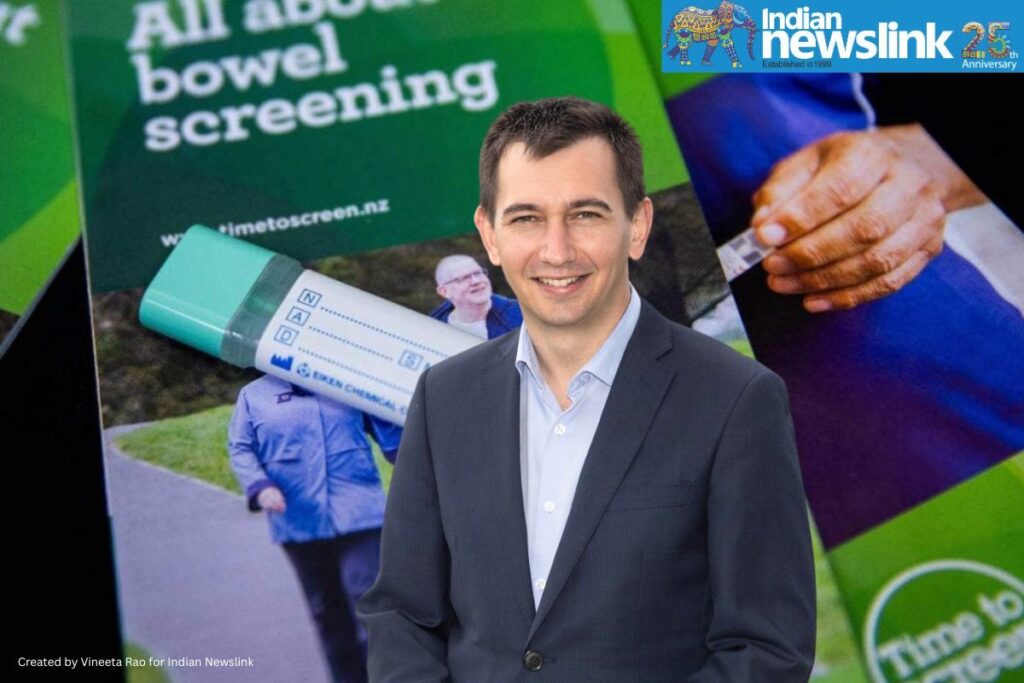
From Monday, the starting age for the New Zealand bowel screening programme will be lowered from 60 to 58 in Northland, Auckland, and the South Island. The rest of the North Island will follow in March 2026, with nationwide eligibility expected by March 2027. This announcement was made by Health minister Simeon Brown today.
The change is expected to make an additional 122,000 people eligible for free bowel cancer screening in the first year alone, potentially preventing 771 colorectal cancer cases and saving 566 lives over the next 25 years. Bowel cancer remains New Zealand’s second-leading cancer killer, and early detection through home screening kits has already identified nearly 3,000 cancers since the programme began in 2017.
FIT for Symptomatic Pathway to Support Early Colorectal Cancer Diagnosis
Alongside the lower age threshold, a new Faecal Immunochemical Test (FIT) for symptomatic patients is being rolled out. This non-invasive stool test helps GPs and specialists identify individuals at higher risk of colorectal cancer without requiring an immediate colonoscopy. Pilot programs in Waikato have shown the FIT pathway could reduce unnecessary colonoscopy referrals by 30 to 60 percent, freeing specialist capacity for those most at risk. The nationwide rollout of the FIT test for bowel cancer is expected to be completed by 2026.
To further improve early detection, a diagnostic uplift package will provide 7,100 additional colonoscopies by July 2026. A $19 million investment is also being directed toward improving participation among communities with historically lower bowel screening rates, including targeted outreach and simplified home test kit return options.
Why Bowel Screening Matters for Indian Communities in New Zealand
National statistics in New Zealand categorise Indian migrants under the broader “Asian” group, but international evidence highlights the importance of colorectal cancer screening for this community. In India, colorectal cancer is growing increasingly prevalent. In 2022, the country recorded 64,863 new cases and 38,367 deaths from colorectal cancer, making it the fourth most common cancer nationally. Several studies show that up to one-third of cases in India are diagnosed in individuals under 40, with an average age of around 47 years.
Five-year survival rates for colorectal cancer in India remain comparatively low, with 34.2 percent for colon cancer and 37.9 percent for rectal cancer. These figures are lower than survival rates in countries with established screening programmes, highlighting the importance of early detection. For Indian New Zealanders, participation in the New Zealand bowel screening programme is particularly relevant, even in the absence of symptoms, as early detection improves treatment outcomes.
How the Bowel Screening Programme Works
Individuals turning 58, 59, or 60 will receive a free bowel screening kit close to their birthday. The home test is simple to use and can detect cancer at an early stage or identify pre-cancerous growths. The screening programme is intended for people without symptoms; anyone experiencing blood in their stool or a persistent change in bowel habits should contact a doctor promptly.
Since 2017, over 2.53 million home test kits have been sent out in New Zealand, leading to the detection of nearly 3,000 cancers, with at least 40 percent identified at an early stage when treatment is most effective. The expansion of the programme, alongside the FIT for Symptomatic pathway and increased colonoscopy capacity, aims to improve early detection of colorectal cancer and provide better outcomes for people across New Zealand, including Indian migrant communities at potentially higher risk.
Vineeta Rao is an Indian Newslink journalist based in Auckland.