
Authors:
Minseok Cho 1, Wonyul Bae 2, Ho Yeol Yu 3, and Luka Ojemaye 4
Author affiliations:
1. Assistant Professor, Department of Sport Management and Recreation, Springfield College, Springfield, Massachusetts, United States.
2. Associate Professor, School of Business, Ithaca College, Ithaca, New York, United States.
3. Assistant Professor, Department of Health and Human Performance, East Texas A&M University, Commerce, Texas, United States.
4. Doctoral Candidate, Department of Health and Human Performance, University of Houston, Houston, Texas, United States.
Corresponding Author:
Minseok Cho
Department of Sport Management and Recreation, Springfield College
263 Alden St., Fieldhouse 213K, Springfield, MA 01109
[email protected], 413-748-3591
Conflict of Interest:
“The authors have no conflict of interest to report.”
ABSTRACT
The purpose of this study is to investigate the effects of role satisfaction, personal achievement, and extrinsic rewards on volunteer satisfaction and subsequent retention in a mega sporting event. An online survey of 2,127 volunteers from the 2018 PyeongChang Winter Olympics was conducted, and structural equation modeling was used to examine direct and indirect effects among the latent variables. Results revealed that role satisfaction, personal achievement, and extrinsic rewards significantly predicted overall satisfaction. Furthermore, overall satisfaction positively influences volunteer retention. Mediation analysis confirmed that overall satisfaction mediated the effect of extrinsic rewards on retention, but not for role satisfaction or personal achievement. These findings underscore the importance of satisfying extrinsic rewards (e.g., material incentives, logistical support) in cultivating volunteer retention. While this study was situated within a mega-event, implications extend to volunteer coordination across various sporting environments that rely on unpaid contributors.
Key Words: Mega sporting event, Volunteer retention, Volunteer satisfaction, Logistic regression, Structural equation modeling
INTRODUCTION
Volunteerism plays a vital role in the successful execution of large-scale events and in reducing operational costs (Pestereva, 2015), making volunteer retention a key concern for both organizers and researchers (Ahn, 2018). This involves an organization’s ability to maintain the involvement of individuals who contribute their time, skills, and effort without financial compensation (Merrilees et al., 2020), using strategies that promote positive experiences, reduce turnover, and build a loyal volunteer base to ensure event success, operational efficiency, cost savings, and community engagement (Gaber et al., 2022; Ahn, 2018). Importantly, volunteer retention emerges as a cost-effective and essential strategy for non-profit and private organizations engaged in hosting mega sports (Kim et al., 2007). Despite volunteers’ significant contributions (e.g., saving costs and providing quality service), there has been a decline in volunteerism attributed to poor retention rates (Do Good Institute, 2018). Given the infrequent occurrence of mega sports events, host countries are presented with challenges in retaining volunteers due to the limitations associated with low event frequency and the rotational selection of host cities (Fourie & Santana-Gallego, 2011). Compared to professional sports operating matches in the same venues, mega sporting events tend to have difficulty retaining volunteers due to restrictions such as low frequency and rotation of host cities. In the detailed examination of volunteer retention within mega sporting events, the integration of Self-Determination Theory (SDT) plays a crucial role, providing valuable insight into the complex dynamics that shape retention, influenced by factors like volunteer role satisfaction, personal achievement, and extrinsic rewards. Thus, this empirical study had two primary objectives: 1) to explore how these three factors significantly impact volunteers’ overall satisfaction and volunteer retention, and 2) to identify the factors that drive volunteer retention when overall satisfaction mediates their retention in a mega sports event. This paper begins by reviewing relevant literature on role satisfaction, personal achievement, and extrinsic rewards. It then outlines the research method, followed by a presentation and discussion of the results. The paper concludes with applications for volunteer management in the sport context.
LITERATURE REVIEW
Self-determination Theory
Self-determination theory (SDT), crafted by Deci and Ryan (1985), stands as a foundational psychological framework delving into the intricate motivations steering human behavior. SDT posits that individuals have three innate psychological needs that, when satisfied, contribute to a sense of well-being and sustained motivation: i) Autonomy which refers to the desire for volition and self-endorsement in one’s actions, ii) Competence which involves the need to feel effective in one’s interactions with the environment, iii) Relatedness pertains to the need to connect with others and experience a sense of belonging (Deci & Ryan, 1985). Furthermore, SDT proposes the importance of the harmonious use of intrinsic (which involves engaging in activities for inherent satisfaction) and extrinsic (which involves engaging in activities for external rewards) motivations in role satisfaction (Ryan & Deci, 2000). In the nuanced exploration of volunteer retention within mega sporting events, the incorporation of SDT emerges as a pivotal factor, offering a profound insight into the intricate dynamics influencing how retention is shaped by factors such as volunteer role satisfaction, personal achievement, and extrinsic rewards. Thus, this study proposes extrinsic motivation (i.e., role satisfaction and extrinsic rewards) and intrinsic motivation (i.e., personal achievement) to explore volunteer retention in a mega sporting event.
Role Satisfaction
Role satisfaction is the extent to which one’s psychological needs are met in an intrinsically valuable role (Malhotra et al., 2014). In volunteerism, role satisfaction is crucial in overall volunteer satisfaction, bolstering volunteer retention. SDT posits that role satisfaction can be influenced by intrinsic and extrinsic factors (Ryan & Deci, 2000), meaning that individuals may find satisfaction in their roles through fulfillment or external rewards. SDT further suggests that when an individual’s psychological and physical needs are met in a role, satisfaction occurs, thereby contributing to retention (Ryan & Deci, 2000). Role satisfaction, therefore, serves as a significant component of overall volunteer satisfaction and a predictor of volunteer retention. Consequently, this study postulated that role satisfaction can occur when individuals are motivated intrinsically or extrinsically, leading to enhanced overall volunteer satisfaction.
Personal Achievement
In volunteering, the achievement motive serves as a determinant of intrinsic motivation, and it involves striving for excellence and competing with one’s or others’ standards (Malhotra et al., 2014). It implies that personal achievement in a volunteer role enhances intrinsic motivation, aligning with SDT to reinforce role satisfaction and overall volunteer satisfaction. Ahn (2018) also highlighted that involvement in volunteerism provides individuals with opportunities for self-achievement. This was further expounded on by Guerrero and Seguin (2012), who illustrated that high achievement motives increase motivation as personal tasks and organizational goals are met, which leads to increased satisfaction.
Extrinsic Rewards
Rewards refer to tangible or intangible benefits for recognized activities (Jung, 2011). Rewards play a critical role in volunteering, as recruiting and retaining qualified volunteers without incentives can be challenging (Ahn, 2018). As such, rewards can become one’s motivation to either participate or continue to engage in volunteering activities. Rewards can be categorized into two types: intrinsic and extrinsic rewards. Intrinsic rewards are psychologically driven and encompass positive feelings derived from performing a meaningful job and a sense of contributing to a worthy cause (Wymer & Starnes, 2001). More importantly in this study, extrinsic rewards refer to economic recognition and tangible items such as discount coupons, accommodations, uniforms, cash, and gifts (Jung, 2011). Prior studies have proposed that extrinsic rewards are driving factors that allow for competence needs, which are essential determinants of volunteer satisfaction (Baard et al., 2004), such as recognition of efforts, tangible rewards, and incentives (Ahn, 2018).
Volunteer Retention
The concept of intention to volunteer has been a central focus in volunteer research, emerging as a pivotal predictor for the prospective retention of volunteers. This prominence is exemplified by the findings of Clary et al. (1998), who underscored the significance of the intention to volunteer as a crucial factor influencing both the recruitment and subsequent retention of volunteers. Volunteer retention refers to the actions, decisions, and patterns of engagement exhibited by individuals who choose to sustain their involvement in volunteer activities (Clary et al., 1998). It encompasses the dynamics that contribute to volunteers choosing to stay committed and engaged in their roles (Hustinx & Lammertyn, 2003). For instance, individuals who consistently participate in volunteer activities over time, take on additional responsibilities, attend scheduled training events, speak positively about their experiences, and invest their resources serve as a few examples of characteristics of volunteer retention (Hustinx & Lammertyn, 2003).
The Mediating Role of Overall Volunteer Satisfaction
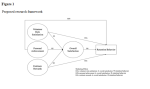
Overall volunteer satisfaction refers to the comprehensive evaluation of volunteers’ contentment, fulfillment, and positive experiences across various aspects of their engagement with a volunteer program or organization (Clary et al., 1998). As volunteers are more likely to continue their engagement if they derive overall satisfaction from their work (Warner et al., 2011), overall satisfaction is immensely important as it predicts retention and decreased turnover rates (Galindo-Kuhn & Guzley, 2001). Satisfied volunteers are more likely to continue their service and even inspire and recruit others to volunteer (Coyne & Coyne, 2001). Moreover, overall satisfaction with a specific volunteer episode fosters positive perceptions of volunteering, highlighting its significance in driving retention (Coyne & Coyne, 2001). The concept of volunteer overall satisfaction has been extensively studied, and existing literature has consistently suggested that it is a predictor of the time spent volunteering, the longevity of volunteer service, and the intention to continue volunteering (Costa et al., 2006). Thus, it is theoretically assumed that volunteers’ perceptions of role satisfaction, personal achievement, and extrinsic rewards collectively influence their overall satisfaction, subsequently impacting volunteer retention. Therefore, the following hypotheses were proposed:
H1. Role satisfaction has a positive effect on overall volunteer satisfaction.
H2. Personal achievement has a positive effect on overall volunteer satisfaction.
H3. Extrinsic rewards have a positive effect on overall volunteer satisfaction.
H4. Overall volunteer satisfaction will positively impact volunteer retention.
H5a. Overall volunteer satisfaction mediates the positive relationship between role satisfaction and actual retention.
H5b. Overall volunteer satisfaction mediates the positive relationship between personal achievement and actual retention.
H5c. Overall volunteer satisfaction mediates the positive relationship between extrinsic rewards and actual retention.
METHOD
Data Collection and Participants
Data were collected from volunteers who participated in the 2018 PyeongChang Winter Olympics, with the valuable contribution of secondary data made available by the PyeongChang Winter Olympics Organizing Committee. An online survey link was sent to actual event volunteers, and the survey link was available during the entire Olympic Games event, from February 7th to 25th in 2018. A total of 2,500 volunteers initially completed the online survey. During the data screening process, 344 incomplete questionnaires were eliminated, resulting in 2,156 usable questionnaires. An additional 29 questionnaires were removed since all items were recorded in the same number. A final sample of 2,127 questionnaires was used for analysis, with 734 males (34.5%) and 1,393 females (65.5%), the majority being single (86.1%) and holding a bachelor’s degree (77.2%), and the largest age group being 20 to 29 years (82.1%).
Instrument and Data Analysis
A total of 20 items were used to measure the four constructs: six items for role satisfaction, eight items for personal achievement, three items for extrinsic rewards, and three items for overall satisfaction. Each measure was found to be internally consistent since composite reliability values ranged from .77 to .85 in this study. All items were anchored on a 5-point Likert scale, ranging from 1 (Strongly Disagree) to 5 (Strongly Agree). To identify the participants who were repeat volunteers to a mega event, the respondents were screened to report whether they had returned to the event and had previous experience volunteering at the mega sporting event. Volunteer retention was used as the binary dependent variable, with the number of volunteer retention variables dichotomized into 0 = non-retention volunteers and 1 = retention volunteers.
Descriptive analysis was calculated, and a confirmatory factor analysis (CFA) was performed using Mplus 8.8 to assess the psychometric properties of the measurement. Furthermore, structural equation modeling (SEM) was conducted to estimate the direct and indirect effects of the measured latent variables on the dichotomous dependent variable, volunteer retention. As this is a logistic regression in SEM, χ2 was unavailable (Arlinghaus et al., 2012). Instead, the Akaike Information Criterion (AIC) and the Bayesian Information Criterion (BIC) were used as the only fit indicators to assess model fit for the logistic regression model in SEM, so these two fit indicators were generally utilized in such models (Arlinghaus et al., 2012). This model was designed to predict volunteers’ retention from 557 participants who returned to volunteer at a mega sporting event. However, an estimation of weighted least squares (WSLMV), which was available in Mplus 8.8, allowed researchers to estimate binomial regression models that provide traditional model fit indices, such as the comparative fit index (CFI ≥ 0.90), the root mean square error of approximation (RMSEA ≤ 0.08), the Tucker-Lewis index (TLI ≥ 0.90), and the standardized root mean squared residual (SRMR ≤ 0.08). Thus, the WSLMV estimation method was used for our model. A significant level of 0.05 was used to determine statistical significance.
RESULTS
Descriptive Statistics
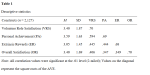
In terms of descriptive statistics, the mean scores of all factors related to volunteering, including volunteer role satisfaction, personal achievement, and extrinsic rewards, were above the mid-point. Among the three factors, personal achievement was rated as the highest mean score (M = 3.59, SD = 1.63), followed by volunteer role satisfaction (M = 3.40, SD = 1.87) and extrinsic rewards (M = 3.05, SD = 1.45). In addition, the mean score of overall satisfaction was 3.40 (SD = 1.69). As shown in Table 1, the relationships between variables were all less than .85, thereby demonstrating the absence of multicollinearity (Kline, 2005).
Model Comparison
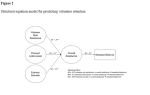
The original model in this study was partially mediated. Any covariance structural models had alternative models that are identical to the original model regarding goodness of fit to data (MacCallum et al., 1993). To deal with this potential issue, the existence of such equivalent models can be compared with the original model. Besides our original model, we identified a fully mediated model, which omitted paths from volunteers’ personal achievement, role satisfaction, and extrinsic rewards to volunteer retention. The model comparison was performed between the hypothesized structural model and a model using overall model fit (Morgan & Hunt, 1994). SEM was performed for both models (i.e., the partially mediated model vs the fully mediated model). Accordingly, the partially mediated model revealed an acceptable model fit (CFI = .909, RMSEA = .062, TLI = .893, SRMR = .043). Also, all the paths were significant at the level of .05. However, the fully mediated model showed superior model fit compared to the partially mediated model (CFI = .913, RMSEA = .060, TLI = .898, SRMR = .043). Hence, we decided to use the more parsimonious model that excludes the paths from volunteers’ personal achievement, role satisfaction, and extrinsic rewards to volunteer retention.
Measurement Validation
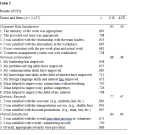
The psychometric properties of the measurement were assessed by performing CFA. The initial process revealed that one item in volunteer role satisfaction and one item in personal achievement were deleted due to low factor loadings (i.e., < .40; Hair et al., 2010). Afterward, the results of CFA demonstrated that the remaining items demonstrated high factor loadings, ranging from .653 to .907. Additionally, composite reliability (C.R.) coefficients ranged from .77 to .88, exceeding the suggested criteria of .70 (Hair et al., 2010). The values of average variance extracted (AVE) were mostly above the cut-off criteria (.50; Bagozzi & Yi, 1988), except for personal achievement (.48) and extrinsic rewards (.47). Fornell and Larcker (1981) mentioned that AVE values of 0.4 can be accepted when its values of C.R. were above the acceptable level of .70. Based on the results of AVE and C.R., convergent validity was established. Discriminant validity was confirmed by comparing the square roots of AVE values with construct correlations (Fornell & Larcker, 1981). All the square roots of AVE values were greater than the values of construct correlations, indicating the presence of discriminant validity. Finally, model fit indices indicated a good fit to the data (CFI = .963, RMSEA = .043, TLI = .953, SRMR = .035).
Logistic Model in SEM
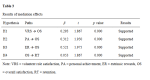
The results of the logistic model in SEM indicated a good fit of the data to the model (CFI = .913, RMSEA = .060, TLI = .898, SRMR = .043). All the path coefficients for the hypotheses were positively significant, supporting H1 to H4 (see Table 3 and Figure 1). H1 was supported since the relationship between volunteer role satisfaction and overall satisfaction was positively significant (𝛽 = .29, p < .001). Also, significant positive relationships were identified between personal achievement and overall satisfaction (𝛽 = .31, p < .001) and extrinsic rewards and overall satisfaction (𝛽 = .52, p < .001), thus supporting H2 and H3. In addition, H4 was supported in that overall satisfaction positively impacted volunteer retention (𝛽 = .05, p < .05). Regarding the latent variable of overall satisfaction, a total of 90.7% of the variance in overall satisfaction was explained by volunteer role satisfaction, personal achievement, and extrinsic rewards.
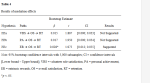
To test H5, a post-hoc mediation analysis using 5,000 bootstrap samples was conducted to examine if overall satisfaction mediated the relationship between three factors (i.e., role satisfaction, personal achievement, and extrinsic rewards) and volunteer retention. Table 4 shows the results of the indirect effects. The mediation effect of extrinsic rewards on volunteer retention via overall satisfaction was significant at the level of .05, and the confidence interval did not include zero. Besides the mediating effects of extrinsic rewards, no other significant mediators were identified. Thus, H5a and H5b were not supported, but H5c was supported.
DISCUSSION
The current study investigated the impact of three underlying factors of volunteering (i.e., role satisfaction, personal achievement, and extrinsic rewards) and overall satisfaction as the drivers that promote volunteer retention in a mega sporting event. The findings demonstrated that all three factors positively influenced overall satisfaction, with extrinsic rewards playing a significant role in predicting volunteer retention.
Volunteer retention remains a significant challenge for human resource management in sports organizations. This study confirmed a positive relationship between overall satisfaction and volunteer retention (H4). Various factors, including volunteer roles, personal achievement, and extrinsic rewards, were found to influence overall satisfaction. Additionally, satisfaction with the volunteering experience positively affected both retention and recruitment efforts. Enhancing overall satisfaction improves volunteer performance and retention while fostering continued engagement and commitment in future mega sporting events through positive experiences.
The current study predicted a fully mediating effect of extrinsic rewards on volunteers’ future intentions through overall satisfaction (H5c). Previous research demonstrated intrinsic rewards as the primary motivator for volunteers, stemming from positive emotional states developed by satisfactory performance and a sense of worthiness (Wymer & Starnes, 2001). However, this study suggests the significance of extrinsic rewards in securing existing volunteers and maintaining professional relationships with them. Although volunteers provide their services without monetary compensation, the expectation of tangible rewards, complimentary services, or products (e.g., apparel, equipment, and souvenirs) is prevalent.
CONCLUSION AND FUTURE RESEARCH
This study provides compelling evidence on the importance of volunteer satisfaction in driving retention at mega sporting events, particularly highlighting the pivotal role of extrinsic rewards. Among the factors (i.e., role satisfaction, personal achievement, and extrinsic rewards), tangible incentives such as apparel, transportation, and discounts emerged as the most influential in enhancing volunteers’ overall satisfaction and future participation intentions. The findings also confirm that while intrinsic motivations are meaningful, it is the concrete, rewarding experiences that most effectively translate satisfaction into long-term commitment. These insights offer valuable guidance for event organizers and volunteer managers in designing volunteer programs that strategically balance motivational drivers. By prioritizing volunteer needs, recognizing contributions, and offering supportive and rewarding environments, sports organizations can cultivate a reliable and engaged volunteer base. Future research should expand on these findings by exploring variations across event types, cultural contexts, and demographic profiles to refine retention strategies and support the sustainability of volunteer engagement in sport.
APPLICATIONS IN SPORT
The current study suggests a practical insight into volunteering that sports organizations, volunteer managers, and event organizers can develop volunteer programs by incorporating a balanced mixture of intrinsic and extrinsic motivations. Sports organizations could focus on identifying various methods to improve overall satisfaction to ensure the retention of existing volunteers for upcoming events. Volunteer managers can continue offering high-quality onboarding services to improve overall satisfaction before, during, and after sports events. The onboarding process helps volunteers familiarize themselves with the organization’s mission and vision, and volunteers can also be informed about the training, support, and resources to fulfill their role more successfully (Gunn, 2023). For instance, before events, sports organizations could implement well-organized recruitment online systems, training sessions for designated roles, and detailed information about volunteer schedules (Angosto et al., 2021). During events, volunteer managers could actively listen to volunteers’ feedback and address any concerns to provide a better work environment. After events, sports organizations can express gratitude through appreciation emails to all volunteers and conduct satisfaction surveys to further enhance their retention behavior. Volunteer feedback helps figure out how to make the volunteer program better including its improvement, understanding of volunteer experiences, and communication with volunteers (Wang, 2023).
Sports organizations may seek to augment volunteer recruitment and satisfaction by implementing strategies to elevate individual volunteer achievements. In promoting volunteer programs for sports events or organizations, hiring managers can accentuate potential achievements, such as leadership, communication skills, language acquisition, and networking. For example, volunteering can provide opportunities to practice essential skills used in the workplace or community, incorporating teamwork, communication, problem-solving, and task management (Segal & Robinson, 2013). Our findings also imply that sports organizations can provide a better quality of products or services to enhance overall satisfaction for volunteers, such as uniforms, shoes, and equipment. Additionally, sports event organizations can utilize volunteer-specific gear or clothing brands and products as extrinsic rewards to boost engagement and morale among volunteers in general sport settings (Volunteer Hub, n.d.). In essence, leveraging our findings and practical implications holds the potential to significantly enhance volunteer retention at mega sporting events through strategic and targeted interventions.
REFERENCES
Ahn, Y. J. (2018). Recruitment of volunteers connected with sports mega-events: A case study of the PyeongChang 2018 Olympic and Paralympic Winter Games. Journal of Destination Marketing and Management, 8, 194-203.
Angosto, S., Bang, H., Bravo, G. A., Díaz-Suárez, A., & López-Gullón, J. M. (2021). Motivations and future intentions in sport event volunteering: A systematic review. Sustainability, 13(22), 12454.
Arlinghaus, A., Lombardi, D. A., Willetts, J. L., Folkard, S., & Christiani, D. C. (2012). A structural equation modeling approach to fatigue-related risk factors for occupational injury. American Journal of Epidemiology, 176(7), 597-607.
Baard, P. P., Deci, E. L., & Ryan, R. M. (2004). Intrinsic need satisfaction: A motivational basis of performance and well-being in two work settings. Journal of Applied Social Psychology, 34(10), 2045-2068.
Clary, E. G., Snyder, M., Ridge, R., Copeland, J., Stukas, A., Haugen, J., & Miene, P. (1998). Understanding and assessing the motivations of volunteers: A functional approach. Journal of Personality and Social Psychology, 74(6), 1516-1530.
Costa, C. A., Chalip, L., Christine Green, B., & Simes, C. (2006). Reconsidering the role of training in event volunteers’ satisfaction. Sport Management Review, 9(2),165-182.
Coyne, B. S., & Coyne, E. J. (2001). Getting, keeping and caring for unpaid volunteers for professional golf tournament events, Human Resource Development International, 4(2), 199-214.
Deci, E. L., & Ryan, R. M. (2000). The “What” and “Why” of goal pursuits: Human needs and the self-determination of behavior, Psychological Inquiry, 11(4), 227-268.
Do Good Institute (2018). Where are America’s volunteers? A look at America’s widespread decline in volunteering in cities and states. University of Maryland.
Fourie, J., & Santana-Gallego, M. (2011). The impact of mega-sport events on tourist arrivals. Tourism Management, 32(6), 1364-1370.
Gaber, J., Clark, R. E., Lamarche, L., Datta, J., Talat, S., Bomze, S., Marentette-Brown, S., Parascandalo, F., Di Pelino, S., Oliver, D., Price, D., Geoffrion, L., & Mangin, D. (2022). Understanding volunteer retention in a complex, community-centred intervention: A mixed methods study in Ontario, Canada. Health & Social Care in the Community, 30(6), 2259-2269.
Galindo-Kuhn, R., & Guzley, R. M. (2001). The volunteer satisfaction index: Construct definition, measurement, development, and validation. Journal of Social Service Research, 28(1), 45-68.
Guerrero, S., & Seguin, M. (2012). Motivational drivers of non-executive directors, cooperation, and engagement in board roles. Journal of Managerial Issues, 24(1), 61-77.
Gunn, R. (2023, January 10). How to manage volunteers effectively. Rosterfy. https://www.rosterfy.com/blog/how-to-manage-volunteers-effectively
Hoye, R., & Cuskelly, G. (2009). The psychology of sport event volunteerism: A review of volunteer motives, involvement and behaviour. In T. Baum, M. Deery, C. Hanlon, L. Lockstone-Binney, K. Smith (Eds.), People and Work in Events and Conventions: A Research Perspective (pp. 171-180). CABI: Wallinford, UK. http://doi.org/10.1079/9781845934767.0171
Hustinx, L., & Lammertyn, F. (2003). Collective and reflexive styles of volunteering: A sociological modernization perspective. VOLUNTAS: International Journal of Voluntary and Nonprofit Organizations, 14(2), 167-187.
Jung, J. (2011). The effects of recognition on volunteer activities in Korea: Does it really matter? International Review of Public Administration, 16(2), 33-47.
Kim, M., Chelladurai, P., & Trail, G. T. (2007). A model of volunteer retention in youth sport. Journal of Sport Management, 21(2), 151-171.
Kline, T. J. B. (2005). Psychological testing: A practical approach to design and evaluation. Thousand Oaks, CA: Sage.
MacCallum, R. C., Wegener, D. T., Uchino, B. N., & Fabrigar, L. R. (1993). The problem of equivalent models in applications of covariance structure analysis. Psychological Bulletin, 114(1), 185-199.
Malhotra, R. S., Vohra, P. S., & Rangnekar, S. (2014). Will psychological empowerment and role satisfaction influence motivation? Evidence from public sector organizations in India. Asia-Pacific Journal of Business, 5(2), 25-35.
Merrilees, B., Miller, D., & Yakimova, R. (2020). Volunteer retention motives and determinants across the volunteer lifecycle. Journal of Nonprofit & Public Sector Marketing, 32(1), 25-46.
Morgan, R. M., & Hunt, S. D. (1994). The commitment-trust theory of relationship marketing. Journal of Marketing, 58(3), 20-38.
Pestereva, N. (2015). University network of volunteer training centers as a social project of the sochi-2014 Olympic Winter Games heritage. Procedia – Social and Behavioral Sciences, 214, 279-284.
Ryan, R. M., & Deci, E. L. (2000). Self-determination theory and the facilitation of intrinsic motivation, social development, and wellbeing. American Psychological Association, 55(1), 68-78.
Segal, J., & Robinson, L. (2023, February 27). Volunteering and its surprising benefits. HelpGuide.org. https://www.helpguide.org/articles/healthy-living/volunteering-and-its-surprising-benefits.htm
Wang, G. (2023, July 17). The power of volunteer feedback: Get the data to improve your program. Civic Champs. https://www.civicchamps.com/post/the-power-of-volunteer-feedback-get-the-data-to-improve-your-program
Warner, S., Newland, B. L., & Green, B. C. (2011). More than motivation: Reconsidering volunteer management tools. Journal of Sport Management, 25(5), 391-407.
Wymer, W. W., & Starnes, B. J. (2001). Conceptual foundations and practical guidelines for recruiting volunteers to serve in local nonprofit organizations. Journal of Nonprofit and Public Sector Marketing, 9(1/2), 97-118.