
Every first Sunday of October, Romania marks its National Day of Gastronomy and Wine, created in 2019 to recognise local heritage and wine culture. Intended as a flagship celebration for the hospitality industry, it has yet to gain consistent traction. Co-founders Cosmin Dragomir and Cezar Ioan reflect on why its impact remains limited. Their insights, alongside a closer look at Taste of Transylvania and the upcoming Bocuse d’Or Romania, reveal untapped potential amid retail’s rapid growth.
A celebration still waiting for its moment
The National Day of Gastronomy and Wine is still unknown to many. Seven years after the law was passed to introduce the celebratory day, its impact remains limited. “I believe it could be of great significance, but it still isn’t,” says Cezar Ioan. “For the hospitality sector, its relevance is close to non-existent: it hasn’t gained any real traction, perhaps because the law was not widely known, perhaps because the Covid years disrupted the industry, or because other actors in the field failed to integrate it into their plans,” he adds.

By contrast, other industries and even small communities have proven how food-centred events can transform perception and tourism. But in Romania, gastronomy remains caught between two extremes: rustic clichés on one side and overly modern reinterpretations on the other. The middle ground, where tradition meets modern everyday practice, is often absent.
The industry’s blind spot

For Cosmin Dragomir, the situation is even more paradoxical. “Romania’s National Day of Gastronomy and Wine should be the main celebration of the industry. We don’t really have others, at least not ones as broad and representative. What I find astonishing, however, is that marketing in the hospitality sector would rather promote, at least on social media, days dedicated to pancakes, chocolate, Bavarian sausages, or seafood pizza,” he adds.
This disconnect reflects a deeper issue: the gap between theory and practice when it comes to supporting local producers. “The Romanian producer is praised online, but struggles to find customers. They have a better chance to make money from TikTok live streams than at the farmers’ market,” Dragomir says.

Taste of Transylvania: a glimpse of what could be
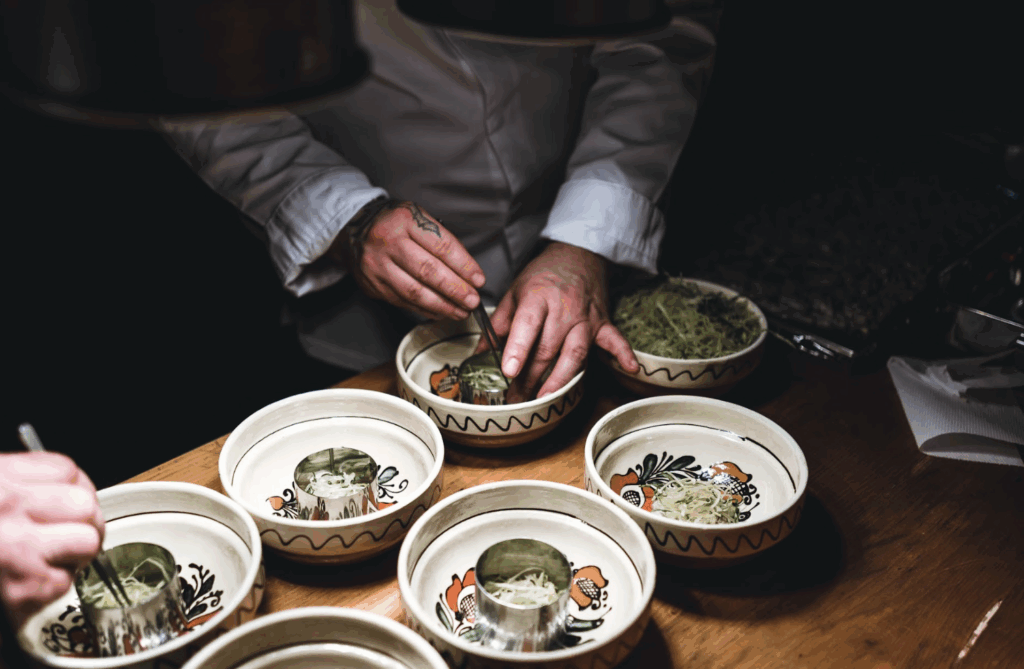
Despite these challenges, there are moments when the potential of Romanian gastronomy shines through. One such moment is Taste of Transylvania, which brought together Michelin-starred chefs from across Europe alongside Romanian culinary talents.

The festival was more than a feast; it was a showcase of how local products and traditions can inspire world-class cuisine. Dishes combined foraged herbs from the Apuseni mountains with modern plating, while local cheeses, charcuterie, and wines were elevated to international standards. Guests included international chefs who praised Romania’s biodiversity, seasonal produce, and untapped culinary stories. The potential exists; we just have to acknowledge it.
Bridging generations through food
One of the strongest arguments for the national day lies in its potential to spark dialogue between generations. Both Ioan and Dragomir emphasise that food and wine are not mere commodities, but identity markers and tools of connection.
“Food and wine are markers of identity and important points of differentiation,” explains Cezar Ioan, while for Cosmin Dragomir, the key is hands-on practice: “It is proven that cooking together and bringing children into the kitchen has countless benefits: quality time, education, sparking interest in ingredients once deemed undesirable, developing other skills, and even having fun.”
Gastronomy as tourism’s missing ingredient
Tourism is another area where Romanian gastronomy could play a decisive role. “Unfortunately, gastronomy and wines are contributing just marginally to the development of national tourism,” says Cezar Ioan. “Yes, there are places and social circles where these values are understood and put to work, but generally they’re at the lowest level.”
Dragomir insists that gastronomy should be treated as one of Romania’s key advantages: “Most holiday spending goes on food experiences, and people are increasingly prone to choosing destinations for their culinary options. Foreigners end up eating international dishes abroad only when local options are lacking or past experiences were poor.”
Examples from neighbouring countries show what is possible. Bulgaria, for instance, has managed to reposition itself as a culinary and tourism destination through coordinated efforts. Romania, however, still struggles with infrastructure gaps, weak promotion, and a lack of strategy.
Looking ahead: international recognition for the Romanian chefs
For the first time, a Romanian chef has been recognized on the global stage of The Best Chef Awards, one of the most prestigious platforms in contemporary gastronomy. Chef Alex Petricean from Noua was honored in Milan with the symbolic knife, a mark of excellence and official entry into the international community of chefs shaping the future of global cuisine.
Founded in 2015, The Best Chef Awards go beyond restaurant rankings to highlight creativity, research, innovation, and the personalities defining the culinary world today. Being nominated means joining an elite network of chefs who influence international trends and inspire the next generation.
This recognition is not only about one chef, but also about the team at NOUA, who turn vision into reality, the local producers whose ingredients carry Romania’s authenticity and the guests and community who give meaning and courage to dream further.
At the same time, the the National Association of Chefs and Confectioners in Tourism (ANBCT) achieved unprecedented success at the Croatian Culinary Cup 2025, winning all gold medals, the Country Grand Prix, and the Pastry Grand Prix. The competition, held under WACS (World Association of Chefs’ Societies) standards, was judged by a jury of 25 experts from 15 countries, making Romania’s performance even more significant. This is the first time that Romania has achieved such recognition at both individual and team levels, positioning Romanian gastronomy and talent firmly on the international culinary map.
Furthermore, this year, Romania will take a bold step forward in high-end cuisine. At the end of November, the country will host its first-ever Bocuse d’Or competition, often called the Olympics of gastronomy. Organised by ANBCT and spearheaded by Chef Cezar Munteanu, the event will bring Romania closer to the global fine dining stage.
The timing is symbolic: just weeks after the National Day of Gastronomy and Wine, Romanian chefs will compete under the strict standards of Bocuse d’Or, proving that the country’s culinary talent is ready to perform alongside the world’s best.
And a decade from now?
Where will Romanian gastronomy and wine be in ten years? Both founders remain cautious. “There cannot be any strategic vision without real conversation and communication,” warns Ioan. Without them, he sees the same extremes repeating: “eggplant salad, tripe soup, and pork knuckle everywhere, on one hand; and some very high-end mumbo-jumbo on the other.”
Dragomir is even more sceptical: “I honestly don’t believe we are capable of such a strategy or, more precisely, of taking responsibility for it.” And yet, there are visible seeds of change: festivals like Taste of Transylvania, initiatives like Bocuse d’Or Romania, and the growing international appetite for authentic, sustainable food experiences.
Meanwhile, Romania’s National Day of Gastronomy and Wine may gain new momentum thanks to a recent legal amendment. Starting in 2025, Romanian embassies and consulates worldwide are allowed to mark the day through cultural and public diplomacy events. As a result of this expansion, the holiday could finally move beyond symbolic recognition and become an international showcase of Romanian food, wine, and tourism.
Photo courtesy of Taste of Transylvania