
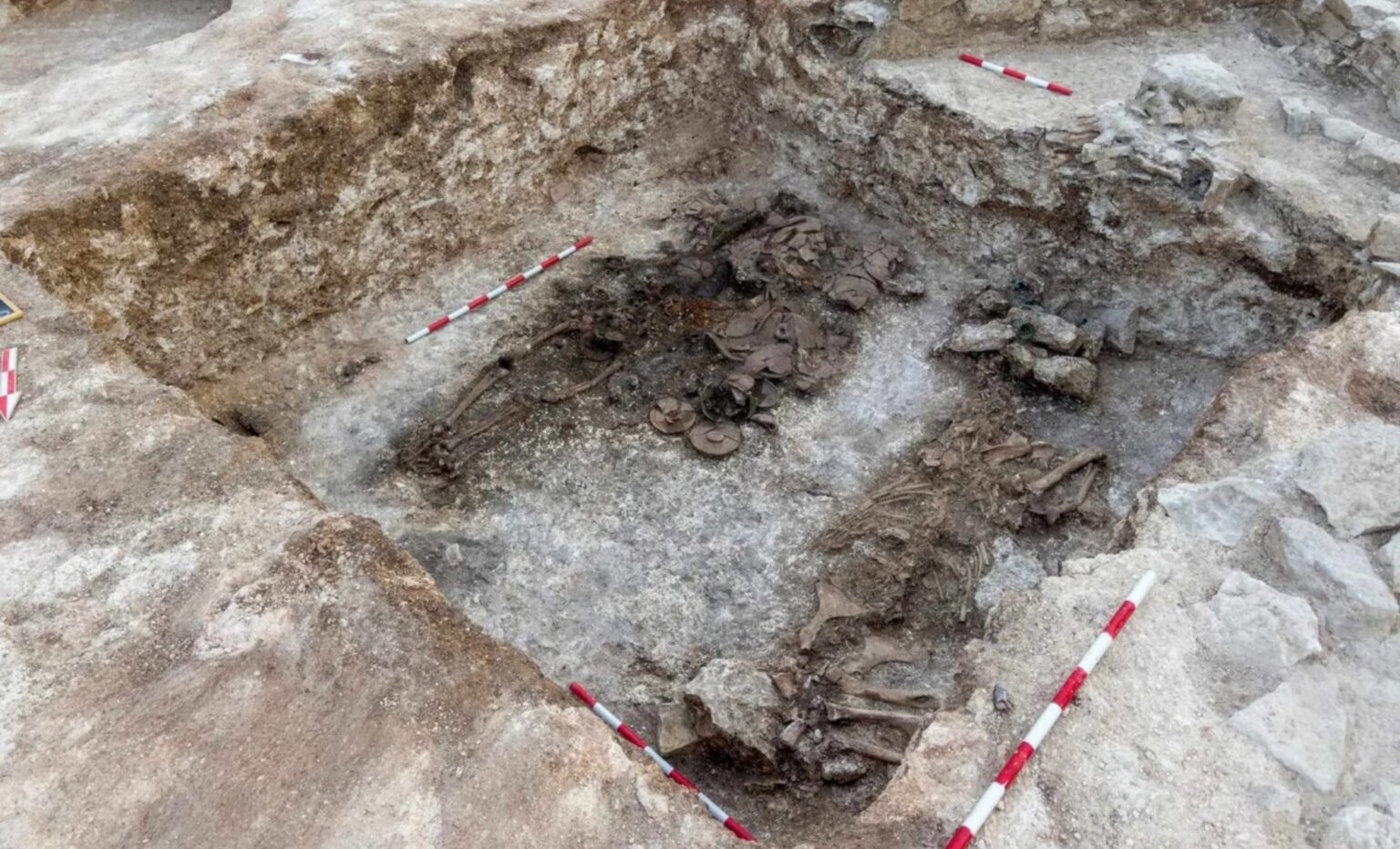
Discovered in the Sakar Mountains near the village of Kapitan Petko Voyvoda, the tomb was excavated as part of a rescue project led by Dr. Daniela Agre from the National Archaeological Institute with Museum at the Bulgarian Academy of Sciences (NAIM-BAS). Now on display in Sofia, the artifacts provide a striking glimpse into the life, death, and status of Thracian elites in the late second century B.C.
The burial site sits within a larger necropolis, a planned cemetery in use across multiple generations. The combination of weapons, ornaments, and horse gear reflects both local customs and Hellenistic influence. The discovery contributes significantly to understanding how power was expressed in Thracian society during a time of regional transition and external cultural contact.
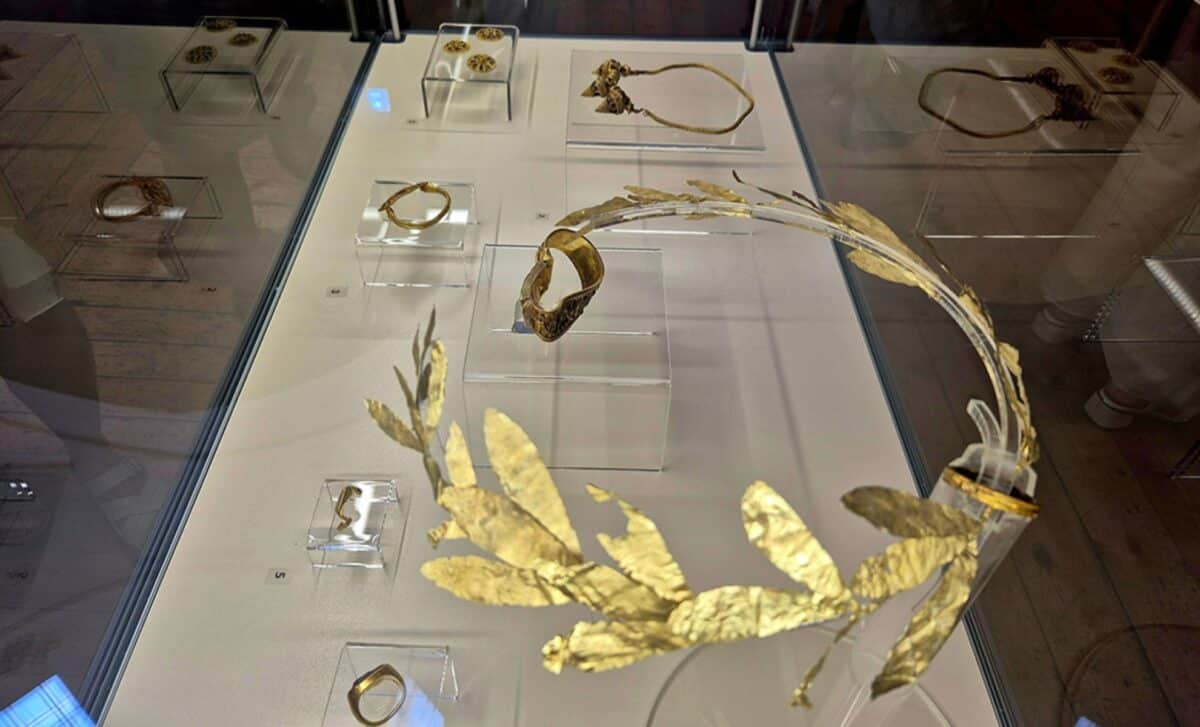 Jewelry found in 2,100-year-old tomb – © Museum at the Bulgarian Academy of Sciences (NAIM-BAS)
Elite Identity Expressed in Death
The warrior, estimated to have died between 35 and 40 years of age, was cremated along with his horse, then buried in a mound with a variety of finely crafted objects. These included iron spears, a shield, glass and ceramic vessels, silver jewelry, and a gem-set knife. A silver-gilt wreath had been placed around his skull, a clear symbol of prestige.
According to excavation records, the horse’s harness was richly decorated with bronze fittings, gold accents, and a gold frontlet bearing a repoussé snake motif. Three iron bridles and complete harness sets were arranged above the cremated remains, showing careful staging of the burial ritual.
The archaeologists involved described the tomb as “the richest Hellenistic-era example documented in Bulgaria so far,” based on the quantity and quality of the recovered objects. The use of pyres, metalwork, and symbolic placement of items all point to a warrior of notable standing whose burial was meant to preserve and display his status.
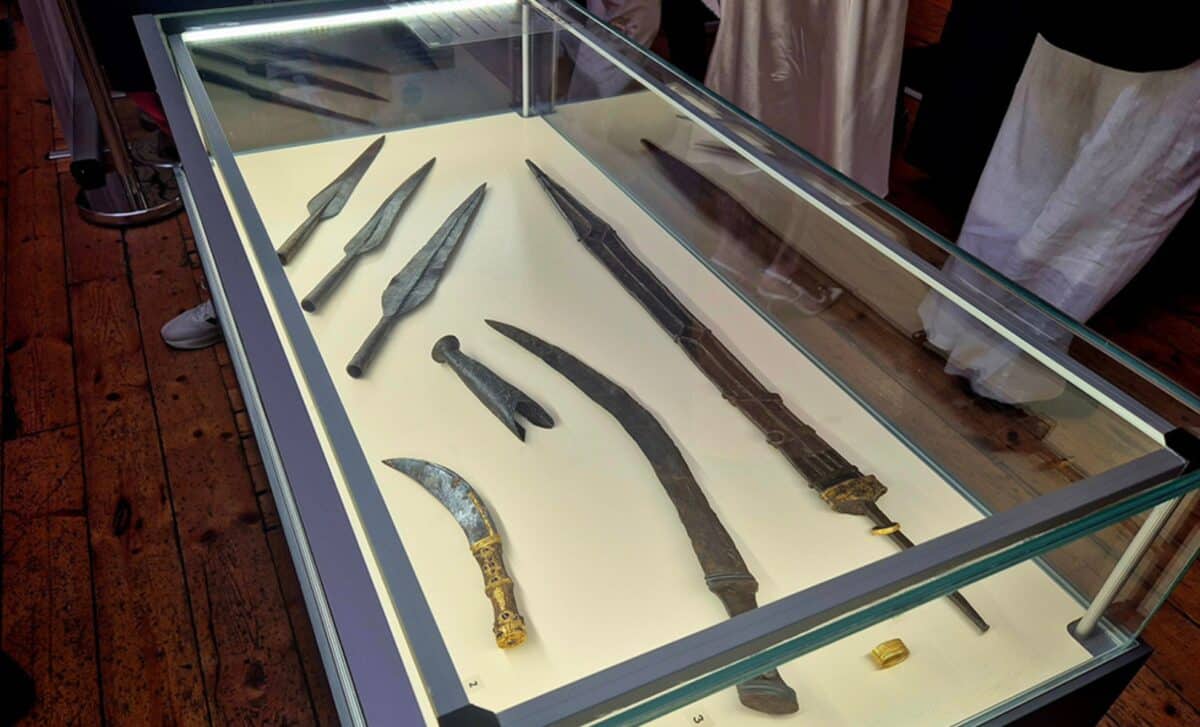 Iron spears and gem-set knife found in the 2,100-year-old tomb – © Museum at the Bulgarian Academy of Sciences (NAIM-BAS)
Crafted for Memory and Display
The objects found in the tomb reveal a sophisticated level of craftsmanship and cultural symbolism. Animal medallions on the harness, gold appliqués, and Greek-influenced regalia were all part of a visual language used to communicate the warrior’s identity and status. According to museum conservators cited by Earth.com, stabilizing the artifacts took months of lab work, due to the heat damage caused by cremation.
The use of wreaths and ornamental weaponry was not only decorative but loaded with meaning. These objects often reflected heroic ideals and ancestral links, further emphasized by the horse burial—a practice reserved for individuals of high rank. The mix of local Thracian traditions and imported Hellenistic styles shows a blending of cultural practices that defined elite identity in the region during this period.
All elements were documented in their original context and presented in Sofia as part of a temporary exhibition. The exhibition includes descriptions of the excavation process, scientific analysis, and conservation methods used to preserve the heat-altered items.
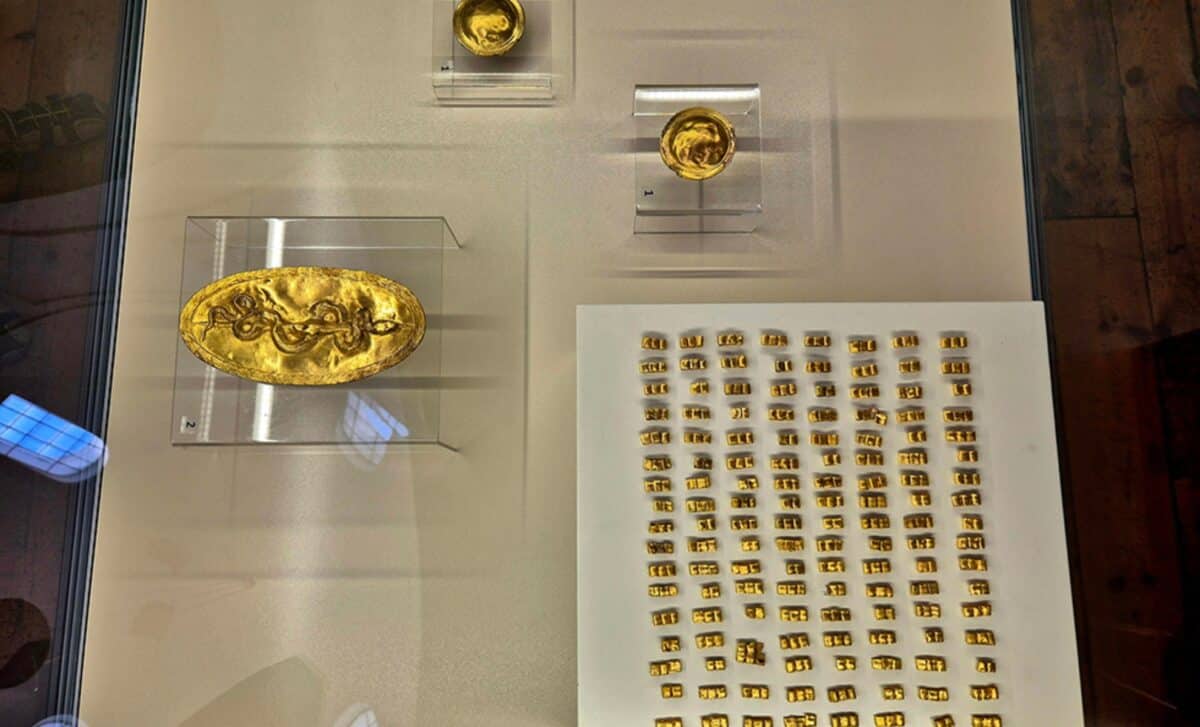 gold objects found in the 2,100-year-old tomb – © Museum at the Bulgarian Academy of Sciences (NAIM-BAS)
Additional Finds Enrich the Site
Near the warrior’s mound, archaeologists discovered a second grave containing a young woman, who was buried with a jewel-covered wooden chest and two leather shoes. Her grave, while different in style and content, also reflected significant material investment, indicating wealth and social distinction.
The site’s broader context includes a nearby sanctuary, where numerous coins were found, possibly linked to ritual activity or regional governance. Another tomb, located around 200 feet away, has been dated to the second half of the second century B.C., suggesting continued use of the area for elite burials.
As noted by Dr. Evelina Slavcheva, chair of NAIM-BAS, the treasures found across the Bulgarian region are evidence of “the high-level mastership and the spiritual culture of the prosperous ancient societies.” The Sakar cemetery, with its wealth of burial goods and architectural planning, adds a crucial piece to the puzzle of Thracian life and death during a transformative historical moment.
Visitors can view the artifacts in Sofia until October 17, 2025, after which they will return to the Historical Museum in Topolovgrad.