
Published on
October 8, 2025

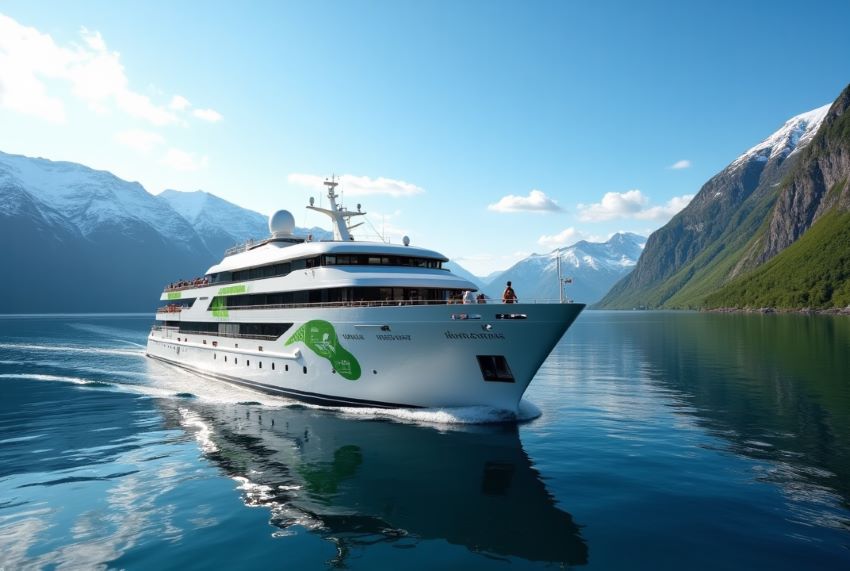
Havila Voyages is, once again, leading the way in groundbreaking, sustainable travel. The Havila Polaris will soon offer climate-neutral voyages. The ship will travel the Norwegian coast in late November 2025. The ship will, for the first time, operate without emissions, and the voyage will be proof of the long-term viability of climate-neutral shipping. Havila Voyages will be one of the leaders in maritime shipping in actively reducing greenhouse gas emissions.
Havila Polaris will operate from Hammerfest to Bergen and back. The ship will use liquefied biomethane gas to travel the distance without fossil fuels and biogas will be used to reduce greenhouse gas emissions by 90%. This announcement is after the company’s commitment to securing climate goals for Norway, building sustainable jobs, and contributing to the local and coastal communities.
Incorporating Sustainability Using Biogas
On November 26, 2025, the Havila Polaris will fill 200 cubic meters of liquefied biogas at Polarbase, located just outside Hammerfest. When the ship reaches Bergen on November 30, it will load an additional 150 cubic meters of biogas, giving it enough fuel for the entire journey. Biogas will be used alongside the ship’s large battery packs as a reliable, clean energy source to power the vessel fossil fuel-free.
The large amount of biogas being used allows Havila Polaris to minimize its environmental impact as it sails along the Norwegian coast. The staff at Havila Voyages is committed to embracing advanced green technologies in the maritime industry, especially to minimize the reliance of the cruise industry on traditional marine fuels. This is just one of the steps taken to meet the company’s goal of climate-neutral voyages by 2028.
Future Plans and Greenhouse Gas Reductions
For Havila Voyages, sustainability and reducing greenhouse gases are top priorities, and strides have been made in this regard. As Bent Martini, CEO of Havila Voyages, has stated, this voyage is the company’s commitment to tangible proof of Green Travel. They have already exceeded the Norwegian government’s demand for a 25 percent reduction in CO2 emissions for maritime contracts. They are enthusiastic about taking this company initiative even further. The reduction of emissions without technical modifications to the ship is made possible through the use of biogas.
In the future, Havila Voyages intends to use biogas exclusively for all its ships, which will be sourced and produced along the Norwegian coast. The Havila company has committed to a sustainable solution and will help create new job opportunities for Norwegians by strengthening the value chain along the Norwegian coast. They are aiming to replace liquefied natural gas (LNG) entirely with biogas by 2028. This initiative will support Norway’s Green economy, and the biogas will be locally sourced.
Biogas and Sustainable Maritime Travel
LNG alternatives with biogas highlight the remarkable reduction of the environmental footprints of large vessels while keeping operational efficiency. Biogas is produced from organic waste and is a renewable energy source. This is a great effort to provide a cleaner alternative to fossil fuels. Most of the effort to provide cleaner energy sources and cleaner climate alternatives is to reduce gas emissions in the shipping industry. Biogas energy is a greatly improved energy source.
With biogas fuel, Havila Voyages is still providing breathtaking tourism experiences on the Norwegian coast while helping the country reach its climate goals. It is no surprise that the cruise industry is among the fastest-growing in all of global tourism. This growing industry is segmenting into cleaner fuels to reach climate-neutral objectives. This is a positive and critical first step in the right direction.
Havila Polaris: Sustainable Travel for Cruises
Havila Polaris is a great example of how sustainable travel tech can be added to the cruise industry. Building one of the first ships of the Havila Voyages division meant using innovative eco-friendly methods like biogas engines burning cleaner fuel, and large battery packs to reduce fuel consumption and to get some of the burning fuel during travel and docking. The battery packs let you run the ship for some of the electrical dock and periods of the voyage, burning even cleaner, environmentally friendly fuel.
Havila Voyages is installing new green tech on its ships, using the Havila Polaris as a benchmark. The ship shows other cruise lines how to run a ship effectively by reducing carbon emissions, and how to operate a cruise ship sustainably by using very little fossil fuel during a cruise. The ship shows other cruise lines how it’s done.
Conclusion: A Sustainable Future for Norwegian Tourism
The start of Havila Polaris’ climate-neutral voyage is a defining moment for the maritime industry and tourism. Fuels limited by biogas and advancements in battery technologies are leading the cruise industry to become greener. The impact of this voyage is an example of operating and doing large vessels sustainably and positively. This supports tourism in Norway and offers the world its first sustainable, eco-friendly cruise for the future.
The future will speak to the route laid with this historic sailing. The industry will aspire to the climate-neutral future planned for the biogas-enabled fleet by 2028. For the tourism sector and in the local communities, this is the first positive shift to responsible, eco-friendly cruising.
