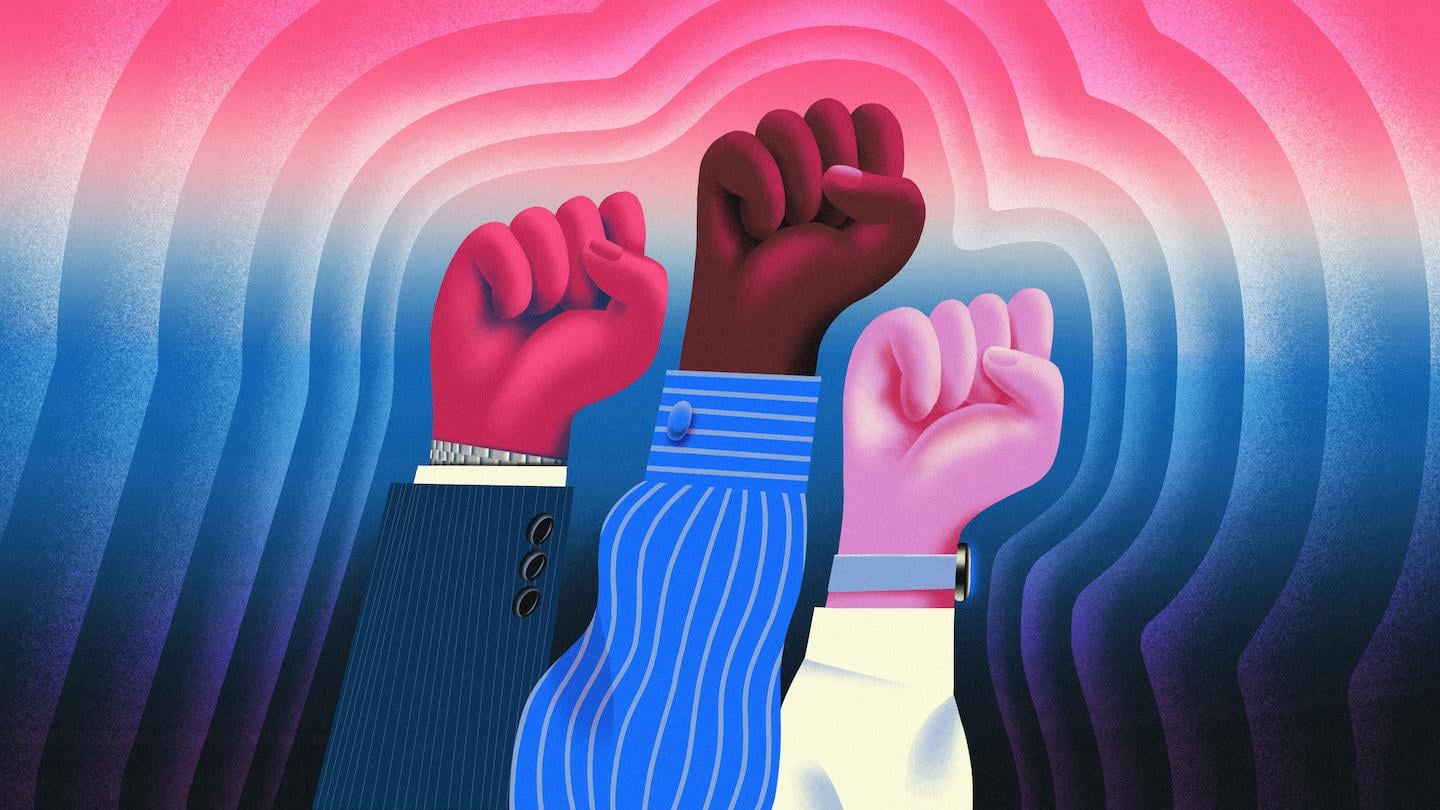
The future of white-collar work may be unionized – Law firms, banks and tech companies are seeing an uptick in employees choosing to organize.
https://www.washingtonpost.com/business/2025/10/08/employees-white-collar-unions/

The future of white-collar work may be unionized – Law firms, banks and tech companies are seeing an uptick in employees choosing to organize.
https://www.washingtonpost.com/business/2025/10/08/employees-white-collar-unions/
8 Comments
From the article
In 2024, [a record-low 9.9 percent](https://www.bls.gov/news.release/pdf/union2.pdf) of U.S. workers were members of a union, according to the Labor Department, but interest is soaring. An [August Gallup poll](https://news.gallup.com/poll/694472/labor-union-approval-relatively-steady.aspx) found that nearly 70 percent of Americans approve of organized labor, and last year, unions filed [twice as many](https://www.nlrb.gov/news-outreach/news-story/union-petitions-filed-with-nlrb-double-since-fy-2021-up-27-since-fy-2023) petitions seeking elections compared to 2021, according to federal data. With layoffs and automation eroding the stability traditionally associated with knowledge jobs, the future of white-collar work might include some tried and tested ways to protect one’s job.
“The introduction of new technologies has eroded both pay and prestige of these jobs, and I think that’s making workers feel that the kind of career path that might have been available to the generation before them is starting to seem less accessible,” says Joseph McCartin, a labor historian at Georgetown University.
White-collar workers are fueling some of that interest, and union drives could become more common in the coming years for professional workers in high-earning sectors, McCartin says.
One factor is declining job security in white-collar industries, a trend particularly apparent to tech employees. Since 2020, tech companies have unleashed rounds of [mass layoffs](https://www.washingtonpost.com/business/2023/01/06/layoff-numbers/), inspiring calls for worker protections across the industry. In 2020, employees at Kickstarter, a crowdfunding platform, formed the first union at a major U.S. tech company. The union helped secure layoff terms significantly above the industry average at the time, including up to six months of health care and severance, according to Dannel Jurado, a senior engineer at Kickstarter and union organizer.
It’s so well ingrained in our society (at least in the US) that unionizing is something blue collar workers do, with the reasoning often being that white collar jobs are too “comfortable” for you to fight for anything better, even with insane pay disparity, implied extra hours, abusive management, etc.
The idea is “could be worse.”
But the response should be “could also be better.”
It will never work because of competitive job market. If you unionize the whole team will be fired and replaced for people who will do more for less.
Union reps have already booked their pricey hotels and restaurants and putting out feelers for kickbacks. The kickbacks from finance firms will be huge.
This is currentology in most civilised countries. Maybe someone is going to share an american article on how free healthcare might be a crazy idea for the future utopia.
Union-like protections should be part of our Constitution.
Whew, good thing the NLRB has been gutted, anti-union leaders appointed there, and enforcement against union busting is now almost non-existent
https://www.reuters.com/legal/government/us-senators-question-independence-trumps-nlrb-picks-after-members-firing-2025-10-01/
It’s even worse in the TV industry. All the salaried people like producers, etc. are not in a union. Sure, they make a little more but they’re not getting OT. They work 7 day weeks, 18-20 hours a day and get nothing for it. Meanwhile, we attend meetings almost daily about limiting overtime for the crew. They only care about overworking people when they have to pay for it.